
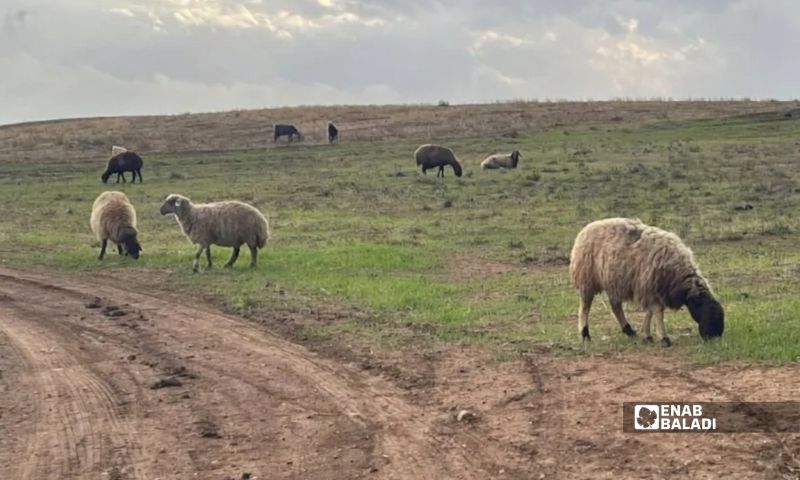

Rainfall in al-Hasakah governorate (northeastern Syria) over recent weeks, combined with periods of warm, sunny weather, has encouraged dense growth of natural grasses and vegetation across farmland and open pastures. The growth has benefited livestock breeders by reducing feed costs, while farmers face challenges related to the density of winter crops and the need to regulate grazing during the early stages of the agricultural season.
Autumn rainfall plays a crucial role in creating favorable conditions for the winter agricultural season in Syria’s northeastern Jazira region, particularly in al-Hasakah, where a large proportion of the population depends on wheat and barley cultivation and sheep breeding.
This season, successive rainfall followed by periods of warmth and sunshine has accelerated grass growth across extensive areas, allowing livestock breeders to take advantage of natural pastures and uncultivated land. This has reduced their dependence on purchased feed, one of the main expenses associated with raising sheep.
Early Germination and Dense Crop Growth
In the northern countryside of al-Hasakah, farmer Mohammed al-Jassem noticed that early rainfall had significantly affected his 100-dunum wheat field, as soil moisture and successive warm, sunny days helped seeds germinate rapidly and densely.
Mohammed told Enab Baladi that the dense growth in his field prompted him to look for a sheep breeder willing to graze his flock on the land. His aim was to reduce plant density at this early stage of crop development and limit potential damage caused by overcrowding.
He explained that the practice worked differently in previous years, when sheep owners paid farmers to allow their flocks to graze on cultivated land at the beginning of the season, particularly when crops had grown densely. This year, however, circumstances have changed.
Farmers are now the ones seeking out livestock breeders and offering free grazing on their land in an attempt to use sheep to thin out dense crops, he added. However, the widespread availability of green vegetation and pastures has made it difficult for him to find a sheep breeder willing to graze his field.
Mohammed’s experience illustrates how rainfall conditions have changed the relationship between farmers and livestock breeders. Cultivated fields are no longer the only available grazing areas, as grass has spread across natural pastures and fallow land, giving breeders more options for feeding their flocks.
This does not mean that dense germination is a problem in every field. Conditions vary depending on planting dates, rainfall amounts, and soil characteristics. However, closely spaced and dense plant growth in some fields requires farmers to monitor their crops and manage them according to their stage of development.
Natural Pastures Reduce Sheep-Raising Costs
Hamad al-Saleh, a livestock breeder in al-Hasakah governorate, said the spread of grass across open pastures since the beginning of the rainy period has helped him reduce the cost of feeding his flock of approximately 150 sheep.
Hamad told Enab Baladi that natural grasses growing over recent weeks have provided an additional food source for his livestock, allowing him to rely more heavily on grazing rather than purchasing large quantities of feed. This has eased the financial burden of raising his flock.
He added that one farmer had allowed him to graze his sheep on his land free of charge. Alongside open pastures and fallow land left uncultivated this season, this has allowed him to move his flock between different areas in search of grass.
He noted that the availability of natural pastures during this period presents an opportunity for sheep breeders, particularly given the high cost of feed and the ongoing expenses associated with purchasing it. Grazing helps meet part of their flocks’ nutritional needs without additional costs.
Grazing Cannot Fully Replace Feed
Veterinarian Yahya Abdullah said the growth of natural grasses following autumn rainfall benefits sheep and other livestock by providing an additional food source and reducing the financial burden of purchasing feed.
Abdullah told Enab Baladi that the availability of grass in open pastures allows breeders to reduce the quantities of feed they provide to their animals or decrease the number of daily feedings, depending on the amount of natural vegetation available and how much their flocks consume.
However, he emphasized that grazing cannot entirely replace supplementary feed. Animals’ nutritional needs depend on their circumstances, physical condition, and dietary requirements, meaning grass alone cannot meet all their needs.
Dense Crop Growth Requires Regulated Grazing
Agricultural engineer Hassan Hamid said autumn rainfall plays an important role in the agricultural cycle by providing the moisture needed for winter crops, particularly wheat and barley, to germinate. It also helps regenerate natural vegetation on uncultivated land.
Hamid told Enab Baladi that adequate moisture, combined with suitable temperatures and periods of sunshine, accelerates plant growth. In some fields planted early, these conditions can lead to dense germination within a short period.
He explained that excessive plant density during the early stages of wheat growth can cause overcrowding and increase competition for nutrients, water, and sunlight. This requires farmers to monitor field conditions and manage excessive growth according to the characteristics of each field and the crop’s stage of development.
Hamid added that regulated grazing at this stage can help manage excessive plant density in some fields by allowing sheep to graze for an appropriate period. However, grazing must be timed carefully, taking into account the plants’ stage of growth, to prevent damage to or destruction of the crops.
Autumn Rainfall Reduces Agricultural Costs
Beyond promoting plant growth and regenerating pastures, autumn rainfall also provides economic benefits to farmers amid rising agricultural production costs.
Rainfall naturally irrigates farmland and reduces the need for pumping water, lowering fuel consumption and operating expenses, particularly during the early stages of winter crop growth.
These benefits come as farmers face additional financial pressures from rising agricultural input costs and insufficient support. As a result, crops’ dependence on rainfall plays an important role in determining overall expenses during the agricultural season.