


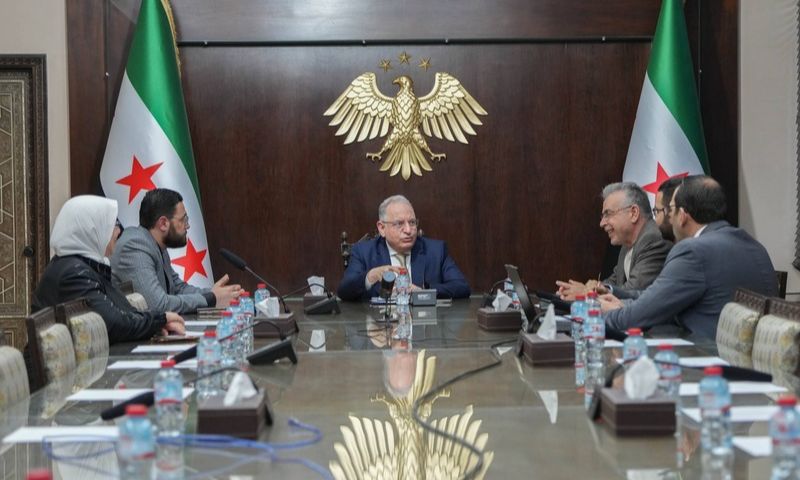
 Review of the final draft law regulating financial and oversight professions at the Syrian Ministry of Finance, November 9, 2026 (Syrian Ministry of Finance).


 A
A
A
The Syrian Ministry of Finance announced that a committee tasked with reviewing and updating Law No. 33 of 2009, which regulates the certified public accounting profession in Syria, has completed a new draft law expanding regulation to seven specialized financial and oversight professions. The draft will undergo the legislative and constitutional procedures required for its enactment.
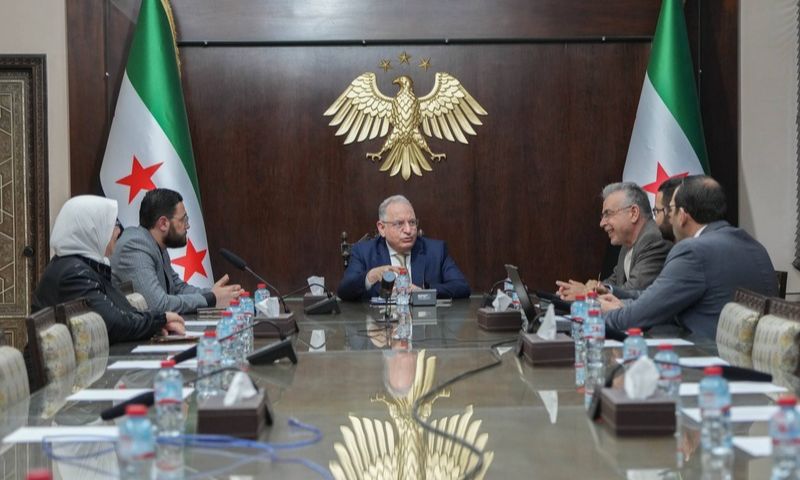
The ministry said Finance Minister Mohammed Yisr Barnieh met with the Financial Professions Development Committee, chaired by Deputy Minister Mohammed Abazid, to review the final version of the draft law. The legislation aims to modernize the regulatory framework for financial and oversight professions and strengthen their role in governance, transparency, accountability, and the protection of public and private funds.
The draft law covers seven professions: certified public accounting and external auditing, internal auditing, risk management, financial analysis, financial valuation, tax consulting, and management accounting, according to a ministry statement published on Monday, November 9.
The draft law establishes a general legislative framework covering several key areas, while the details, regulations, and procedures required for implementation will be determined through executive instructions and relevant regulatory decisions in accordance with the law. Its main provisions include:
The ministry expects the new law, once approved and brought into force, to deliver several strategic benefits to the national economy, most notably:
On June 29, 2025, the finance minister issued a decision establishing a committee to review and update the state’s Basic Financial Law.
The committee aims to introduce substantial changes to the law to improve the management of expenditures and revenues, move away from centralized restrictions, introduce digital payments, and develop the duties and responsibilities of financial controllers, among other reforms.
The Accounting and Auditing Council at Syria’s Ministry of Finance had previously added five new professions, including risk management, financial analysis, and internal auditing.
On June 28, 2025, Syrian Finance Minister Mohammed Yisr Barnieh said the Accounting and Auditing Council had introduced and regulated five new financial professions during a meeting at the Syrian Ministry of Finance.
In a LinkedIn post at the time, Barnieh identified the new professions as financial valuers, tax consultants, internal auditors, risk managers in financial institutions, and financial analysts. He said members of the Accounting and Auditing Council had supported the proposal to add these professions.
Syria’s Accounting and Auditing Council is a government body responsible for regulating, supervising, and developing the accounting and auditing profession in the country. Chaired by the finance minister, the council aims to improve the quality and accuracy of professional work in the field and strengthen confidence in accounting and financial activities.
According to Barnieh, those practicing the newly added financial professions must obtain prior licenses in Syria under specified standards and pass appropriate professional examinations in accordance with international standards governing these professions, ensuring that practitioners possess the necessary knowledge and experience.
A working group was formed comprising experts from the Ministry of Finance, the Central Bank of Syria, the Syrian Commission on Financial Markets and Securities, the Insurance Supervisory Commission, the Association of Certified Public Accountants, and other financial specialists. The group was tasked with developing and implementing procedures to regulate and advance the newly added financial professions and establish proper licensing processes in line with existing regulations.
Barnieh also said the existing licensing procedures for certified public accountants would be reviewed and improved, including revising and developing licensing examinations and emphasizing continuous professional training. He stressed that these measures were essential to developing financial professions, raising professional standards, improving the effectiveness of financial oversight, and strengthening risk management in Syria’s financial sector.
if you think the article contain wrong information or you have additional details Send Correction







 More Economic Reports