

The United Nations Food and Agriculture Organization (FAO) recorded a 5.9% year-on-year increase in global food prices in October, despite a 1.2% decline compared with September.
In its report released on Friday, November 6, the FAO said its Food Price Index stood at 133.9 points in October, down 1.6 points from the revised September level of 135.6 points.
The FAO attributed the monthly decline to weaker import demand, which lowered prices for cereals, dairy products and meat, while sugar and vegetable oil prices rose.
Despite the decline, the index remained 5.9% higher than in October 2025, though it was still 16.4% below its March 2022 peak.
Cereal and Dairy Prices Fall as Sugar Prices Rise
The Cereal Price Index fell by 4.5% compared with September, driven by declining wheat and maize prices amid weaker demand and improved production prospects, particularly in Argentina, along with expectations of abundant cereal supplies in global markets.
Dairy product prices also declined by 1.1%, reflecting lower butter and cheese prices, while the Meat Price Index fell by 1.2%.
By contrast, the Sugar Price Index rose by 6.6%, marking its fourth consecutive monthly increase and reaching its highest level since December 2024, amid disruptions to sugarcane harvesting in Brazil and concerns over production in several countries.
Vegetable oil prices increased by 0.3%, with soybean and sunflower oil prices rising, while rapeseed oil prices declined.
Varying Price Increases in Damascus Markets
Enab Baladi documented varying increases in commodity prices across Damascus markets in an earlier report. Depending on the type, quality, and place of sale, prices rose by between 10% and 30% for most goods, with larger increases recorded for some vegetables.
Among basic food staples, the price of one kilogram of sugar rose from approximately 80 Syrian pounds ($0.55) to 105 pounds ($0.72), an increase of about 31%. The price of one kilogram of Thai rice increased from 125 pounds ($0.86) to 150 pounds ($1.03), or around 20%, while a liter of vegetable oil rose from 230 pounds ($1.58) to 270 pounds ($1.86), an increase of approximately 17%.
Increases in vegetable ghee prices varied according to type and quality, ranging from 30 to 60 Syrian pounds (approximately $0.21 to $0.41). The price of mid-range varieties rose from approximately 280 pounds ($1.93) to 330 pounds ($2.27), an increase of about 18%.
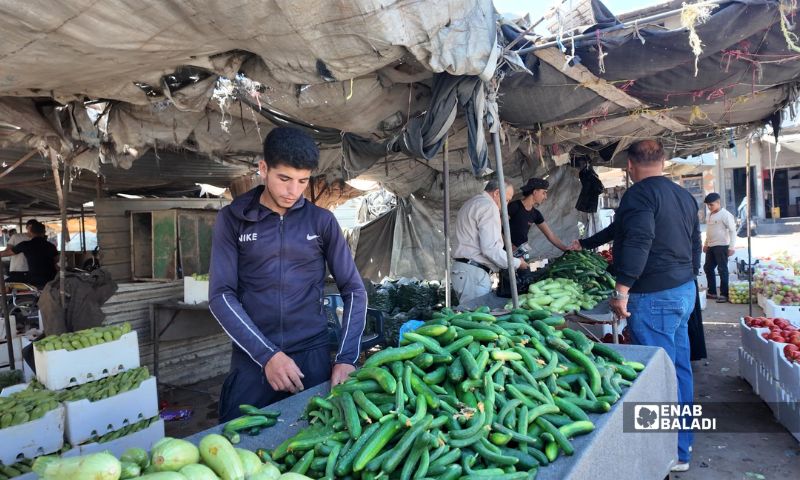
Fruit and vegetable prices increased by between 10% and 25%, depending on the product, with some exceeding that range. The price of one kilogram of cucumbers climbed from 60 pounds ($0.41) to 85 pounds ($0.59), an increase of approximately 42%, while tomato prices rose from 50 pounds ($0.34) to between 60 and 70 pounds ($0.41 to $0.48) per kilogram, and potato prices from 60 pounds ($0.41) to between 70 and 80 pounds ($0.48 to $0.55).
Dairy products and cheese also recorded increases generally ranging from 10% to 15%. The price of one kilogram of yogurt rose from between 90 and 95 pounds ($0.62 to $0.65) to approximately 110 pounds ($0.76), while milk prices increased from 70 pounds ($0.48) to between 85 and 90 pounds ($0.59 to $0.62). The price of one kilogram of cheese rose from between 350 and 380 pounds ($2.41 to $2.62) to approximately 390 to 410 pounds ($2.69 to $2.82).
After Price Hikes, Energy Ministry Tests Syrians’ Resilience