


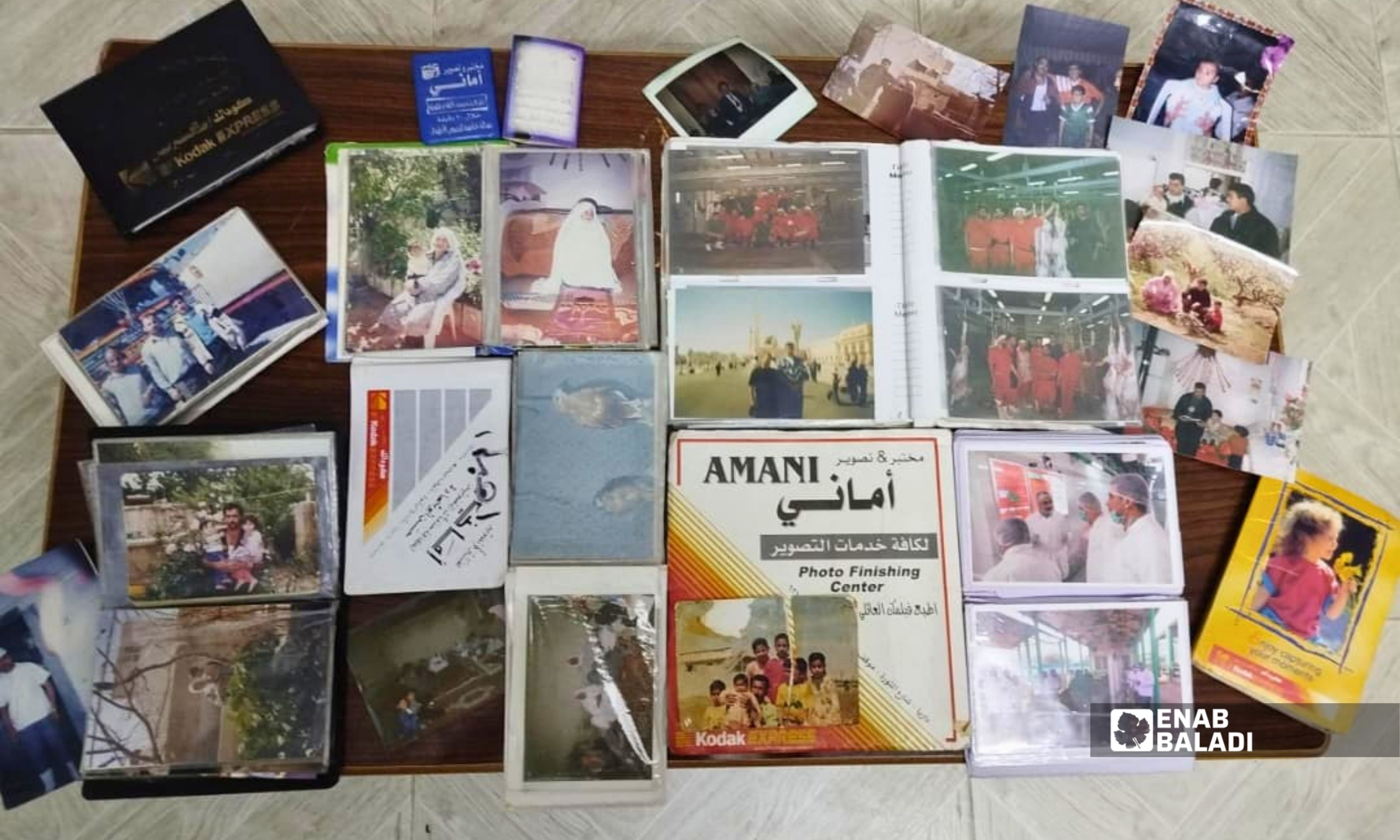
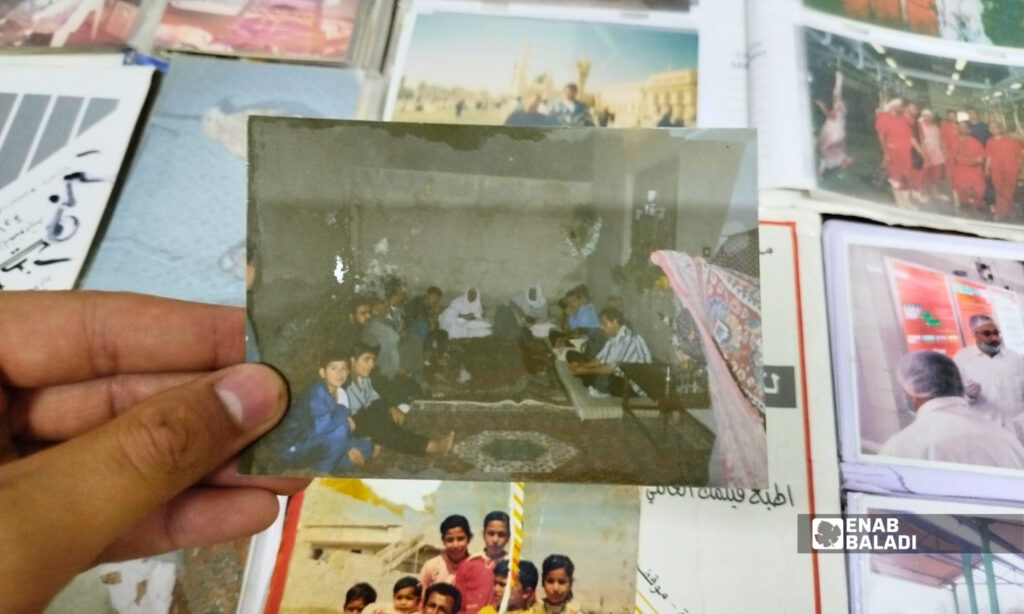
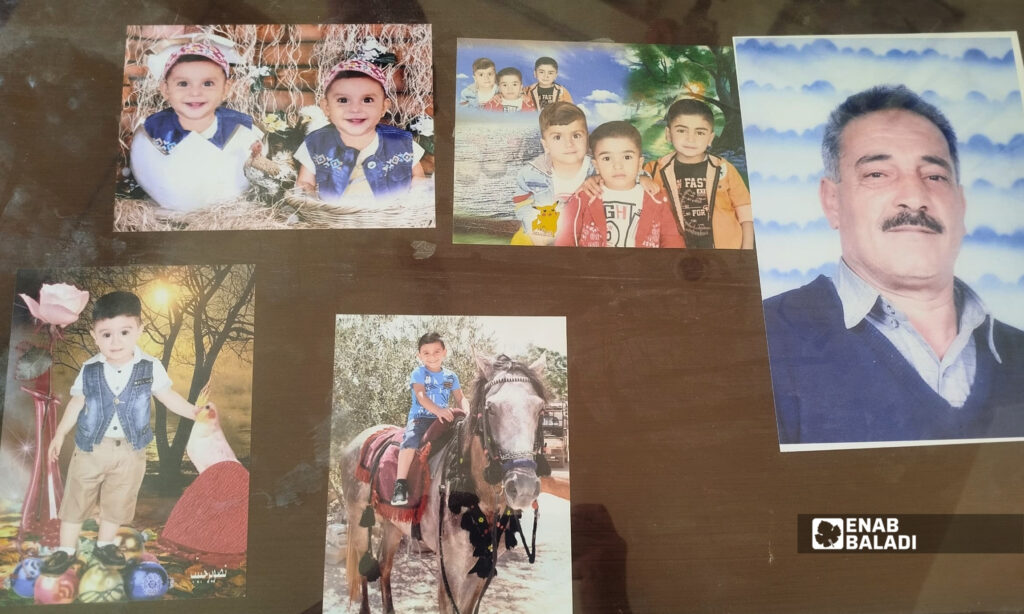
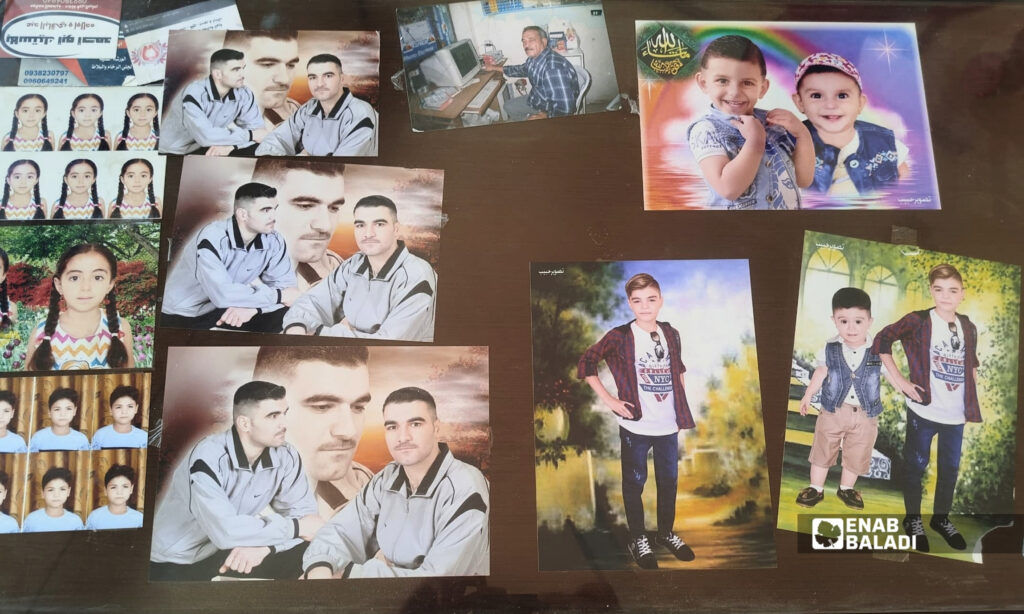
 A collection of old family photo albums belonging to residents of Darayya, August 29, 2026. (Enab Baladi, Muhammad Mushmushtin)
A collection of old family photo albums belonging to residents of Darayya, August 29, 2026. (Enab Baladi, Muhammad Mushmushtin)
About a week after residents were allowed to enter Darayya (Rural Damascus, southwestern Syria) in late 2018, Israa returned to her family home.
Her maternal uncle had reached the house before her and saw people taking its contents without being able to stop them. When Israa arrived, the furniture the family had left behind was gone, the rooms were damaged, and parts of the walls had collapsed.
She did not begin by looking for the furniture. Instead, she went to the place where the family had kept its photo albums.
She roughly remembered where they were, so she searched and dug through the rubble until she found them and carried them out of the house.
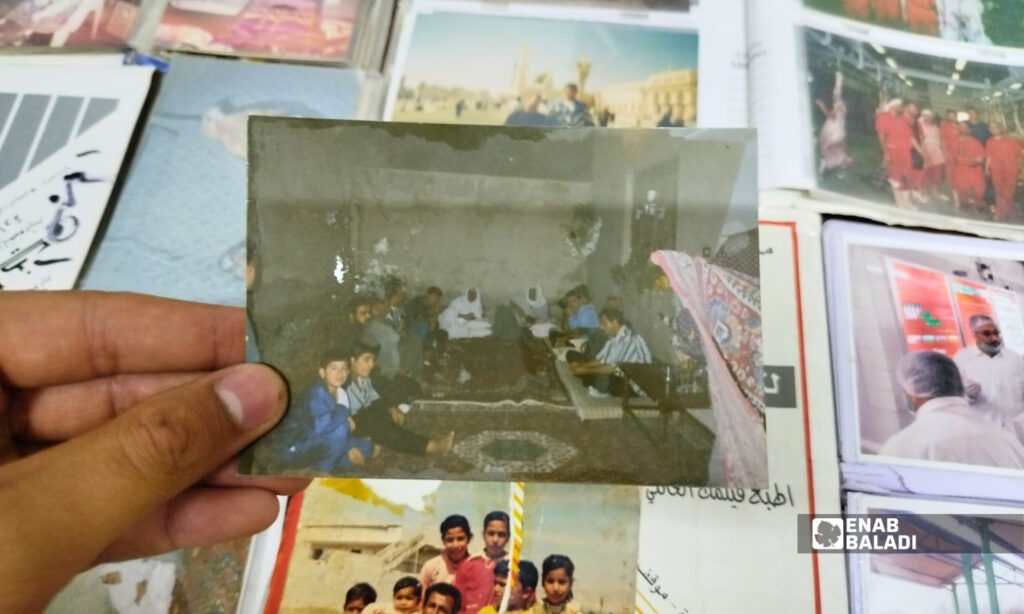
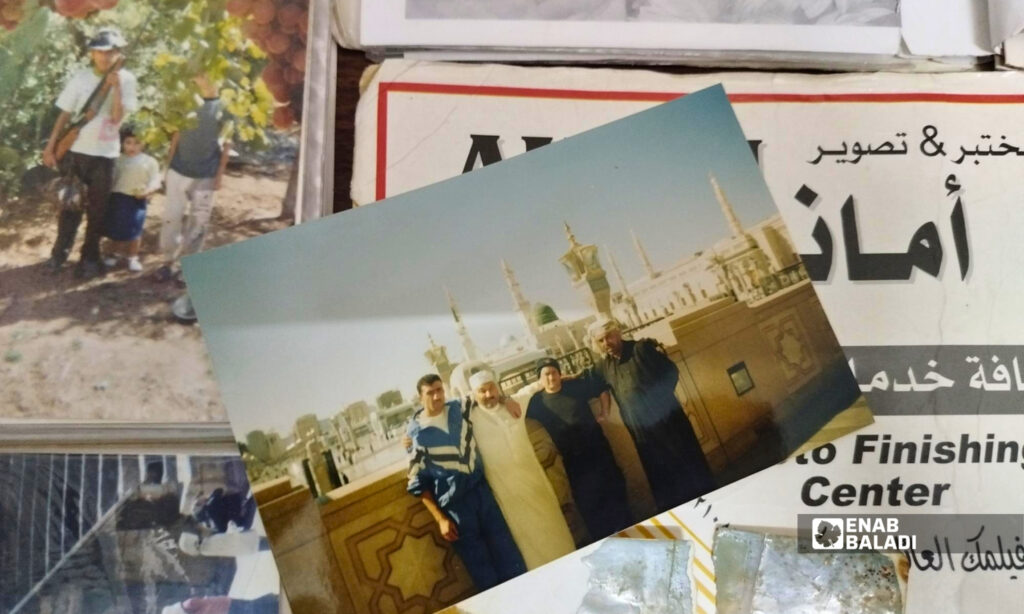
The albums preserved photographs of Israa as a child, her mother during her childhood, and the family in the 1980s, alongside pictures of grandparents, uncles, and relatives, most of whom have since died. One photograph still bears a visible date, May 3, 1989.
Her father, Adel, had taken many of the photographs with a film camera he carried on trips, to weddings, and during family visits. He would then take the film to a studio and wait several days before he and his family could see the developed and printed photographs.
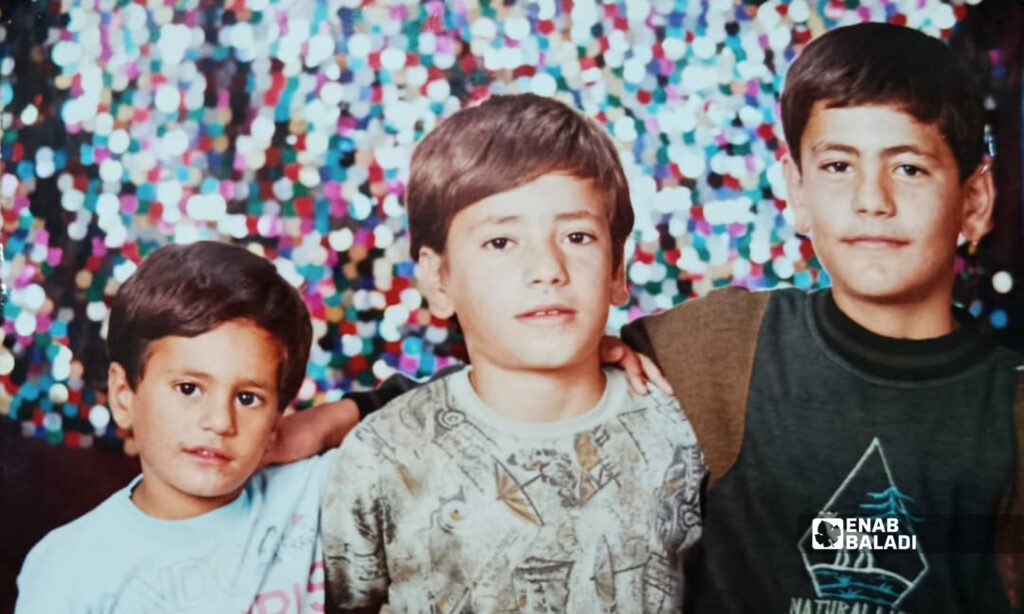
The camera remained in Darayya when the family was displaced to Shawaqa in 2012. Adel was unable to retrieve it after the city was closed off, but the photographs he had taken before then continued to document years in the lives of his children, Israa, Mohammad, and Qusai, as well as holidays, weddings, and family gatherings.
His daughter Sarah, born in November 2013, had her childhood documented differently. The family photographed her using a Nokia X2 phone, and some of those pictures remain stored on memory cards.
Between the eldest and youngest sisters, the family’s means of photography changed, from a camera and film that required waiting for development and printing to a phone capable of taking dozens of photographs within minutes.
But the years of war and displacement also changed the fate of the photographs themselves. Some albums were recovered from beneath the rubble, while others burned or disappeared. Some families recovered photographs from the phones of relatives and friends who had kept copies.
Mohammad Khair Dabbas was in seventh grade when, in 1985, he began a decades-long journey with photography.
He entered the profession by chance after agreeing with a friend to look for summer work in Damascus. The two eventually found themselves at Semiramis Studio near Victoria Bridge.
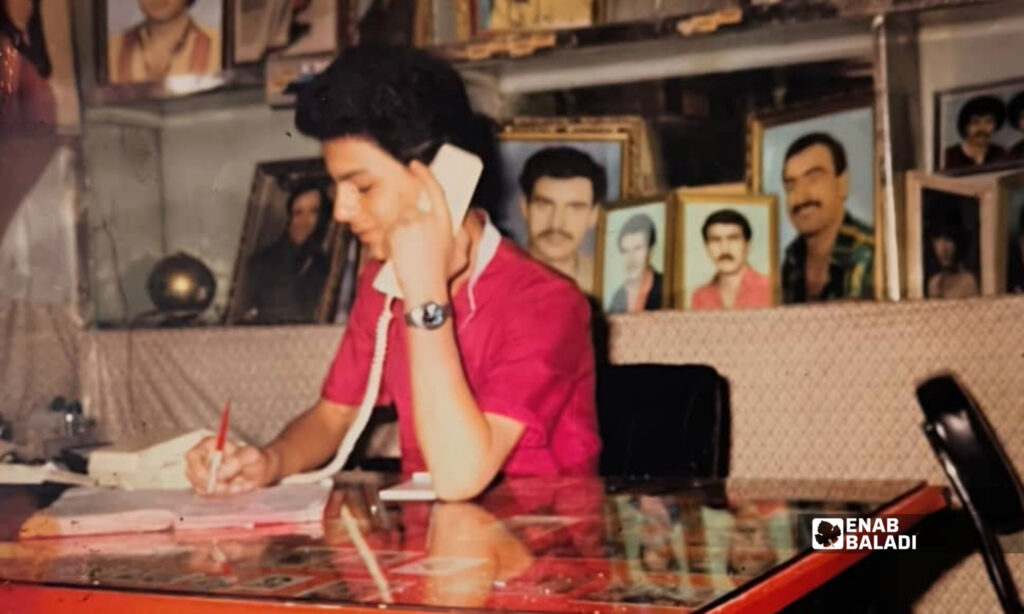
Over seven years, Dabbas worked in photography studios and laboratories across Damascus, including al-Firdaws, al-Shahbaa, Afamia, and Shehadeh Laboratories, learning the profession through practice without academic training.
In 1992, he opened al-Diyaa Photography and Laboratories on al-Shamiyat Street in Darayya, behind Anas Mosque.
Dabbas used a Canon A-1 camera for color photography, while black-and-white studio photographs were taken with a large camera mounted on a tripod.
Taking the photograph was only the beginning. In the darkroom, film was placed in developing solution and then dried. Some imperfections were manually corrected using special pencils before the photographs were printed on specialized paper, developed, fixed, dried, and cut.
Dabbas developed black-and-white film inside the studio and sent color film to specialized laboratories in Damascus. Customers also brought him film they had shot with their own home cameras.
Developing itself did not necessarily take days, but the volume of work meant customers were usually asked to return about two days later to collect their photographs.
After handing over the prints, Dabbas kept an archive of film, organized by date, number, or customer name, so he could retrieve it when people requested additional copies.
Holidays, weddings, New Year’s celebrations, birthdays, snowy seasons, and the start of the school and university years were among the busiest periods. Families and students would visit the studio to have new photographs taken.
Dabbas remembers customers waiting to discover how their pictures had turned out and the happiness that accompanied collecting them. He said photography in the past had “its own flavor and joy,” when the result remained unknown until the photographs were delivered.
At Habib Studio, founded by Habib Hannoun, another chapter in Darayya’s photographic history began.
Hannoun, a graduate of the Institute of Physical Education and a physical education teacher at Western Ghouta Secondary School in the 1980s, began working as a traveling photographer in the 1990s. He rode his bicycle between residents’ homes and family occasions to take photographs.
He later established a permanent workplace in a kiosk inside the public park on al-Thanawiya al-Shariya Street before moving to a shop opposite the park.
Today, his son Iyad Hannoun works at the studio, having started helping his father when he was 15.
His two brothers were more involved in taking photographs, while Iyad was responsible for taking film to Damascus for development and bringing back supplies for the shop.
Inside the studio, backdrops were fixed to the walls, with teddy bears and toys arranged in front of them for customers to pose among. Preparing the scene before taking the picture was part of the job because, unlike today, the background could not be changed afterward.
In spring, residents would invite Habib to their homes to photograph them in front of flowers, and he also photographed families in the park. His work was not limited to portraits and family pictures. He also photographed bedroom furniture for furniture manufacturers.
During holidays and special occasions, Iyad remembers lines of customers outside Habib Studio, comparing the crowds at the time to those outside a bakery.
As photography moved into the digital era, Iyad learned to use version eight of Photoshop, but he still prefers old film photographs, describing them as “more beautiful and more precise.”
Habib Hannoun died in October 2025, while his son continued working in the studio his father had founded.
In Um Omar al-Qassas’s home, photographs were more than pieces of paper stored inside an album.
She keeps a photograph of her father when he was about 15, along with pictures of grandparents, relatives, weddings, engagements, and family gatherings, as well as photographs of children taken by a photographer the family encountered while out.
Um Omar arranged the photographs herself. Opening the album would turn into an evening family gathering during which the family recalled stories about the people, occasions, and places pictured.
She sums up the difference she feels between an album and a phone screen by saying, “An album is different. You feel as though the photograph is speaking.”
Um Omar does not print the photographs on her phone today to add them to the album, but she believes printed photographs can survive for the children if someone takes care of them.
Among the photographs that later reached her was one of her son Omar during the siege of Darayya, sent to her by one of his friends. The photograph became even more precious after her son was killed on May 1, 2018.
During the war, keeping an album inside a cupboard was no longer enough for Um Omar.
She placed her album in a cardboard box, wrapped it in several bags, and hid it beneath sand on the roof of the house. Even so, she lost some photographs of her children before later recovering others from someone who had kept them on a phone.
Israa, meanwhile, rescued photographs from her family home showing her childhood in the snow and during holidays, pictures of herself riding a horse in the park, and others depicting people and places that have changed or disappeared.
She said the photographs’ value lies in the details they bring back to her about the house and family, not only in what appears within their frames.
Wuroud al-Hou also kept an album containing photographs of her husband as a child, pictures of herself when she was young, and photographs of her children, their birthdays, and family occasions.
When the family was displaced from Darayya on August 24, 2012, the album remained in the house. When she returned, she found some photographs torn and others damaged, before discovering that someone had hidden the album beneath the kitchen sink.
During another displacement on November 24 of the same year, her husband did not leave the album behind. He wrapped it in cloth and placed it among the belongings the family carried with them.
But the photograph most firmly fixed in Wuroud’s memory was not in the album.
It was a photograph of her brother, the only copy the family possessed. After the house burned, Wuroud said the family found it inside an envelope placed in a Quran that had not burned.
The family photographed the paper copy with a phone and kept several digital copies out of fear of losing it again.
Wuroud still prints some of her new photographs and adds them to the old album because, for her, browsing it brings back the journey, the occasion, and the people in a way a phone screen cannot.
Hajar and her sisters had another reason to hide their photographs.
They kept their wedding pictures in locked drawers, particularly photographs in which they appeared without headscarves, fearing they could fall into someone’s hands during raids or displacement. They eventually gathered the photographs and entrusted them to their mother.
As their mother moved from one house to another, Hajar told Enab Baladi that she carried the photographs with her before her gold jewelry.
She eventually took them to the grandmother’s house near the cultural center in Darayya. The mother left the city before the grandmother and left the photographs with her. The grandmother was later forced to flee under shelling, leaving the albums inside the drawer.
Hajar said a missile later struck the house and destroyed its contents, and her childhood and wedding photographs, along with photographs of her sisters, were lost.
What Hajar misses most are photographs of herself as a child. She wanted to see them after growing up and compare her features. She also misses her wedding photographs. “I don’t have pictures to show my daughter what I looked like,” she said.
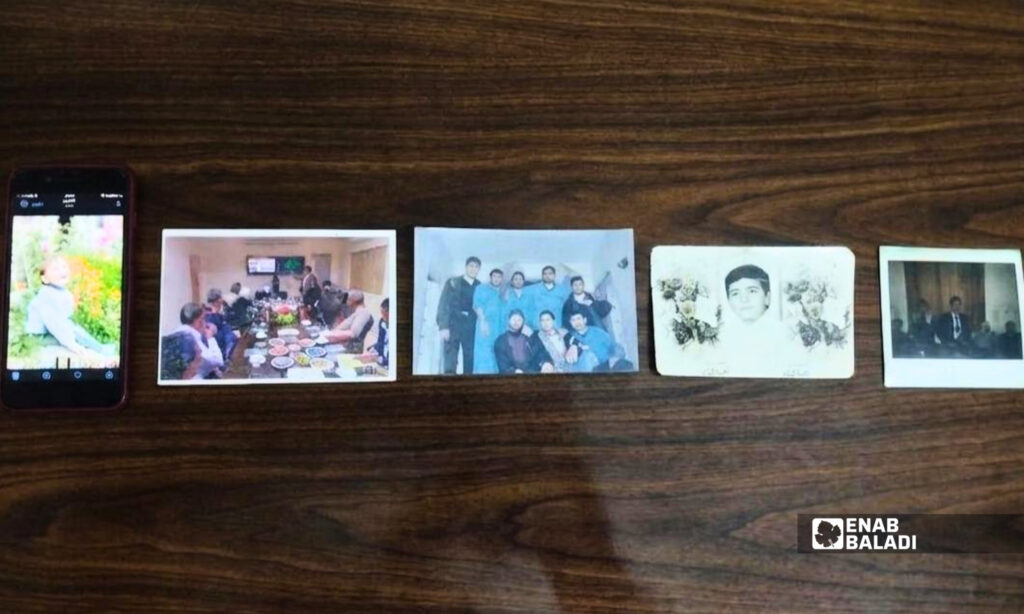
After residents returned to Darayya, Hajar found a few old photographs with relatives on her father’s side showing her with other children in the family. She made copies and saved them on her phone, but she never recovered her childhood or wedding photographs.
The loss of photographs was not confined to people’s homes.
Mohammad Khair Dabbas said the equipment from al-Diyaa Photography and Laboratories and the film archive he had accumulated over years of work were lost during the years of war, displacement, and siege.
He summed up what remains by saying, “Nothing remains except what stayed in our memories.”
Dabbas has not yet returned to Darayya or reopened his shop there. As a result, owners of old photographs have not approached him looking for copies from his archive. He expects people may ask about them if he returns one day and reopens the shop, although he no longer has anything to give them.
Today, Israa photographs her children with her phone. She no longer needs to finish a roll of film, go to a studio, or wait two days to find out how the picture turned out, but she does not place digital and printed photographs on the same level.
For her, a printed photograph carries a “real and tangible” memory, even though she stores pictures of her children electronically.
Hala Habib, meanwhile, may take 20 or more photographs at a single occasion, then delete similar or unclear images and keep those connected to a moment, place, or people who matter to her.
Hala stores her photographs on her phone or a memory card and does not print them. She uses digital tools to adjust lighting and details, yet believes paper photographs carry greater sentimental value and may be safer if properly preserved.
Hala has previously lost digital photographs she was unable to recover. Still, she does not believe phones have eliminated the value of photographs, but rather changed how people capture and preserve moments.
Fatoun Qudra Yahya takes dozens of photographs during trips, outings, visits, and family occasions, then edits some using phone tools or artificial intelligence applications and stores them in the phone’s memory.
Fatoun also lost photographs when a previous phone stopped working and she could not recover them. Nevertheless, she still prefers browsing photographs on a screen and has created a folder for her son containing pictures from the time of his birth, which she plans to show him when he grows older.
Iyad Hannoun said the spread of smartphones has reduced the studio’s business in keepsake photography by about 80%. Much of the remaining demand is now for official photographs for passports, identity cards, civil registry documents, and driver’s licenses, along with photographs for schools, universities, and certificates.
Iyad sums up the transformation by saying, “The phone is the studio.” A phone allows users to take a photograph, edit it, and change its background, tasks that once required a studio, equipment, and specialized software.
Iyad expects technological advances to further reduce the work of photography studios and push some studios toward other services, such as stationery and document copying.
Mohammad Khair Dabbas experienced the same transformation. After being displaced to the countryside of al-Kiswah (Rural Damascus), he worked with a studio there, moving from film, chemical development, and manual retouching to computers and Photoshop.
He believes new technologies have simplified many stages of the work and expanded photographers’ capabilities, but the number of customers and the types of services requested have changed with the spread of smartphones.
Dabbas is currently not working while undergoing physical therapy following back surgery, but he wants to return to the profession and to Darayya.
Of his many years in photography, the decade before the war remains especially vivid in his memory, filled with occasions, faces, and photographs, after the archive that preserved them was lost.
When Hajar recently visited Darayya, meanwhile, her phone remained in her hand for most of the time.
She photographed her surroundings and took new pictures with her sisters after years of wishing she had a photograph bringing them together as a family.
Hajar opens these pictures every day and looks at them. The albums left behind in the drawer never returned, and she never recovered her childhood or wedding photographs, but this time she returned from Darayya carrying new family pictures.
if you think the article contain wrong information or you have additional details Send Correction


 A
A
A
A
A
A





 More Society