


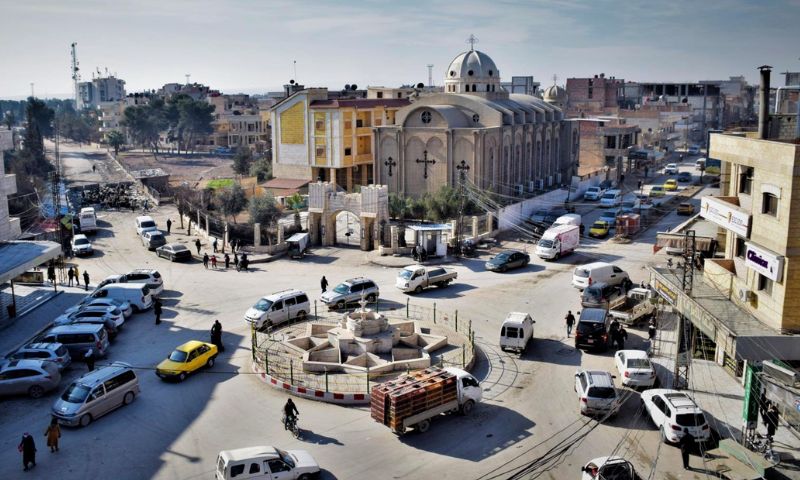
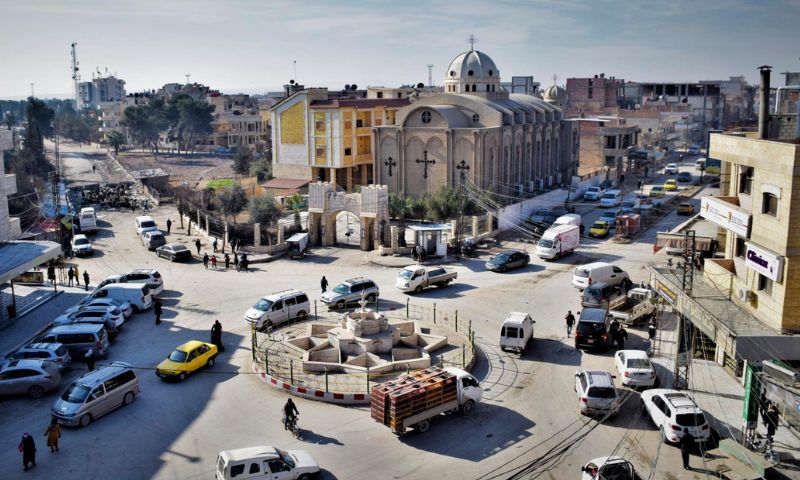
 Hasakah city, April 27, 2026 (Ronahi)
Hasakah city, April 27, 2026 (Ronahi)
As al-Hasakah governorate (northeastern Syria) undergoes political, security, and administrative changes, calls are growing to strengthen civil peace among its communities and move away from polarization and rhetoric that could revive tensions among residents along ethnic, religious, or political lines.
The calls coincide with the International Day of Peace, observed annually on September 21, in a governorate that has experienced successive shifts in territorial control and administration in recent years, affecting residents’ lives and social relations.
In early 2026, al-Hasakah saw changes on the ground as the Syrian army took control of southern and eastern rural areas and parts of the western countryside, while the Syrian Democratic Forces (SDF) withdrew to the main cities, including al-Hasakah and Qamishli. This created a fragmented administrative and security landscape in the governorate.
On January 29, the Syrian government and the SDF agreed to begin integrating military, security, and service institutions into state structures, and the implementation of the agreement gradually began in February. The process continued over the following months, while several administrative, security, and service-related issues remained unresolved.
On August 25, Mazloum Abdi announced the dissolution of the SDF, the Autonomous Administration, and their affiliated formations. Two days later, on August 27, President Ahmed al-Sharaa issued a decree appointing Abdi as an adviser at the Presidency of the Republic.
The move prompted mixed reactions across the governorate, with local voices emphasizing the need for the political transition to translate into improved security, stability, services, and residents’ daily lives.
The effects of the recent developments have not been limited to military and administrative affairs. In recent months, sharp rhetoric between Arabs and Kurds has emerged on social media alongside the redrawing of areas of control in northeastern Syria.
Hate speech escalated against the backdrop of the developments on the ground, while everyday relations among members of different communities continued despite the sometimes intense political and media rhetoric.
al-Hasakah’s diversity extends beyond Arabs and Kurds. The governorate is also home to Syriac-Assyrians, Armenians, Chechens, Circassians, Turkmen, and other communities, while questions of cultural and linguistic rights have prompted discussions about relations among these groups and guarantees for their rights during the new phase.
Mohammad al-Ali, a teacher from al-Hasakah city, told Enab Baladi that “peace for us is not merely the absence of weapons, but for every person in al-Hasakah to feel that they are living among their own people, and that differences in ethnicity, religion, or political opinion do not put them at odds with others.”
Al-Ali believes the current period requires “rhetoric that reassures people instead of frightening them,” arguing that neighborhood ties, family relationships, and shared interests among the governorate’s residents outweigh political disagreements.
From Qamishli (northeastern Syria), Sara Mahmoud, an activist with a civil society association, told Enab Baladi that social media can serve as a tool for calming tensions, but can also deepen polarization.
She added that “disagreement with a political position or a particular party should not turn into a conflict with an entire community,” calling on people to verify news before sharing it and to avoid circulating videos and posts containing generalizations or incitement based on ethnicity or sect.
Ahmed al-Hassan, a government employee from northern rural al-Hasakah, told Enab Baladi that “people from the countryside and the cities have lived together for many years, and what people need today is security, jobs, and services, not a return to accusations of treason.”
Al-Hassan believes overcoming the effects of the previous years will take time, but begins, in his view, with “respecting others and not viewing them as opponents merely because they belong to a different ethnicity or sect.”
He added that restoring institutions and services could contribute to rebuilding trust between residents and state institutions, particularly because the continued presence of multiple administrative authorities during the transitional period has affected services and residents’ relationship with institutions.
Layla Ibrahim, a homemaker from northern rural al-Hasakah, told Enab Baladi that peace “begins at home, at school, and in the street, and with the way people treat one another,” noting that children and young people are most in need of rhetoric free from hatred and polarization.
She added that “al-Hasakah is not one color, and that is not a problem, but part of the nature of Syria as a whole,” calling for public occasions to serve as opportunities to remind people of the relationships they share rather than reviving political and military disagreements.
These calls come during a transitional period in which, according to local voices, political agreements must be translated into realities that residents can feel in their daily lives. After the announcement of the SDF’s dissolution, activists who spoke to Enab Baladi called for moving beyond political and security disputes toward stability and the restoration of state institutions, while stressing that security and reassurance should extend to Arabs, Kurds, and all other residents of the governorate without discrimination or exclusion.
As the restructuring of institutions and the administration in al-Hasakah continues, maintaining social relations among its residents remains, according to those who spoke to Enab Baladi, one of the challenges facing the coming period in a governorate where ethnic, religious, and social diversity is a defining characteristic.
On the International Day of Peace, calls to reduce tensions and move away from hate speech and polarization are closely tied to residents’ daily lives, from schools, workplaces, and markets to neighborhood and family relationships. The aim is to prevent political disagreements from becoming conflicts among communities and to ensure that the changes taking place in the governorate do not reproduce divisions.
The International Day of Peace is observed annually on September 21. The United Nations General Assembly established the occasion in 1981, before designating it in 2001 as a day dedicated to strengthening the ideals of nonviolence and ceasefires.
This year’s theme is “Invest in Peace: For Everyone, Everywhere, Every Day,” calling for peace to become a daily practice beginning within local communities and for greater dialogue, cooperation, and efforts to overcome divisions.
The United Nations emphasizes that peace is not limited to the absence of war, but is also connected to security, dignity, and cooperation in everyday life.
if you think the article contain wrong information or you have additional details Send Correction


 A
A
A
A
A
A



 More Society