



 Former Syrian officer Musab Abu Rukba, August 14, 2026. (Daraa 24)
Former Syrian officer Musab Abu Rukba, August 14, 2026. (Daraa 24)
Reuters reported on Friday, August 14, that former Syrian security officer Musab Abu Rukba left Austria and returned to Syria despite being convicted and sentenced to eight years in prison over abuses against detainees while serving in Raqqa. The case was considered one of the most prominent European trials of former officials from Bashar al-Assad’s regime.
A Vienna court convicted Abu Rukba in July on charges including serious bodily harm, aggravated coercion and sexual assault against opponents and detainees in Raqqa between 2011 and 2013, sentencing him to eight years in prison. Abu Rukba pleaded not guilty.
According to four sources and messages reviewed by Reuters, Abu Rukba left Austria while appealing the ruling and arrived in early August in his hometown of Nawa, Daraa governorate, where his family held a reception celebrating his return.
His return raises questions over how he was able to leave Austrian territory despite the court ruling against him, and what measures authorities took to ensure he remained available to the judiciary during the appeals process, particularly because the judgment had not become final when he departed.
The case also brings renewed attention to efforts by European courts to hold former officials accountable for abuses committed in Syria, as well as the limits of those courts’ ability to enforce their judgments when a convicted person or defendant leaves the country where they were tried.
Abu Rukba’s case is part of a series of trials based on the principle of universal jurisdiction, which allows serious crimes committed outside the country hearing the case to be prosecuted.
A court in the Austrian capital, Vienna, issued its ruling on July 6 against two former Syrian security officers following a trial based on survivor testimony and documentary evidence concerning abuses committed in Raqqa between 2011 and 2013.
According to Reuters, the court sentenced former Syrian intelligence Brigadier General Khaled al-Halabi and former criminal police Lieutenant Colonel Musab Abu Rukba to eight years in prison each after convicting them on charges including torture, serious bodily harm, aggravated coercion and sexual assault, in connection with abuses against detainees and opponents of the former Syrian regime in Raqqa.
The ruling followed a final hearing at the conclusion of a trial that began in early June, during which the court heard testimony from more than 12 victims, in addition to arguments from the prosecution and defense.
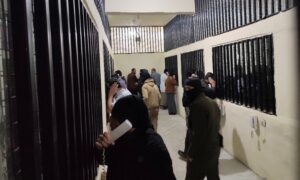
According to evidence presented before the court, the abuses attributed to the defendants took place inside a State Security facility in Raqqa governorate between the outbreak of protests in Syria in 2011 and 2013, when government forces lost control of the city to armed opposition factions.
Survivor testimonies said torture methods included severe beatings, electric shocks and pouring hot and cold water over detainees, as well as confinement in overcrowded cells and inhumane conditions, along with cases of humiliation and psychological and physical torture.
While reading the verdict, the judge said the defendants were aware of the mistreatment inside the detention facility, noting that victims were beaten immediately upon arriving at the security headquarters. The court considered this evidence of direct or indirect responsibility for the abuses.
Austrian prosecutors accused the two former officers of involvement in systematic torture, issuing orders or turning a blind eye to practices inside detention facilities, as well as sexual assault in some cases.
Prosecutors also argued that the abuses were not isolated incidents but part of a recurring pattern of torture inside detention facilities, where methods described as “routine” were used against detainees associated with the protest movement.
The two defendants, however, denied all charges against them, saying they were unaware of torture taking place inside the security facilities and had not directly participated in such practices.
if you think the article contain wrong information or you have additional details Send Correction


 A
A
A
A
A
A







 More Politics