Enab Baladi, Shaaban Chamieh
Security incidents targeting Syria’s energy infrastructure have taken a new strategic turn, moving beyond technical failures or isolated attacks toward “systematic” targeting of the supply lines feeding power plants.
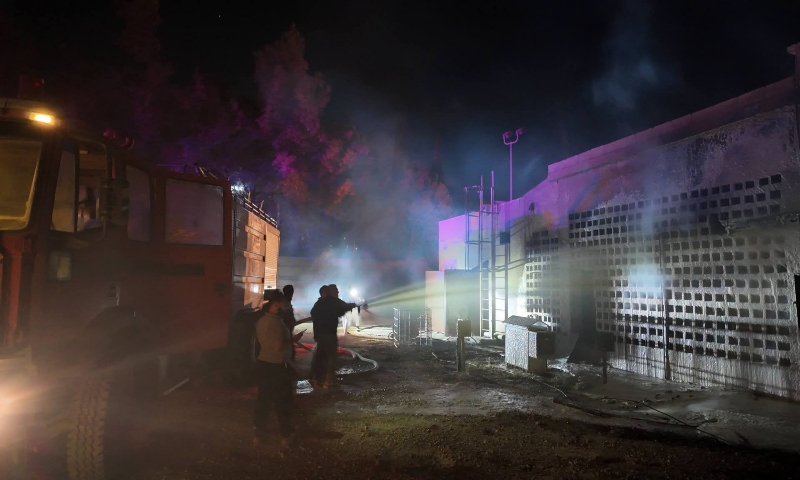
Within a few days, a powerful explosion struck the natural gas pipeline supplying the Tishreen Thermal Power Plant in Eastern Ghouta (Damascus countryside, southwestern Syria). The resulting fire temporarily put three major power plants out of service simultaneously: Tishreen, Deir Ali, and al-Nasiriya. Technical teams later managed to restart two of them.
The incident was part of a broader security context. It coincided with another attack targeting a sectional isolation valve on the gas transmission pipeline connecting al-Shoula and Deir Ezzor (eastern Syria). This temporarily halted the flow of gas from the al-Jabsa Gas Plant in al-Hasakah (northeastern Syria), before the Syrian Petroleum Company announced that its crews had completed repairs and restored the pipeline to service.
The escalation extended beyond pipelines to the people operating the sector. An armed attack targeted a bus carrying engineers and workers employed by a private electricity company near the Masyaf bridge in Homs governorate (central Syria), killing seven people and injuring four others.
According to analysts, this series of simultaneous acts of sabotage carries sensitive political and strategic implications beyond its immediate economic impact, including longer periods of electricity and water rationing.
Experts interviewed by Enab Baladi believe that targeting these vital facilities at this time aims to undermine development and recovery projects and send coded political messages to regional and international powers active in Syria. The message, they said, is that “energy infrastructure remains at the mercy of military rivalries, and attempts to rehabilitate this sector will always encounter an undeclared war of attrition.”
The parties benefiting from this escalation vary according to the nature and location of the attacks. Some regional powers see targeting these facilities as a means of undermining the economic capabilities of the Syrian government and its allies, while Islamic State cells exploit the security vacuum to demonstrate their presence and disrupt the situation.
Beyond Security Gaps
Wael Alwan, a researcher at Jusoor for Studies, told Enab Baladi that the simultaneous explosions recently witnessed in Syria were more than temporary security gaps or isolated operations carried out by “domestic troublemakers,” as he described them. Instead, he said, they reflected broader pressure and efforts by external actors to influence developments directly.
Alwan said Damascus’s denial of remarks reported by Reuters about a meeting between the Syrian government and Hezbollah, coinciding with explosions targeting infrastructure and energy and gas lines in sensitive areas, demonstrated that the issue went beyond exploiting security gaps to attack fixed military positions. He described it as systematic targeting of the Syrian economy.
Using Islamic State Cells Under Intelligence Cover
Discussing the possible perpetrators, Alwan said that although Islamic State cells routinely plan operations, whether working directly or indirectly for other actors, the current targets appeared to have been selected to create greater chaos and place more pressure on the Syrian government.
He added that the repeated explosions in Deir Ezzor and then Damascus countryside suggested more than security breaches. In his assessment, they indicated that a high-level actor was exploiting the disorder.
Alwan said targeting energy facilities required less effort to find people to carry out the attacks than it required intelligence, logistical coordination, and substantial funding.
Regarding the Islamic State’s role and recent activity attributed to it in the Deir Ezzor desert and parts of southern Syria, he stressed that the group’s radicalism, extremism, and propensity for violence should not obscure what he described as external powers’ infiltration of its policies and direction. Those powers, he said, use the group in one way or another, allowing operations to be coordinated within short intervals.
Regional and International Involvement
In his assessment of the rapidly developing situation, Alwan concluded that the simultaneous explosions carried regional and international messages, identifying Israel as a leading possibility behind them. He argued that Israel sought to provoke political and security escalation serving the interests of Prime Minister Benjamin Netanyahu and his government ahead of the upcoming elections.
According to Alwan, this escalation aims to pressure the Syrian government, which refuses to make an “unconditional concession” and instead insists on reaching a reasonable and acceptable understanding that guarantees security and stability across the region.
Alwan also did not rule out another possibility involving Iran and Hezbollah. He said both needed to create pockets of disorder at this time to ease the mounting pressure on them.
A Tool to Undermine Stability and Economic Recovery
As political and security circles await the results of official investigations to determine whether the recent incidents were random acts or coordinated attacks, political economy researcher Ayman al-Desouki believes that several parties share an interest in undermining the Syrian government’s legitimacy.
They do so, he said, by targeting internal stability, obstructing economic recovery, and hindering the country’s reintegration into the international system, while exploiting security and administrative gaps that allow them to operate on the ground.
Al-Desouki told Enab Baladi that the shift from targeting military and security headquarters to attacking vital facilities represented a change in methods rather than strategy. The primary objective, he said, remained to portray the government as an irresponsible actor domestically and internationally.
According to al-Desouki, targeting power plants and energy supply lines seeks to drain government resources through repair work and raise living costs to stir public anger, exploiting discontent over fuel price increases.
It also undermines plans to use Syria’s geographical position as a connecting hub in regional energy networks, depriving the state of revenue essential to recovery, he said.
The Need for a New Defensive Approach
In his assessment of the security situation, al-Desouki said he did not believe the recent attacks indicated clear structural breaches in the system protecting vital facilities. Rather, he saw them as reflecting an urgent need to reconsider the approach to national security.
That would involve strengthening integration between intelligence agencies, security services, and the military, while involving local communities in containing these threats.
Regarding the possible perpetrators, al-Desouki said the Islamic State’s recent significant losses did not eliminate its ability to carry out “lone-wolf” attacks, which do not require complex logistical or organizational capabilities.
He also argued that an Iranian role through affiliated cells could not be ruled out, given Iran’s interest in obstructing alternatives to the Strait of Hormuz and its desire to ease pressure on its allies in Iraq and Lebanon by drawing attention to Syria.
Available Options
Concluding his assessment, al-Desouki outlined several options available to the Syrian authorities to address this challenge.
These begin with putting local security into practice by involving communities in protecting vital facilities. They also include improving the security system’s effectiveness through stronger coordination and the development of resources and capabilities, as well as strengthening channels for regional security cooperation.
With several possibilities remaining, al-Desouki stressed the difficulty of reaching a firm conclusion about the next phase. Do these attacks mark the beginning of prolonged attrition, or are they temporary security repercussions? In his view, a definitive answer will depend on the findings of the ongoing investigations.


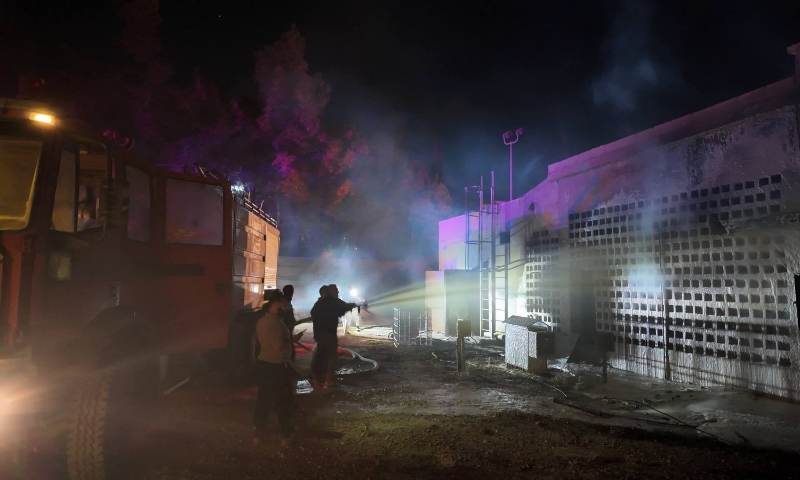
 Civil Defense teams from 11 centers affiliated with the Ministry of Emergency and Disaster Management extinguish a fire caused by a gas pipeline explosion at the Tishreen Thermal Power Plant in eastern Damascus countryside, September 30, 2026 (Syrian Civil Defense/Facebook).


 A
A
A
A
A
A



 More Politics