

Amir Huquq | Marina Marhej | Christina al-Shammas | Mohammad Deeb Bazt
The recent decision to amend electricity tariffs has sparked wide controversy among citizens and production sectors, from factories to small workshops, especially amid the harsh living conditions Syrians are facing.
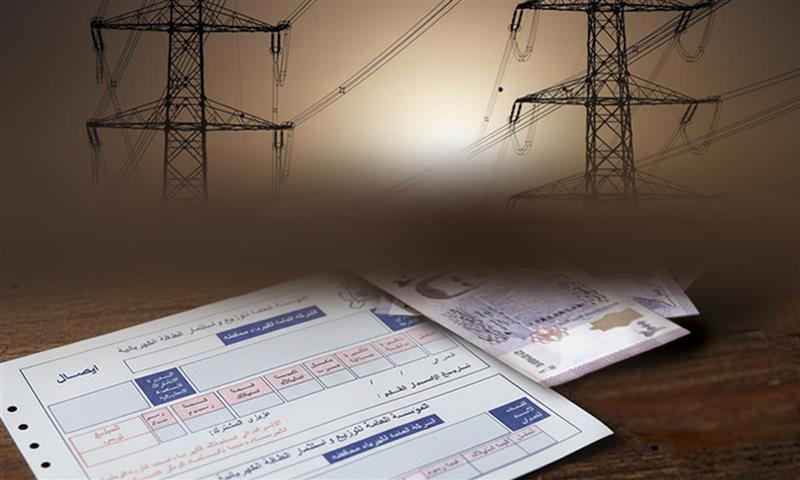
On 30 October, Syria’s Ministry of Energy published the details of a decision to raise electricity prices across four brackets, saying the changes “take into account social categories and different consumption levels.” The hike is part of a government plan that aims to reform the electricity sector and improve services at a time when the sector is reportedly incurring losses estimated at one billion US dollars annually, amid funding and infrastructure challenges in most areas, according to the ministry.
Following the price increase, electricity has become the main topic of conversation for Syrians at all levels, while the government’s plan to address public concerns remains unclear.
Enab Baladi conducted a poll to gauge Syrians’ views on the new electricity tariff and to what extent it is compatible with income levels in Syria.
Of 2,550 respondents, 83% said the new tariff is not compatible with their income, while 17% considered it appropriate.
Enab Baladi also canvassed views on the street and spoke with specialists, associations, and relevant bodies to provide a broader reading of the expected impact of the decision to raise electricity prices on people’s lives, prices, and costs across productive sectors.
How low income households are coping with the “nightmare” of the electricity tariff brackets
With the continued erosion of purchasing power in Syria and the difficult living conditions many people face, news of the revised electricity tariff has stirred a wave of debate and anger, as Syrians say it will directly affect their daily lives.
While some see the higher prices as necessary to address deficits in the electricity sector and develop it, others question how individuals will actually be able to pay their bills.
For Samer al-Ali, a government employee, the anticipated electricity bill has become a “nightmare”, forcing him to weigh what must be paid against what his family can give up, just to pay the bill on time, while his monthly salary fails to cover even his household’s most basic needs.
For him, the issue is no longer simply about having power at home, it has turned into a “daily battle for survival”, as he put it. Every improvement in electricity supply now means another jump in costs, unless his income changes and the government follows through on its promises to raise monthly wages.
Amal al-Rifai, a housewife from the al-Midan neighborhood of Damascus (the Syrian capital), spends most of her time thinking about how to rationalize electricity use at home, fearing her monthly bill will exceed the threshold of 300 kilowatt-hours, which she has set for herself as a “red line that must not be crossed.”
Amal is no different from many other citizens who now carefully calculate the hours they run electrical appliances at home. They hesitate to turn on the water heater just to take a shower, plan laundry cycles for specific days of the week, and turn household management into a continuous monitoring operation of appliances, fearing that any small mistake will push the meter up to a level the family cannot afford.
“People no longer worry about power cuts but about consuming electricity itself, after the bill became a major item that threatens the balance of the household budget every month,” she told Enab Baladi.
According to figures the ministry posted on Facebook, electricity tariffs are now divided as follows:
-
First bracket: 600 Syrian pounds per kilowatt-hour, for consumption up to 300 kilowatt-hours over a two-month billing cycle, with a stated government subsidy covering 60% of the actual cost.
-
Second bracket: 1,400 Syrian pounds per kilowatt-hour, covering middle and high income households and small projects that consume more than 300 kilowatt-hours over a two-month cycle.
-
Third bracket: 1,700 Syrian pounds per kilowatt-hour, applied to users exempt from scheduled power cuts, such as government institutions, companies, and factories that require round-the-clock electricity.
-
Fourth bracket: 1,800 Syrian pounds per kilowatt-hour, applied to large factories and high electricity consumers, such as smelting plants and similar heavy industry facilities.

Replacing the damaged transformer at al-Husseiniyah substation no. 3 (near Damascus) with a new 400 kilovolt transformer, 3 November 2025 (Ministry of Energy/Telegram)


Replacing the damaged transformer at al-Husseiniyah transformer station no. 3 (near Damascus) with a new 400-kilovolt transformer, 3 November 2025 (Ministry of Energy/Telegram)
Syrians search for alternatives
The latest increase in electricity prices, coupled with a widening gap between monthly income and living costs, has pushed people to recalculate their power consumption and brace for electricity bills that will arrive at the end of each billing cycle as yet another burden on households. Many have begun looking for sustainable alternatives that can provide energy without relying entirely on the public grid.
Solar power systems top these alternatives, especially after being used initially as a temporary solution to bridge hours of scheduled cuts. Once installed, they can generate electricity at an almost zero running cost, making them a long term investment that provides energy independence and effectively puts a permanent cap on electricity bills.
Solar energy as a sustainable alternative
According to the alternative energy company “xnetron”, solar power systems can cover all of a household’s electricity needs if properly designed and installed.
A typical family with basic appliances such as a refrigerator, lighting, television, fans, and a washing machine can install a system made up of four to six solar panels, a lithium battery, and an inverter with a capacity of 4 to 6 kilowatts. This allows all electrical loads to run during the day without relying on the public grid, while at night the system switches to battery power to cover night time consumption.
The company’s sales manager told Enab Baladi that with good energy rationing at night, households can almost completely dispense with the public grid, cutting their electricity bill by more than 90 percent. In extreme cases, she said, batteries can be charged from the grid for only one or two hours.
She noted that heavy loads such as air conditioners and washing machines are better operated during daylight hours, unless the system is expanded and its capacity increased, in which case the household could fully disconnect from the grid.
On the possibility of benefitting from solar energy in winter, the sales manager said solar panels actually perform better in winter than in summer, as they rely on sunlight, not heat, to generate power.
She revealed that a new product will soon be launched on the market, an immersion heater rod for water heating that runs on solar power and consumes only 500 watts, compared to around 3,500 watts for conventional rods. She said this step would help ease the load on household solar systems.
She also recommended replacing traditional lighting with energy saving bulbs, and using inverter type appliances such as air conditioners, refrigerators, and washing machines, as they consume less power and are better suited to work with solar systems.
“Amperes”, a backup solution for electricity
Issam Hallak, a resident of the al-Sayyid Ali neighborhood in Aleppo (northern Syria), told Enab Baladi that the decision is not necessarily negative, explaining that when compared with the cost of neighborhood diesel generator subscriptions, known locally as “amperes”, the difference in cost is clear. The average subscription for one “ampere” is around 280,000 Syrian pounds per month (about 24 US dollars) and only allows for lighting and a television for limited hours, whereas the public grid, even under the second tariff bracket, can run most household appliances within reasonable limits and at a relatively lower cost.
By contrast, Ibrahim Raslan, who lives in the al-Zebdiya neighborhood in Aleppo (northern Syria), believes the decision will double the burden on low income families. He considers “amperes” a necessity that people can no longer do without, while higher public electricity prices will make combining the two systems a heavy financial load, “especially given low monthly incomes and the instability of regular grid supply hours.”
Ahmad Darbis, who operates a diesel generator providing “amperes” in the al-Jamiliya neighborhood in Aleppo (northern Syria), said residents remain divided over whether to keep their subscriptions after the decision to raise the price of household electricity. Some, he noted, have kept their subscriptions out of fear of high public electricity bills, while others have cancelled them as grid supply has improved to some extent.
He told Enab Baladi that public electricity “has indeed improved”, but is still not available 24 hours a day, prompting some families to maintain a single “ampere” subscription as a backup solution, despite its high cost compared with their monthly income.
Ahmad added that a portion of residents have turned to installing solar power systems to secure their basic needs, arguing that people now face “several options, all of them expensive”, and that for some households, the “ampere” remains a necessity, even if it is no longer the cheapest option.
Proposals to ease the burden
He also called for direct support to poor families, the launch of awareness and consumption rationalization programs to help reduce bills, and using revenues from higher prices to develop infrastructure and improve the stability of electricity supply.
For his part, economist Mohammed al-Hallaq stressed the need for partnership between the government and the private sector in making economic decisions. “You cannot tackle a crisis of this magnitude without involving chambers of commerce and industry and popular committees in the discussions. Top down solutions only widen the trust gap between citizens and the government,” he said.
Dr Mohammed believes that adjusting electricity prices is an unavoidable economic necessity to ensure the sector’s continuity, but that it comes with significant challenges related to households’ ability to bear rising financial burdens.
He argued that it is essential for the government to adopt effective strategies that safeguard the sustainability of electricity services without placing extra burdens on citizens, something that requires a careful balance between economic and social objectives.
Economist al-Hallaq said Syria now needs a realistic vision that preserves social stability. “We cannot emerge from any crisis unless we face it with dialogue and transparency, not by glossing it over,” he said.
The reality of electricity in Syria remains complex, where the need for power intersects with households’ purchasing power, especially among low income families. Citizens find themselves caught in a difficult equation between cost and necessity, forced to weigh temporary fixes against long term investments to secure their daily electricity needs.