


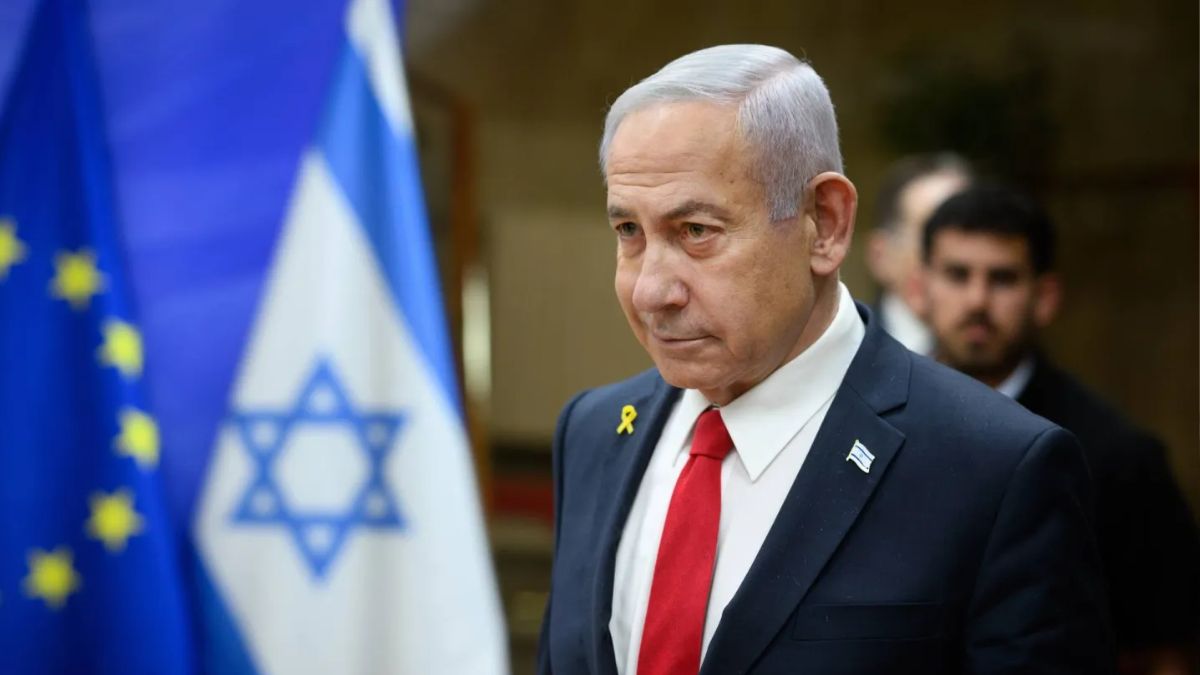
 Israeli Prime Minister Benjamin Netanyahu, 17 August 2025 (German News Agency)
Israeli Prime Minister Benjamin Netanyahu, 17 August 2025 (German News Agency)
Israel has announced that negotiations with Syria have reached a “dead end” after rejecting Syrian demands for a withdrawal from all the positions it has occupied since December 2024.
Following the fall of the Syrian regime, Israel advanced into numerous areas inside Syria, justifying this by what it says is the need to prevent “another 7 October”, and considering that the 1974 disengagement agreement has collapsed while Damascus has remained committed to it.
The Israeli Broadcasting Corporation (KAN) reported on Monday, 17 November, citing unnamed sources without specifying their rank, that Israel rejected “Syrian President Ahmad al-Sharaa’s request for a withdrawal from all the positions the Israeli army has occupied in Syria after the fall of former president Bashar al-Assad’s regime”.
According to the same sources, “Israel will withdraw from some of these positions only in return for a comprehensive peace agreement with Syria”, and not a mere “security agreement”, something that “is not on the horizon at present”.
On 26 September, the Reuters news agency reported that efforts to reach a security agreement between Syria and Israel “faced a last-minute obstacle” because of Israel’s demand to be allowed to open a “humanitarian corridor” to Suwayda province (in southern Syria).
The agency quoted four sources familiar with the talks as saying that the agreement stumbled over Israel’s renewed request for a humanitarian corridor from Israel to Suwayda.
Israeli Prime Minister Benjamin Netanyahu said on 13 November that judging the new Syrian president, Ahmad al-Sharaa, cannot be “through pictures or statements, but through what he actually does on the ground”, in reference to al-Sharaa’s recent visit to Washington and his meetings with American officials and United States President Donald Trump.
In an interview with Australian journalist Erin Molan, Netanyahu expressed his desire “to reach an arrangement that would ensure demilitarization in southwestern Syria and provide lasting protection for the Druze minority there”.
Syrian President Ahmad al-Sharaa ruled out, in an interview with Fox News on 11 November, Syria joining the “Abraham Accords”, explaining that “the situation in Syria is different from the states that signed the agreement”.
Al-Sharaa said, “We have borders with Israel, which has occupied the Golan since 1967, and we are not about to enter into direct negotiations at the moment, and perhaps the United States under Trump’s leadership could play a role in this file.”
In an interview with the Washington Post, the Syrian president went further in talking about the agreement with Israel, criticizing its expansionist policy and calling for the demilitarization of southern Syria.
The Syrian president renewed his assertion that Syria is engaged in negotiations, saying, “We are engaged in direct negotiations with Israel, and we have come a long way toward reaching an agreement, but to reach a final agreement, Israel must withdraw to the lines before 8 December 2024.”
He again noted that the United States supports these negotiations, alongside many international parties “that support our position in this regard, and today we have found that Trump also supports our position, and will push as quickly as possible to solve this issue”.
US President Donald Trump indicated, in remarks to reporters following his meeting with al-Sharaa, that the United States is working with Israel on relations with Syria, saying, “We are also working with Israel on understanding with Syria and understanding with everyone.”
The United States has played, through its envoy Thomas Barrack, the role of mediator between Syria and Israel over the past months, whether in the Paris rounds or in the recent meeting between Syrian Foreign Minister Asaad al-Shibani and Israeli Strategic Affairs Minister Ron Dermer in London.
The Syrian academic and researcher Ahmed al-Kinani believes that what is hindering the progress of the agreement is the raising of the ceiling of Israeli demands, starting from a demilitarized zone, then a ground incursion into the south and the establishment of military bases, and then the demands for a humanitarian corridor to Suwayda, adding that Israel set these conditions to pressure Damascus and push it toward rejection.
This was reflected, according to what al-Kinani previously told Enab Baladi, in a Syrian insistence on the main demands, foremost among them imposing full Syrian presence in the south and a return to the situation before 8 December 2024, adding that the international community has increasingly pushed toward recognizing Syrian sovereignty over the Golan and returning to the 1974 disengagement agreement.
In the event an agreement is reached, al-Kinani expects Israel to retain Mount Hermon, with direct talks between the two sides over the positions Israel has newly established in southern Syria.
If no agreement is reached, which the Syrian academic considers more likely, Israel wants to make southern Syria “Syria’s soft flank” by imposing its own agenda, whether in Suwayda or in the south more broadly.
Israel says it wants a demilitarized zone in southern Syria to prevent any future attacks on its territory similar to what happened on 7 October 2023, according to an interview given by the Israeli foreign minister to the Jerusalem Post newspaper on 28 December 2024.
if you think the article contain wrong information or you have additional details Send Correction


 A
A
A
A
A
A





 More Politics