


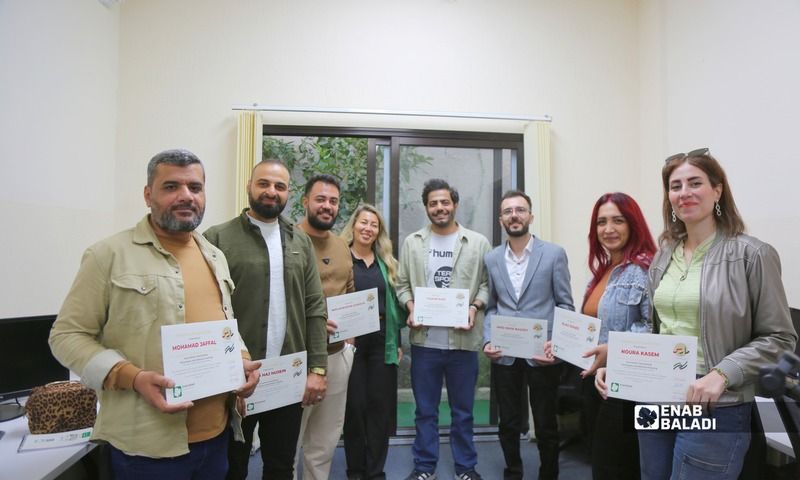
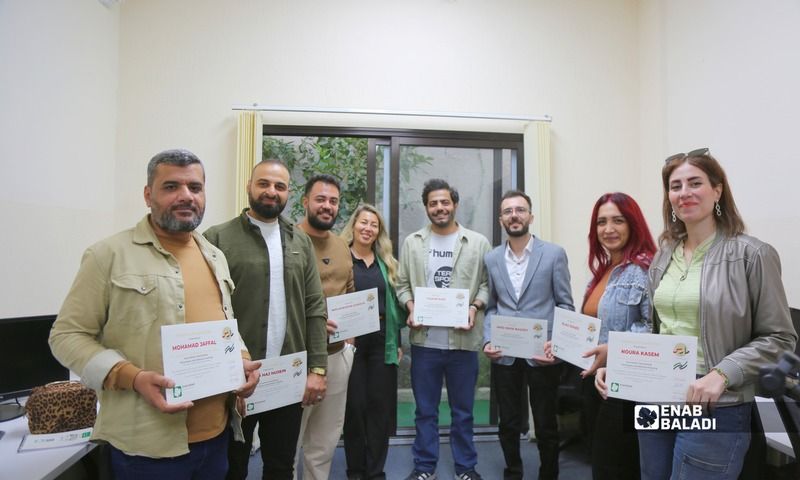
 The second group of Enab Baladi news editors working across Syrian governorates completes training in journalistic storytelling, October 28, 2026 (Enab Baladi).


 A
A
A
The second group of Enab Baladi news editors from five Syrian governorates completed a three-day storytelling training workshop led by Lilas Hatahet of International Media Support (IMS), from October 26 to 28.
The three-day training focused on developing editors’ skills in selecting journalistic angles and structuring stories through reviews of previously published work and practical exercises in storytelling techniques and formats used in reports and investigative journalism.
Editors from Aleppo (northern Syria), Hama (central Syria), Latakia (western Syria), al-Hasakah (northeastern Syria), and Damascus participated in the training. They discussed their experiences covering local issues and the challenges they face when producing reports and investigative stories.
Trainer Lilas Hatahet said the workshop focused on organizing journalistic thinking, identifying a clear angle for each story, and choosing the most appropriate format for presenting it, while preserving each editor’s individual style.
She explained that participants were working on important ideas, reports, and investigations, but some needed a clearer focus in their journalistic angles and story structure.
According to Hatahet, differences in experience levels among the editors posed one of the training’s challenges. This required presenting information in a simplified way without overlooking the details needed by more experienced participants.
She said the workshop featured discussions and differences of opinion that sometimes became heated, but described them as positive because they allowed participants to exchange experiences and reassess their working methods.
For news editor Nour Kassem, identifying the journalistic angle was the most valuable part of the training. She described the workshop as intensive and said it helped her think more precisely about which aspect of a subject she wanted to address when preparing a report or investigation.
Editor Odai al-Haj Hussin said he learned storytelling techniques that differed from those he was accustomed to using. He explained that participants practiced applying models drawn from international media organizations to local Syrian issues.
Editor Mowaffak al-Khouja said reviewing previously published stories prompted him to consider alternative ways of presenting them that would communicate their central ideas more clearly to readers.
He added that the training helped him recognize that some formats he had already been using had specific names and established techniques, while introducing him to other formats he had never used before.
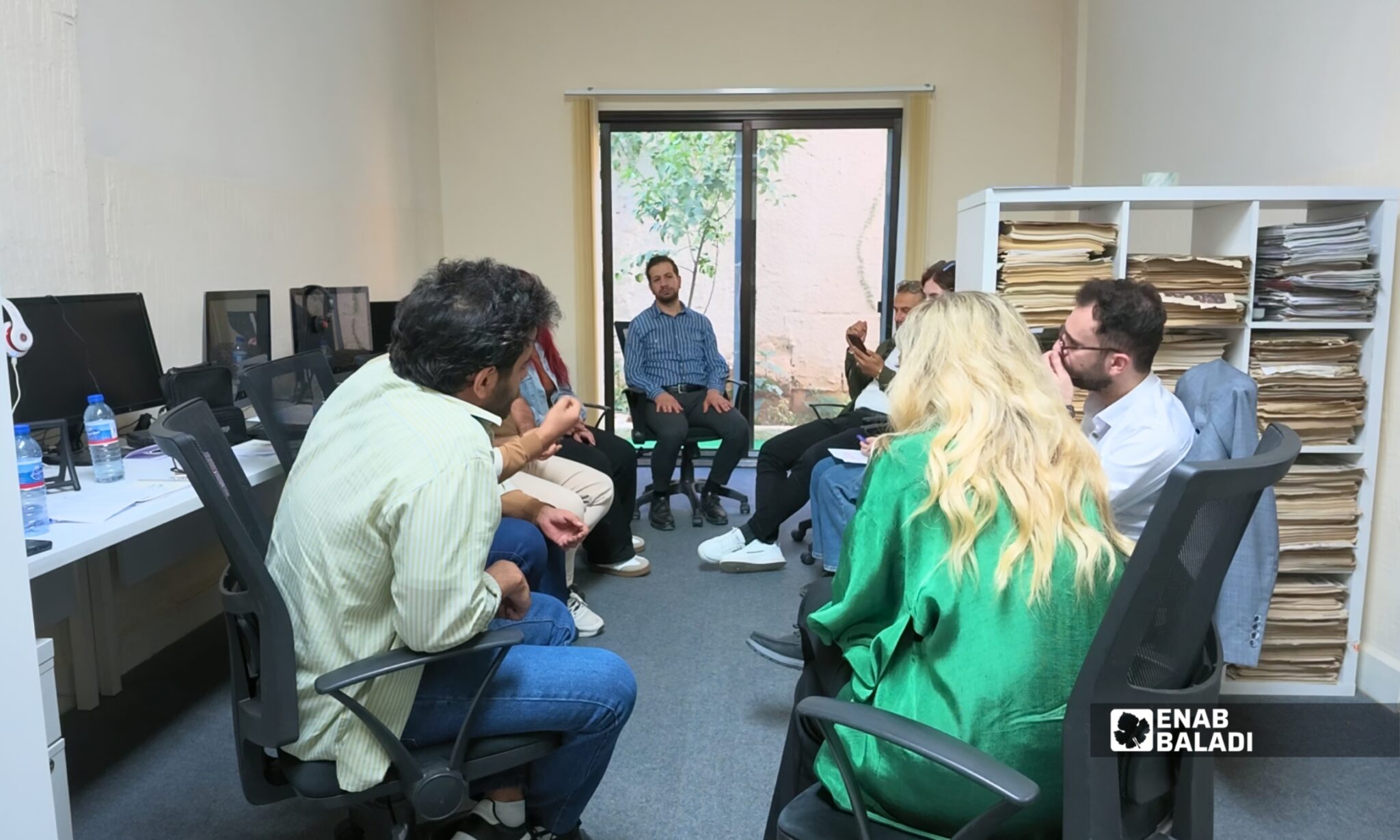
The second group of Enab Baladi news editors working across Syrian governorates completes training in journalistic storytelling, October 28, 2026 (Enab Baladi).
The workshop explored different formats for structuring journalistic stories, including the inverted pyramid and the “Wall Street Journal” approach, which begins with an individual case or personal story before expanding to a broader issue. It also covered scene-based storytelling using description and factual information.
Editor Mohammad Deeb Bazzet said the training addressed how to select a central character who could carry a story, identify its main angle, and determine which additional aspects should be covered without losing focus.
Scene-based storytelling was the approach that interested him most. He said some journalists avoid using description because they confuse it with overly elaborate or literary writing.
He explained that Hatahet presented examples demonstrating how scenes and descriptive details could be used to convey events while maintaining journalistic accuracy.
Among the examples examined during the workshop was a Danish investigative report whose visual presentation caught Mohammad Deeb’s attention. It encouraged him to consider using similar techniques when producing stories about Syrian issues.
The training also included group exercises on selecting journalistic angles and constructing stories, along with discussions about how well different formats suited the subject matter and available information.
Odai al-Haj Hussin said the collaborative exercises allowed participants to compare their approaches to the same topic and benefit from colleagues’ feedback during discussions and practical activities.
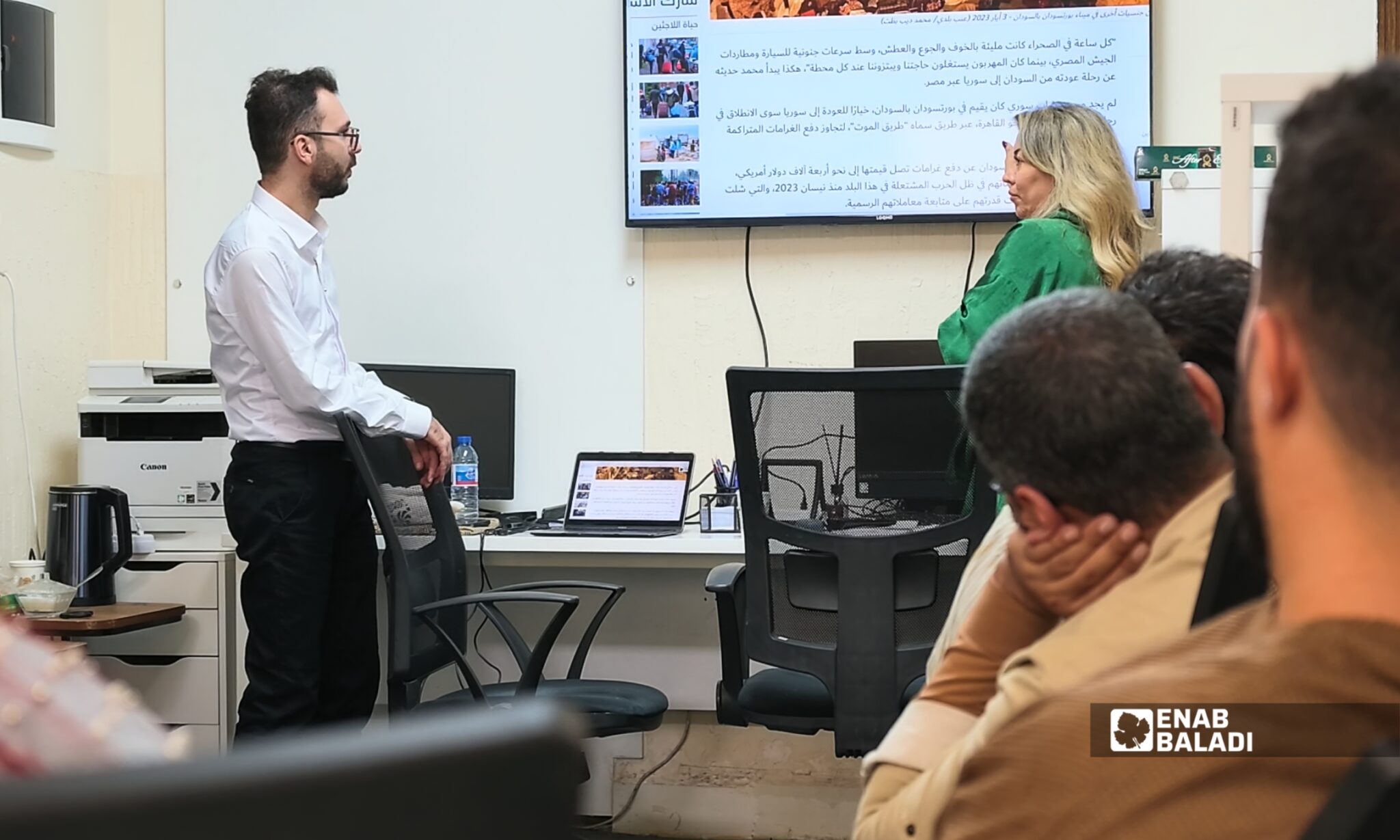
The second group of Enab Baladi news editors working across Syrian governorates completes training in journalistic storytelling, October 28, 2026 (Enab Baladi).
The training provided an opportunity for editors working in different Syrian governorates to meet in person after months during which some had communicated only online.
Nour Kassem, who joined Enab Baladi approximately five months ago, said the workshop was her first opportunity to meet several colleagues and members of the management team.
She explained that face-to-face communication differed from working online and said she was happy to get to know her colleagues. She also expressed regret that the training had ended without knowing when they would meet again.
Mohammad Deeb said meeting his colleagues in person allowed him to discover personal and professional aspects of their lives that had not been apparent during remote communication, changing some of his initial impressions.
Mowaffak al-Khouja said meeting colleagues after months of working together online helped strengthen their relationships on both personal and professional levels.
He expressed hope that the formats and techniques covered during the workshop would be applied in future reports and contribute to improving local news coverage.
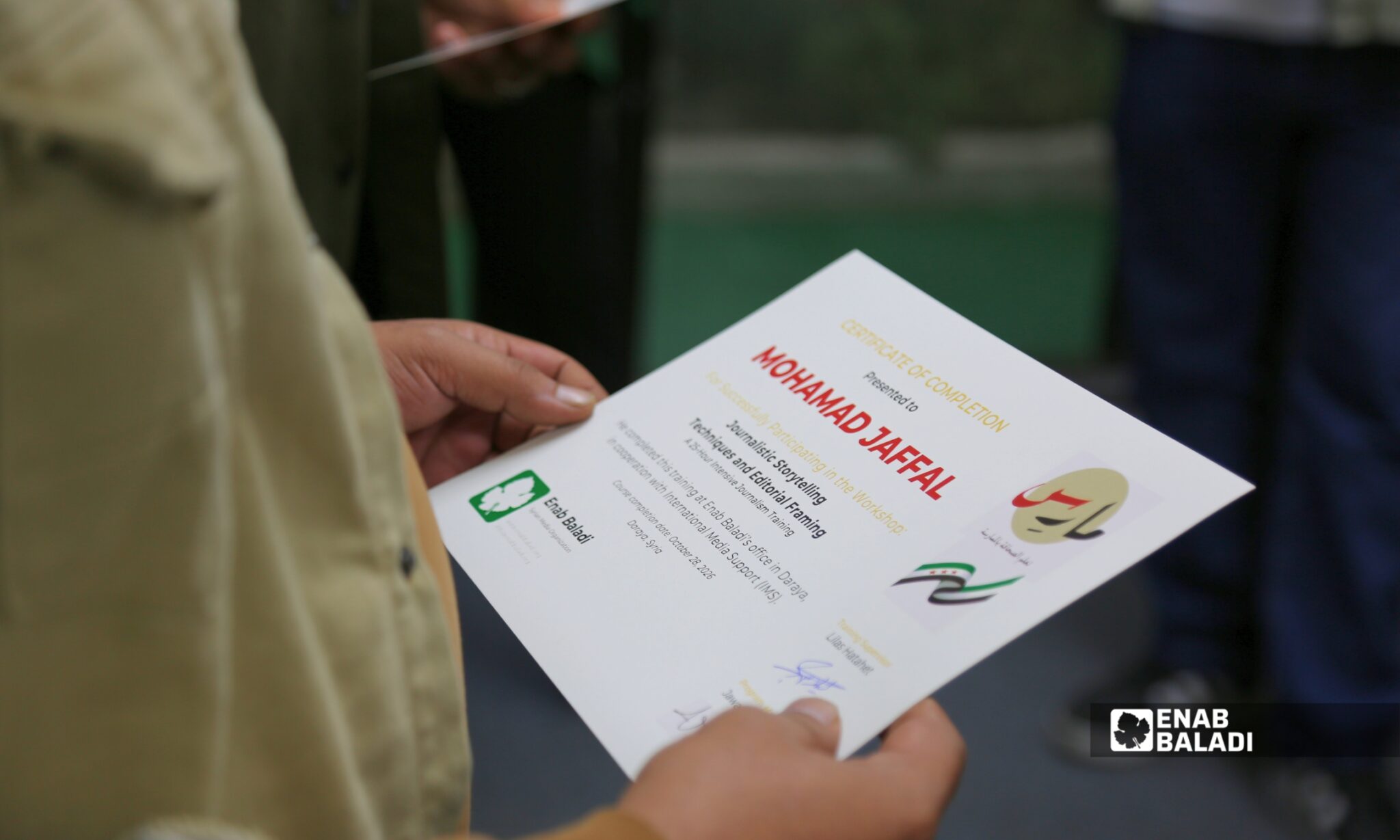
The second group of Enab Baladi news editors working across Syrian governorates completes training in journalistic storytelling, October 28, 2026 (Enab Baladi).
The storytelling workshop is part of Enab Baladi’s training and professional development activities for journalists and editors, aimed at strengthening their editorial skills and improving the quality of published content.
The organization’s training programs cover news and report writing, selecting journalistic angles, fact-checking, and journalism ethics, as well as skills for producing different forms of journalistic content.
Enab Baladi develops its editorial teams’ performance through practical training, reviewing journalistic work, and exchanging feedback among editors. These efforts are supported by editorial guidelines that establish professional standards and procedures for preparing and publishing content.
if you think the article contain wrong information or you have additional details Send Correction







 More Events