


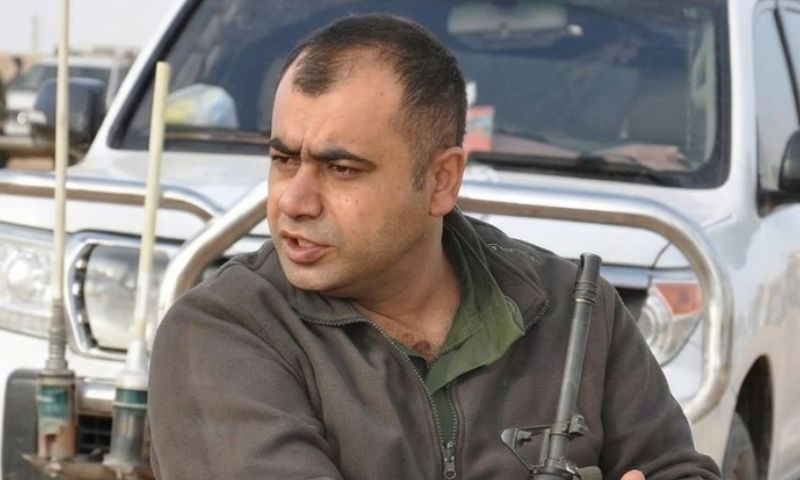
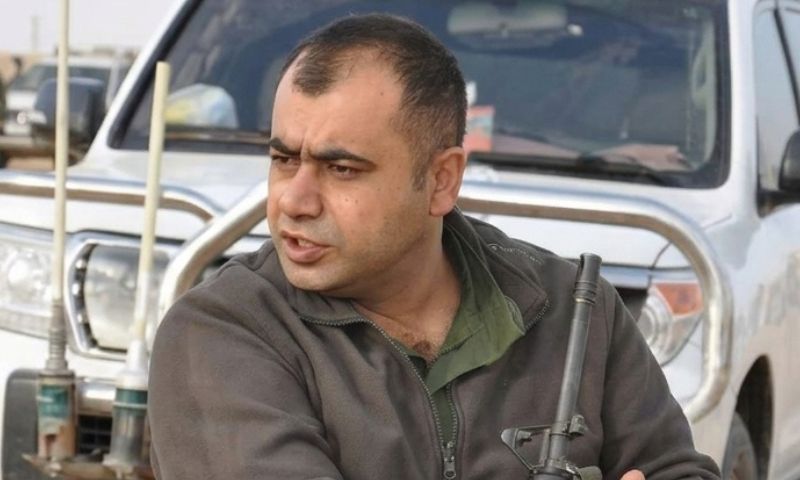
 Jwan Ibrahim, former commander of the Asayish forces in northeastern Syria (Syrian Memory/Archive)
Hawar News Agency, which is close to the dissolved Syrian Democratic Forces (SDF), announced on November 3, 2026, that Jwan Ibrahim, the founder and former commander-in-chief of the Internal Security Forces, known as the Asayish, in northeastern Syria, had been killed. His name appeared on a list of 29 male and female fighters reportedly killed at different times and locations, bringing allegations that he was killed in an internal purge back into focus.
The announcement came about nine years after he disappeared from public view, without specifying when, where or under what circumstances he was killed. It reopened questions about his fate, which has been linked since 2017 to accounts that he was summoned to the Qandil Mountains following internal disputes and statements criticizing Iran’s role in Syria.
In its report on a commemoration ceremony in al-Hasakah (northeastern Syria), the agency provided no separate details about each person on the list. It said only that those commemorated belonged to the “People’s Defense Forces and Free Women’s Units, Star,” referring to the military wing of the Kurdistan Workers’ Party (PKK), and had been killed at different times and locations within what it called the “Kurdistan Freedom Movement.”
The name “Jwan” appeared alongside the real name “Jwan Ibrahim,” without further information about when or where he was killed.
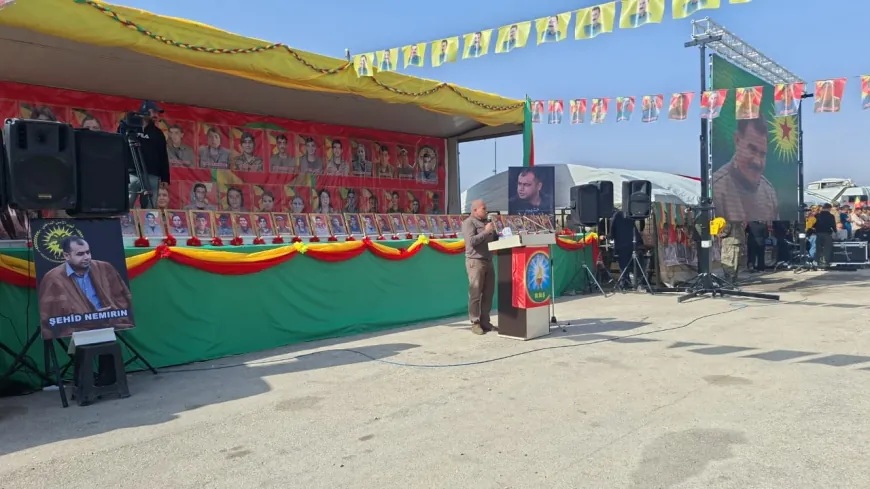
Commemoration ceremony in al-Hasakah for several PKK fighters, including Jwan Ibrahim, November 3, 2026 (Hawar)
For this investigation, Enab Baladi used open-source research to trace reporting about Jwan Ibrahim since his disappearance from public view in 2017. It tracked the chronology of accounts concerning his fate, from reports of his removal and summons to the Qandil Mountains, through allegations that he was killed within the PKK and suggestions that he may have died in a Turkish airstrike, to Hawar’s announcement of his death in November 2026.
It also compared media reports with recordings and statements by those presenting these accounts, seeking to distinguish information that could be documented from allegations and hypotheses for which no conclusive independent evidence was available.
Jwan Ibrahim, also known as Jwan Arabo, whose full name was Nosi Jan Abdul Rahim Ibrahim, was born in 1983 in Ras al-Ain (northern al-Hasakah, northeastern Syria). He had commanded the Asayish Internal Security Forces in northeastern Syria since 2013, according to Rudaw’s September 2017 report about his removal from office.
One published account of his work comes from an April 2015 interview with Buyer Press, a website close to the SDF, in his capacity as Asayish commander-in-chief. Ibrahim discussed the force’s work and security responsibilities, including handling terrorism and armed group cases, the operation of its offices and prisons, and its relationship with institutions affiliated with the Autonomous Administration.
The interview offers a picture of the issues the Asayish handled at that time, before its commander-in-chief became the subject of political and organizational disputes and then disappeared from public view.
On July 27, 2017, Rudaw published an interview with Ibrahim in which he said that “the Iranian project is more dangerous than the Islamic State group’s project in Syria and the region as a whole.” He also addressed the possible entry into the region of the Kurdish Rojava Peshmerga forces, which opposed the SDF. He said that decision rested with the Autonomous Administration’s Legislative Council and that the Asayish was an executive body that followed the decisions of the relevant institutions.
These remarks are significant in tracing the chronology of his disappearance because they came less than two months before his removal from the Asayish leadership. On September 17 that year, Rudaw published a report citing a source who said Ibrahim had been removed and a new leadership appointed in his place. The source attributed his removal to his statements against Iran.
From that point onward, Jwan Ibrahim disappeared from public view, with no reliable public information establishing his whereabouts or fate.
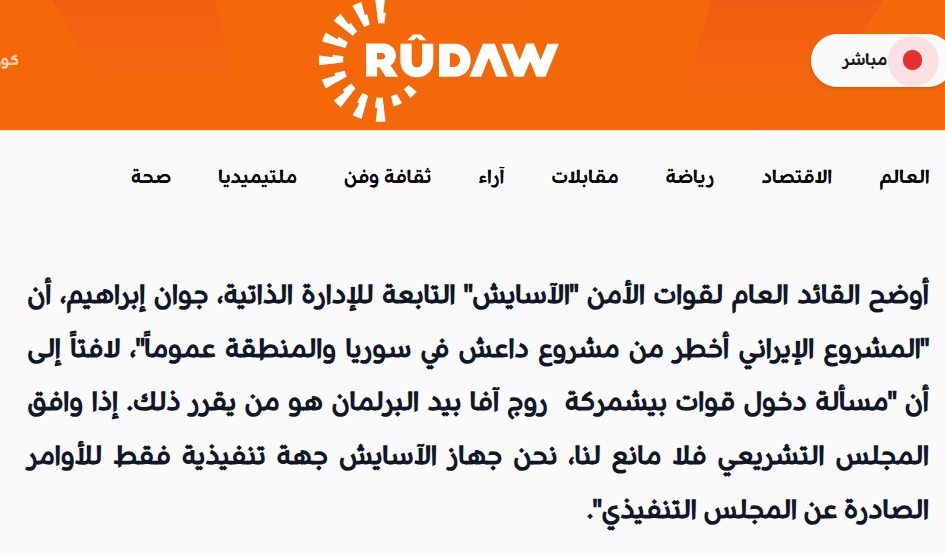
Jwan Ibrahim’s final statement before he was summoned to Qandil, July 27, 2017 (Rudaw/Screenshot)
Ibrahim’s family’s account of his absence begins before 2017, going back to his teenage years. In an appeal dated May 14, 2003, his mother, Anisa Tobal, accused the PKK of abducting her son when he was under 18 and demanded information about his fate.
According to the appeal, an image of which journalist Hoshang Ose reposted on Facebook two days before Hawar’s latest announcement, his mother said her son had been taken away from his family at a young age. She warned Kurdish women about the party, holding it responsible for separating her son from her. Ose had also shared a link and an image of the appeal on his YouTube channel in 2022.
The appeal had appeared on the Amuda Forum blog, but it was removed from its original link and is no longer available through the blog. The reference here therefore relies on an image reposted by Ose, rather than an original online version whose archived record can be independently verified.
His mother’s account is consistent with circulating information that Ibrahim joined the party in 1996, when he would have been about 13 if his reported birth year is correct. It does not, however, independently substantiate every detail of that period.
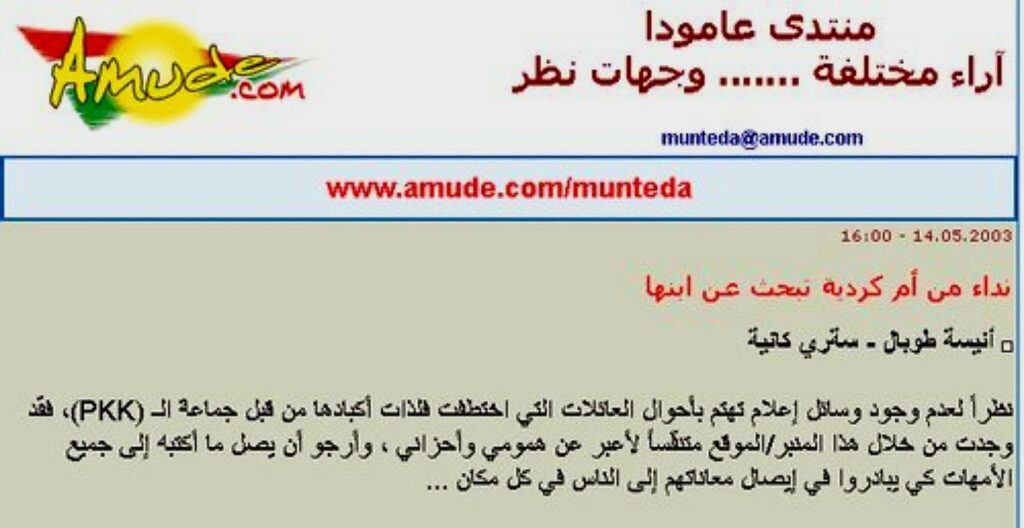
Anisa Tobal’s appeal seeking information about the fate of her son, Jwan Ibrahim, May 14, 2003 (Facebook/Hoshang Ose)
On August 5, 2022, journalist Hoshang Ose discussed Ibrahim’s case in a video published on his YouTube channel, “With Hoshang.” He directly accused the PKK of killing the former Asayish commander, saying his information came from sources in the Qandil Mountains, where the party’s leadership is based.
Ose’s allegations extended beyond Ibrahim. He also spoke of other leaders being killed, naming Nurettin Sofi, Duzdar Hamo, Bozan Tekin and Ali Haydar Kaytan.
In subsequent years, the party announced or acknowledged the deaths of some of those he had named, years after Ose alleged that they had been killed internally. Among those whose death announcements could be documented were Nurettin Sofi and Ali Haydar Kaytan.
On August 11, 2025, the People’s Defense Forces released biographical details of commander Nurettin Sofi, saying he had been killed in a Turkish airstrike on April 6, 2021, in the Gare area. Hawar published a report that day about a condolence ceremony held for him in Ayn al-Arab/Kobani (northern Syria), followed the next day by coverage of his funeral procession to Qamishli (northeastern Syria).
The announcement shows that the party disclosed his death more than four years after the date it gave for his killing.
As for Ali Haydar Kaytan, known by the nom de guerre “Fuat,” the PKK acknowledged his death in the concluding statement of its 12th congress, made public in May 2025. It gave his date of death as July 3, 2018. This appeared in the party’s statement and was reported by media outlets covering its acknowledgment of the death of one of its founders.
In his account of Ibrahim’s case, Ose linked the disputes preceding his disappearance to his poor relationship with PKK commander Bahoz Erdal. He accused Erdal of overseeing internal killings within the party. He also alleged that cannabis farms operated in areas under the party’s control in Syria, with their proceeds going to Erdal, whom he described as responsible for the party’s “dirty practices.”
According to Ose, Ibrahim had raided and burned those farms, contributing to the deterioration of his relationship with party leaders. These allegations remain attributed to Ose. The recording alone provides no documents or independent evidence establishing the farms’ existence, ownership or the involvement of the leaders he named.
Ose also spoke of a deterioration in relations between Ibrahim and Mazloum Abdi before Ibrahim’s disappearance. He said Abdi had submitted “malicious reports” about him to the party leadership in Qandil. He linked this to the disputes surrounding Ibrahim before his removal, without presenting documents or correspondence in the recording that could independently establish the reports’ contents or the nature of the relationship between the two men.
Ose placed Ibrahim’s remarks about Iran at the center of his explanation for the alleged killing. He argued that Ibrahim’s statements about the danger of the Iranian project, and his saying he did not oppose the entry of the Rojava Peshmerga, crossed the party’s red lines. He said Iran was an ally and supporter of the party, that criticism of this kind was unacceptable to its leadership, and that Ibrahim was summoned to Qandil and then killed.
Ose’s account is significant because it constitutes a direct, public accusation made in his original 2022 recording, rather than merely a later repetition of an allegation attributed to him. It nevertheless remains a single source’s account, even though he said he relied on sources inside Qandil. Those sources were not named, and no documents were published alongside it confirming the details of the summons or alleged killing. Nor do the materials examined in this investigation contain a documented response from the party to these allegations.
An internal killing was not the only explanation put forward during the years of Ibrahim’s disappearance. In June 2020, Darka Mazi, a Kurdish website opposed to the PKK, published a report discussing the possibility that he had been killed in a Turkish airstrike targeting positions in the Qandil Mountains in autumn 2018, alongside the possibility that he had been killed within the party.
The report did not establish which account was correct, noting the absence of conclusive information about what had happened to him.
Turkish statements and news reports document airstrikes against PKK positions in northern Iraq, including areas near Qandil and Gara, during October 2018. But evidence that those strikes occurred does not establish that Ibrahim was at the targeted sites or was killed in one of them. None of the available materials contained a Turkish announcement naming him among those killed.
In another report published by the same website in February 2021, the internal killing account featured more prominently, with accusations that the party leadership was responsible for Ibrahim’s disappearance and death. However, this account was not accompanied by published physical evidence establishing the circumstances, location or date of his death.
Both the airstrike and internal killing hypotheses therefore remained present in reporting about his fate, without sufficient independent evidence to conclusively favor either. Ose’s August 2022 recording presented a more direct accusation, but it did not close the information gap concerning Ibrahim’s whereabouts in the years after his disappearance.
On November 3, 2026, Hawar included Jwan Ibrahim’s name on a list of fighters it said had been killed at different times and locations.
The announcement did not specify whether he was killed in Qandil or elsewhere. It gave neither the year nor the circumstances of his death, and did not explain whether he had been killed in an airstrike, a battle or under other circumstances. **[CHECK ORIGINAL]**
The announcement revives questions that have remained unanswered since his removal from the Asayish leadership in September 2017: Where was Ibrahim throughout the years of his disappearance? When did he die? Where was he killed? Was his summons to Qandil actually connected to his remarks about Iran, as Ose said? Were there other organizational disputes involving his relationships with party leaders, as described in Ose’s account?
His mother’s old appeal raises another question about what became of the family that had continued seeking information about his whereabouts, first after he lost contact with them at a young age, and later after he disappeared from public view. The announcement of his death does not, in itself, explain the years of his absence or the circumstances in which his life ended.
Between his mother’s account accusing the party of taking her son during childhood, Ose’s account accusing it of killing him following internal disputes, and the latest announcement, which merely included his name on a list of those killed, gaps in the documentation of Jwan Ibrahim’s fate remain unresolved.
So far, there is insufficient published information to independently establish the date, location and circumstances of his death.
if you think the article contain wrong information or you have additional details Send Correction


 A
A
A


 More Politics