

Enab Baladi, Ghena Jabr
Economy and Industry Minister Nidal al-Shaar issued Decision No. 154 to establish a legal framework for international companies entering Syria’s automotive market. The decision allows foreign companies operating in the automotive, machinery and tire sectors to register agencies and open branches and offices under existing regulations.
Agencies registered under the decision are non-exclusive, allowing more than one agent to represent the same brand and opening the way for greater competition among suppliers and agents.
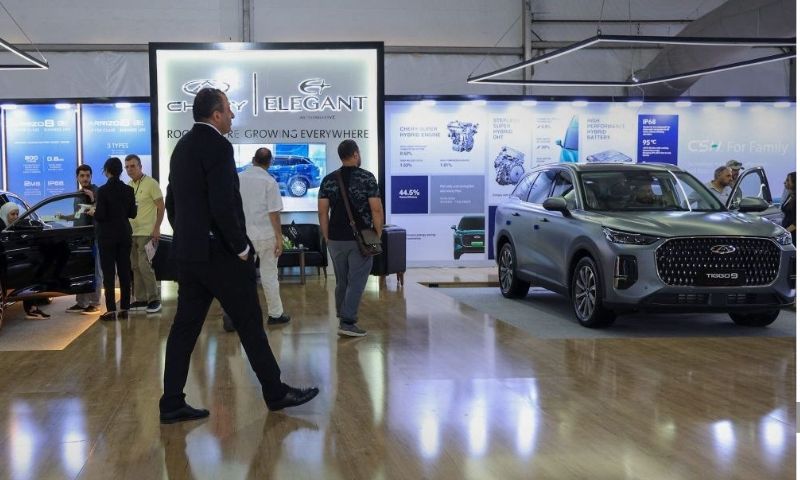
The decision has drawn foreign companies’ interest in the Syrian market, raising questions about whether new agencies can reshape the automotive market and how having multiple suppliers and agents might affect prices, vehicle availability and after-sales services. The market continues to face high import costs and declining purchasing power.
Mohammad Allaq, director of companies at Syria’s Ministry of Economy and Industry, said that since Decision No. 154 was issued, approximately 20 foreign companies in the automotive, machinery and tire sectors have expressed interest in registering agencies or opening branches in Syria.
Allaq told Enab Baladi that this interest was an initial indication of foreign companies’ willingness to enter the Syrian market and operate within a regulated legal framework.
Explaining what the decision means by a non-exclusive agency, he said registering an agency for a foreign company on behalf of a particular entity in Syria does not give that entity exclusive rights to prevent another agent from registering for the same foreign company, provided the contractual relationship meets the legal requirements.
According to Allaq, the aim is to prevent a single entity from monopolizing representation of a brand, allow multiple agents and encourage competition over prices, services and after-sales support, expanding consumers’ choices.
He said several foreign companies and brands were interested in entering or returning to the Syrian market. The decision is expected to expand international brands’ presence in the coming period, with brands to be announced individually as they complete their legal procedures.
Regarding the licensing requirements that a foreign automotive company or its agent must meet, Allaq said Decision No. 154 imposes no additional restrictions or special conditions on companies in the automotive, machinery and tire sectors. Their registration is instead subject to the provisions, conditions and procedures in existing laws and regulations governing foreign company branches and agencies.
He added that companies seeking registration are treated under the established legal framework, with no exceptional requirements tied to their activities in the automotive, machinery or tire sectors. This is consistent with Article 1 of the decision, which requires registration through the proper procedures and under existing laws and regulations.
If a company or agency has submitted all the required paperwork and documents and met the legal requirements, registration can be completed within three working days, according to Allaq.
Allaq said the ministry was working to simplify procedures and shorten processing times for investors and companies wherever possible, so administrative procedures do not become an obstacle to market entry.
According to Allaq, the General Administration for Internal Trade and Consumer Protection had previously reported simplifying the registration of foreign branches and agencies, with some cases completed within hours when all documents were provided.
Allaq concluded that the decision aims not only to allow new agencies to register, but also to regulate international companies’ entry into the Syrian market, expand competition, prevent a single entity from controlling a brand’s representation and simplify procedures for companies with serious plans to operate. This would gradually help create a more diverse and orderly market that benefits consumers and the national economy.
Reorganizing the Market
Foreign companies’ entry into the Syrian market opens the way for a shift from reliance on traditional import channels to official company representation through agencies, bringing changes to the relationship between companies and consumers.
Abdul Rahman Mohammed, an expert and professor of finance and banking at Hama University’s Faculty of Economics (central Syria), believes foreign agencies’ entry will change the structure of Syria’s automotive market. It would shift from a market dominated by traditional importer networks or unofficial import channels to one that is more regulated and competitive. However, the decision’s actual impact depends on the extent of foreign companies’ presence and their ability to supply products and services consistently.
Mohammed told Enab Baladi that foreign companies entering through official agencies could also raise standards for quality and after-sales services, given agents’ legal responsibilities.
Asked whether the Syrian market could accommodate a large number of new brands, Mohammed said this was possible in practice but should proceed cautiously because of the small market for new vehicles and weak demand. He noted that introducing many brands into a limited market could fragment market shares and potentially lead some companies to withdraw later, while consumers would benefit from greater choice and a wider range of services.
According to Mohammed, only 340 new vehicles were registered in the first half of 2025, with the Hyundai H100 accounting for 98.5% of sales. Even with growth after 2025, the market remains very small.
He said demand for particular models in Syria was linked to several factors, primarily reliability, spare parts availability and low maintenance costs. The practical uses of certain vehicles, such as light vehicles used for transport, also influence demand amid low purchasing power and a shortage of liquidity.
Explaining the economic difference between a foreign company entering through an official agent and continued imports of its vehicles by traders and importers, the Hama University finance professor said the distinction was fundamental. An official agent represents the parent company, provides an official warranty, authorized maintenance and genuine spare parts, and bears legal responsibility toward consumers. This arrangement also allows the parent company to manage product distribution and plan its market activities over the long term.
By contrast, a traditional importer buys independently from parallel sources, such as auctions and secondary markets, and does not necessarily provide an official warranty or commit to after-sales services. Prices may also include a higher risk premium because official protections are absent.
He added that an official agent could reduce transaction costs and increase consumer confidence, but might have less pricing flexibility than an independent importer.
Mohammed sees Decision No. 154 as a regulatory step that could help develop Syria’s automotive market, but believes it is insufficient on its own to bring about a fundamental transformation. The underlying problem is not simply the absence of foreign agencies, but also weak demand caused by declining purchasing power, alongside structural import costs that push final vehicle prices beyond the reach of a broad segment of consumers.
He warned against foreign agency registration becoming a merely formal framework that allows unregulated import practices to continue. The decision’s success, he said, depends on whether it produces real changes in how vehicles enter the market and how services are provided.
According to Mohammed, achieving a broader economic impact requires a combination of measures, including exchange rate stability, comprehensive customs reforms and clear, binding quality and service standards for foreign agencies.
Impact on Prices
Foreign agencies’ entry into the Syrian market raises questions about how increased competition and multiple suppliers and agents might affect vehicle prices, and whether the decision will actually bring them down. Other factors also shape the final consumer price, including import costs, fees and exchange rate fluctuations.
Allaq, the ministry’s director of companies, said an increase in the number of companies and agents was expected to strengthen competition and expand consumer choice, creating a more competitive market. However, the decision cannot be directly linked to a specific reduction in vehicle prices. Final prices depend on many factors beyond agency arrangements, including vehicle prices in the country of origin, transport, shipping, insurance, fees and operating costs, as well as supply, demand and exchange rates.
According to Allaq, the ministry’s primary objective is therefore to create a more regulated, competitive and transparent market that limits monopolies and allows consumers to compare multiple suppliers and agents.
Economist Abdul Rahman Mohammed said some price reductions could occur, as competition might squeeze intermediaries’ profit margins. However, final vehicle prices would remain governed by structural factors beyond agencies’ control, including insurance and shipping costs, customs duties, exchange rates and luxury taxes.