


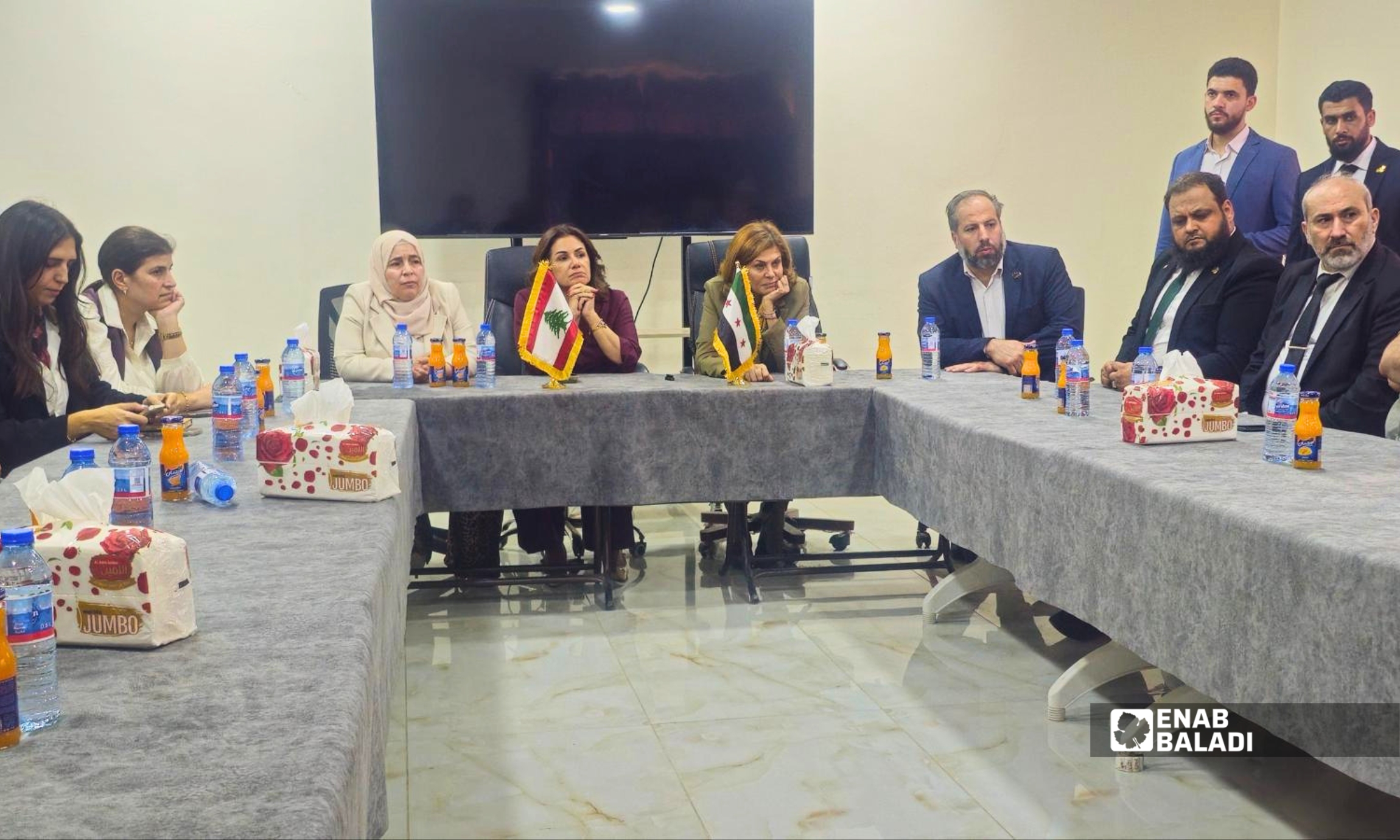
 Syrian and Lebanese social affairs ministers meet with survivors in Darayya, October 18, 2026 (Enab Baladi / Saeed Khashfeh, Nidaa Kanakriya, Nagham Lahham).
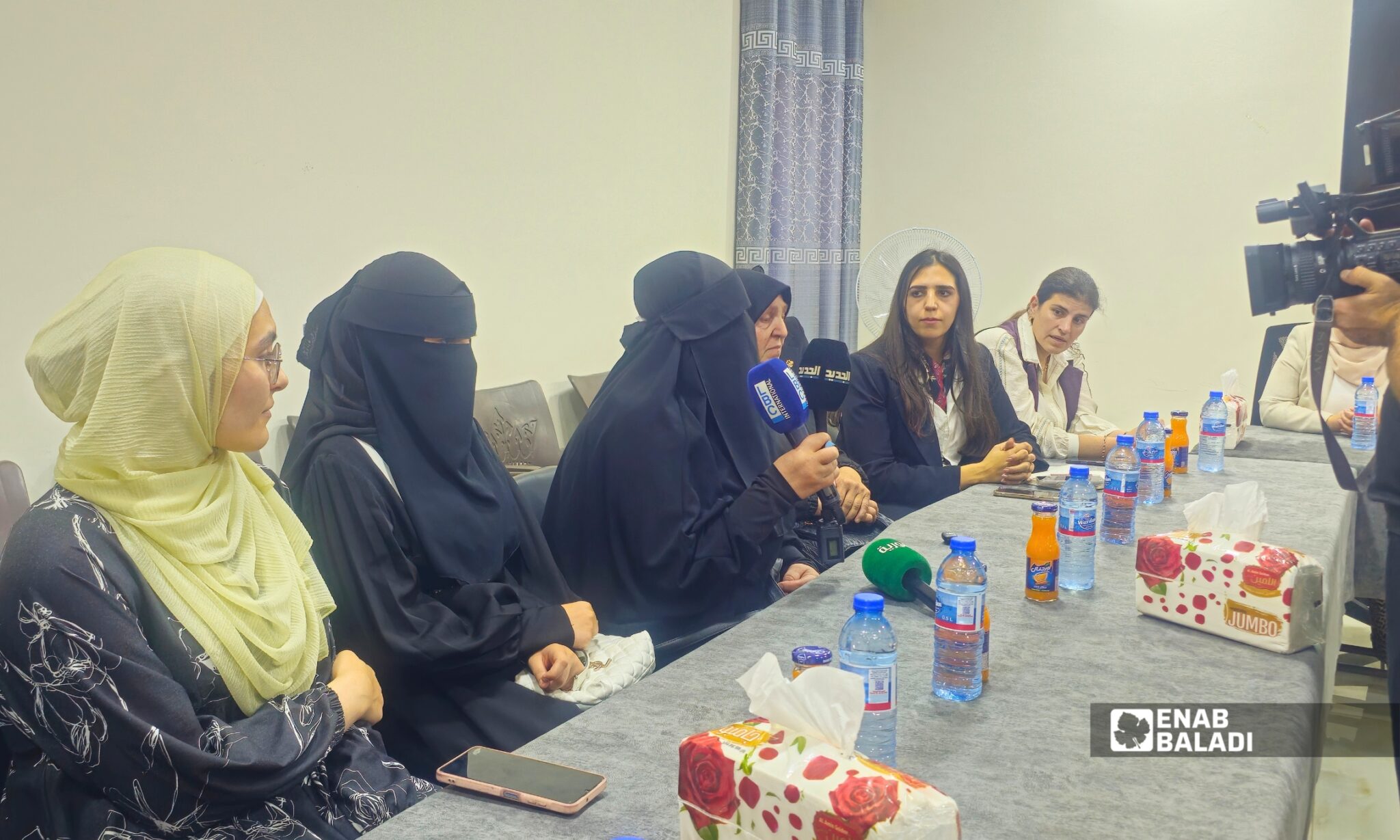
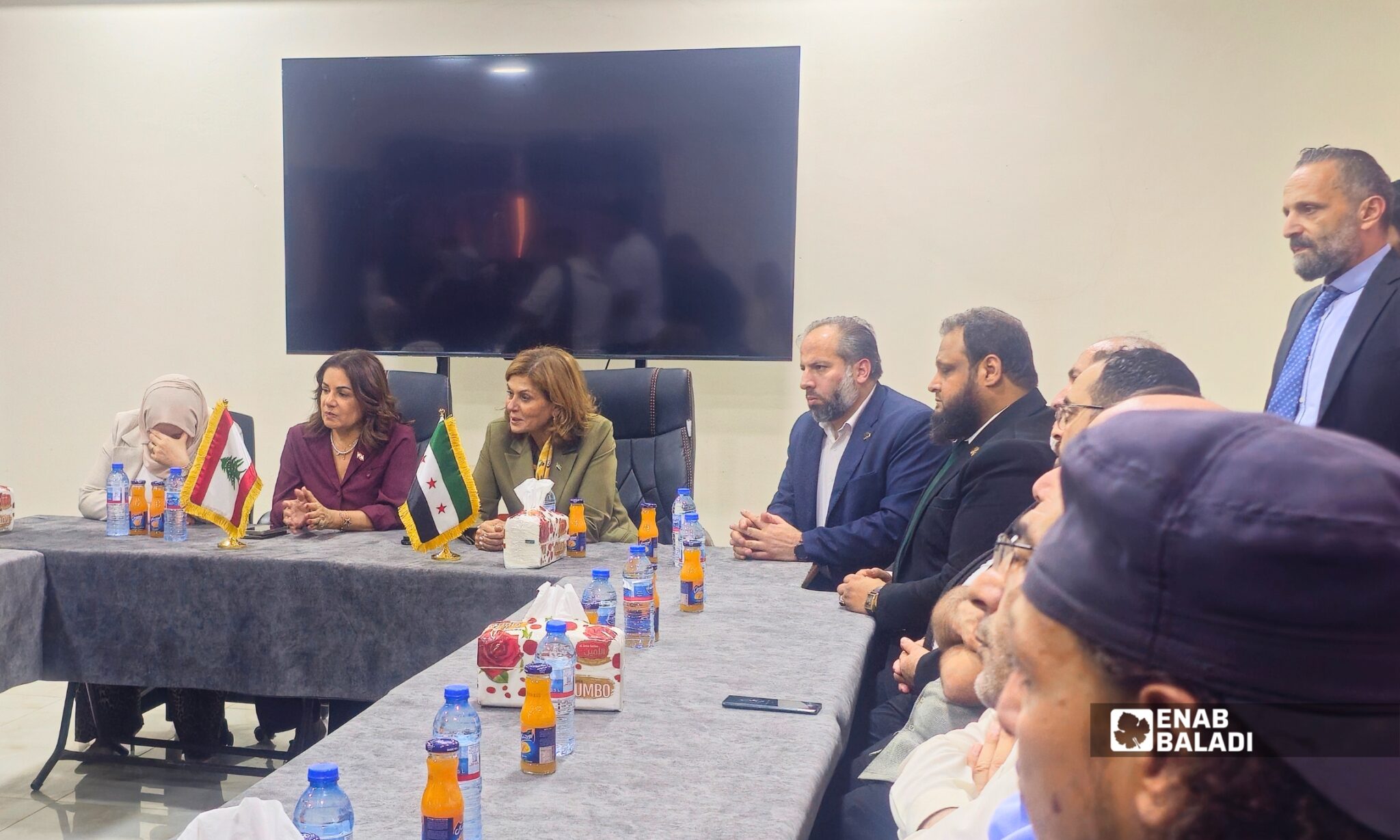
Syrian Minister of Social Affairs and Labor Hind Kabawat and Lebanese Minister of Social Affairs Haneen Sayed visited Daraya (Damascus countryside, southwestern Syria) on Sunday, October 18, meeting with residents and male and female survivors of detention and forced displacement to hear about their experiences during the years of war and refuge, as well as the difficulties they face after returning to Syria.
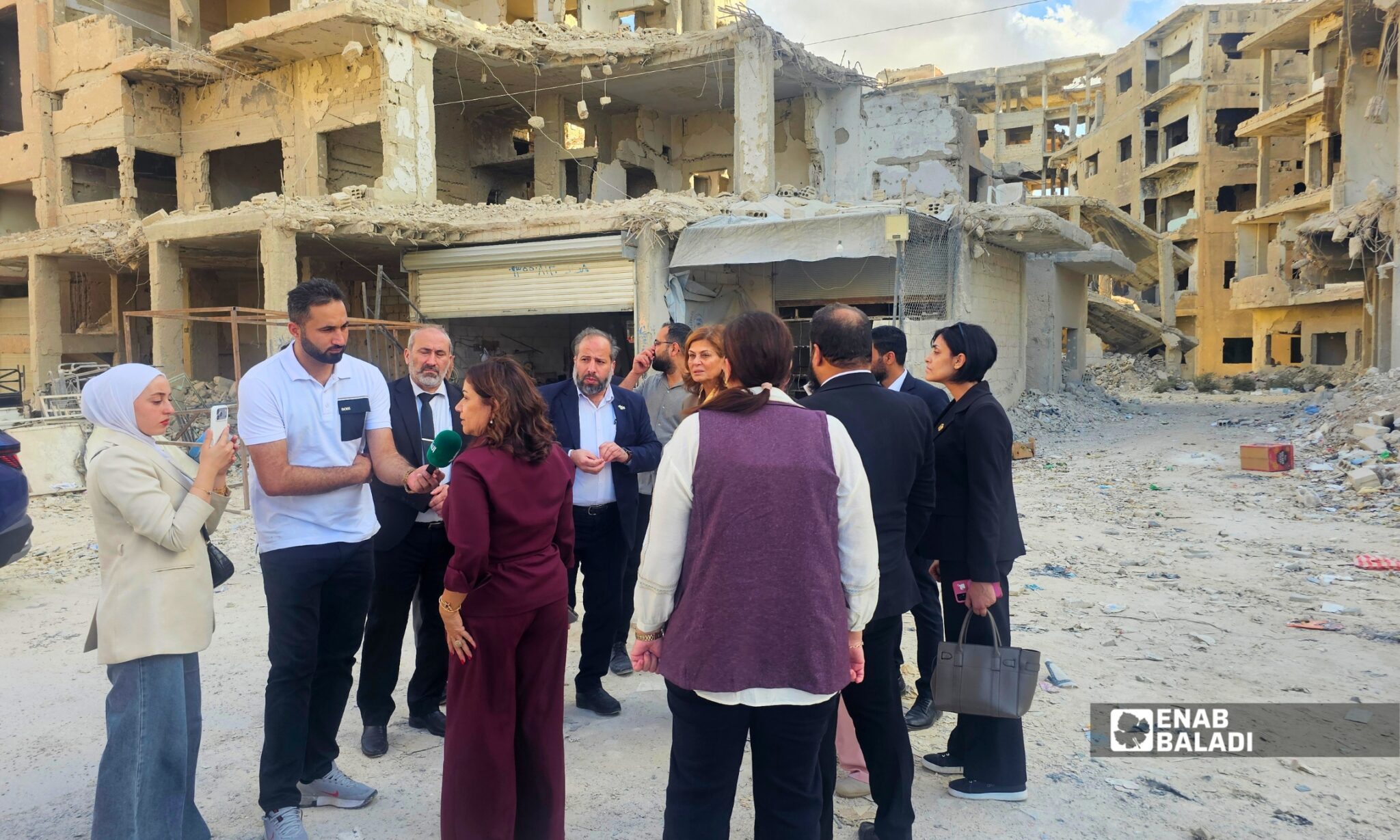
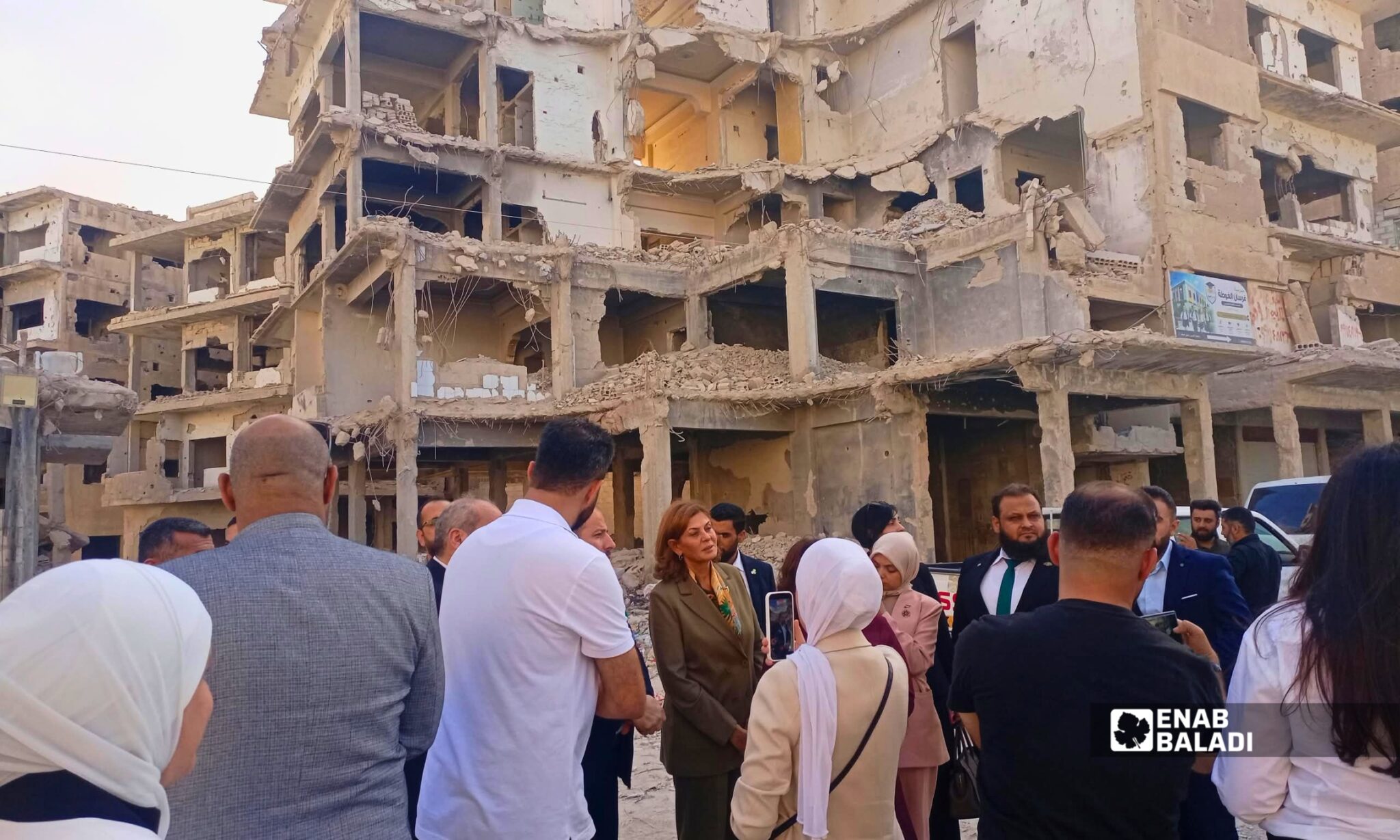
The visit included a meeting at the municipal building that lasted about an hour, followed by another at the cultural center. The ministers then toured the al-Jamiyat area and al-Khalij area to assess conditions in the city.
The meetings were attended by Daraya district director Jamil Mdawar, his deputy Amer Khashini, human rights activist Amneh Khoulani al-Khouli, and a delegation from the Ministry of Social Affairs and Labor.
Residents raised concerns about children dropping out of school, the difficulty of reintegrating them into education after years of displacement, rising rents and living costs, and the need for employment opportunities and support for families and survivors.
Kabawat told Enab Baladi that her ministry was working on a project to support female survivors, including women from Daraya, while the Lebanese minister discussed the experiences of Syrian families who had sought refuge in Lebanon and the services some received during their stay.
Umm Mohammed Gharz al-Din was among the first to return to Syria after deciding to leave Egypt so her children could continue their education. However, she struggled to enroll them in schools after they had been out of education for three years.
She told Enab Baladi that her children had attended schools in Egypt during the first years of their stay, but residency requirements and lengthy registration procedures eventually prevented them from continuing their studies.
After returning to Syria, her children struggled to integrate with other students and keep up with the curriculum because of the educational gap caused by years away from school.
During the meeting, Umm Mohammed focused on the needs of children and adolescents aged 13 to 17, calling for programs to help them catch up on missed education or learn trades and vocational skills that would prepare them for future employment.
She noted that some children’s attachment to electronic games made it even harder to bring them back into school, and she expressed concern that continued absence would reduce their future opportunities.
Ammar Gharz al-Din shared her concerns about children who had dropped out of school, saying that education and healthcare should be priorities at the current stage.
He told Enab Baladi that children were spending long hours on their phones and playing electronic games. He also pointed to smoking and certain behaviors that have raised concerns among parents.
Despite facing housing difficulties himself, Gharz al-Din focused on education during the meeting. He explained that he had moved between four homes, covering repair costs and rent, while the two homes he owns had been destroyed.
He considered addressing children’s educational needs more urgent than his own housing problems.
Umm Mohammed, meanwhile, said officials’ responses showed that they understood the difficulties facing returning families, but also indicated that the resources available to meet their needs were limited.
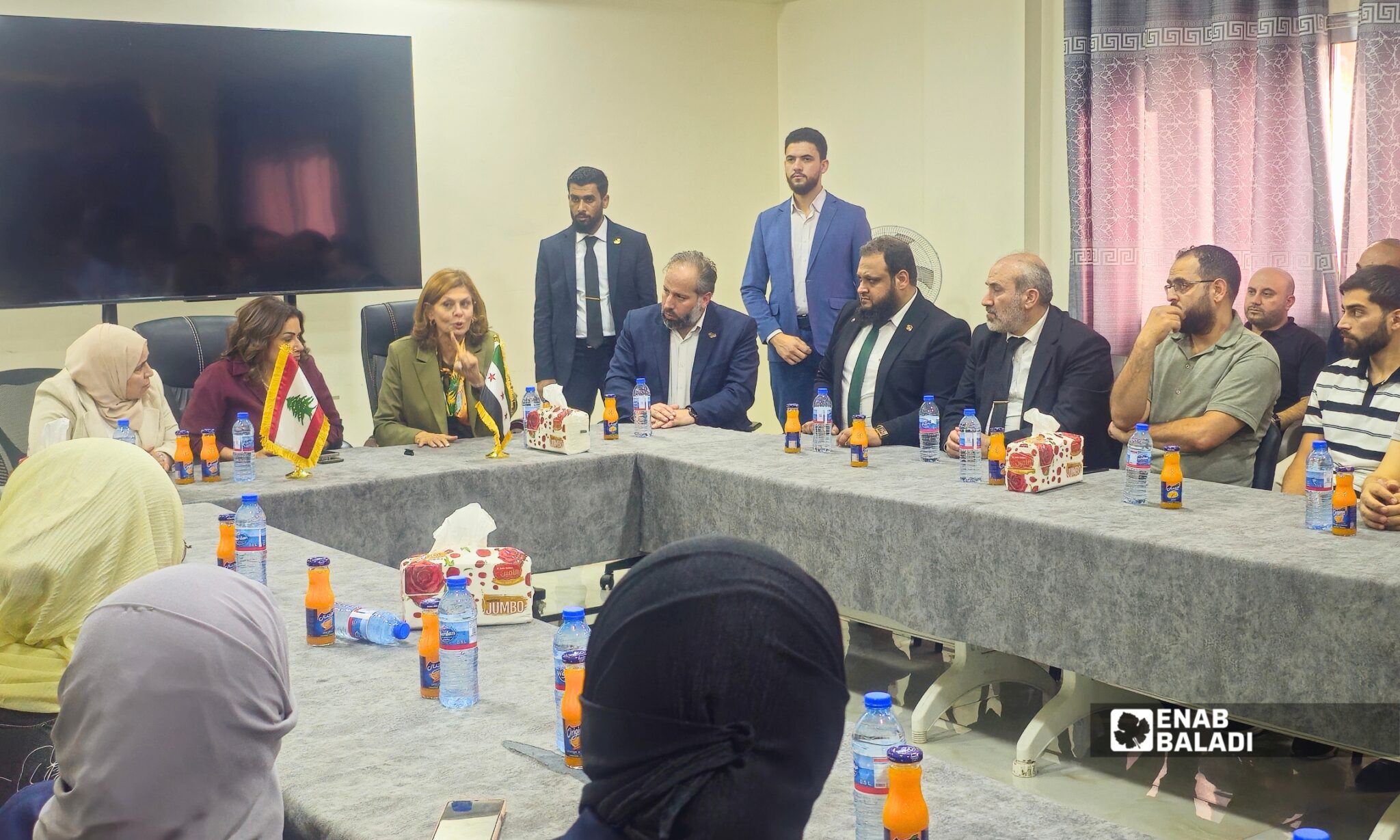
Syrian and Lebanese social affairs ministers meeting with people in Daraya and listening to their needs, October 18, 2026 (Enab Baladi).
During the meeting, Umm Alaa Mdawar proposed providing homes that families could purchase through installment plans instead of continuing to pay rent.
She told Enab Baladi that some property owners were taking advantage of tenants’ need for housing, arguing that paying monthly installments toward homeownership would be better for families than spending the same amounts on rent.
She also called for educational and vocational programs for children and adolescents who had dropped out of school, including those who could neither read nor write.
Umm Alaa spoke about the importance of returning to her country after years of displacement, expressing hope that living conditions and public services would improve.
For her part, Reem Adila focused on low salaries and rising prices. She told Enab Baladi that she had to work more than one job to cover her family’s expenses because the income from a single job was insufficient to meet household needs.
She said the rising cost of living was the greatest difficulty she faced, given her limited income and the need to cover daily expenses.
According to Adila, the minister explained during the meeting that the relevant authorities were aware of families’ needs, but the scale of destruction left by the war made it difficult to respond. The results of ongoing efforts had not yet reached the level residents needed.
Syrian Minister of Social Affairs and Labor Hind Kabawat said that addressing the cases of victims and survivors was not solely the responsibility of her ministry, but also involved the Transitional Justice Commission and the Missing Persons Commission.
In response to a question from Enab Baladi about the ministry’s plans, she explained that it had a dedicated project to support female survivors, including women from Daraya, but provided no details about the nature of the project or when it would be implemented.
Kabawat said the testimonies she heard during the meeting reflected difficulties faced by Daraya residents that were also experienced by Syrians in other areas.
Regarding the return of Syrian refugees from Lebanon, she said work on the issue was ongoing, emphasizing the need to provide conditions that preserve returnees’ dignity. She also expressed her desire to see Syrians leave the camps and return to live in Syria.
She also referred to positive experiences shared by some participants about their time in Lebanon and praised the role of civil society organizations that had assisted Syrians, calling for stronger relations between the two countries based on mutual respect.
For her part, Lebanese Minister of Social Affairs Haneen Sayed said the meeting had allowed her to hear testimonies from families who had lost their children and from women whose sons and husbands had been forcibly disappeared. Some of these women had been forced to seek refuge in Lebanon before returning to Syria.
She added that some participants spoke about how their children had been able to continue their education while living in Lebanon, as well as employment opportunities and assistance provided by the United Nations High Commissioner for Refugees (UNHCR).
Sayed said returning to Syria offered these women an opportunity to participate in rebuilding their lives and establishing their businesses again.
Asked what promises she could make to Syrians, she explained that this was a matter for the Syrian state, expressing hope that refugees would continue returning.
During the visit, Daraya district director Jamil Mdawar addressed the scale of destruction facing the city as its residents return, citing a study prepared by the American Society of Syrian Engineers and the Assistance Coordination Unit (ACU).
He said approximately 60% of buildings within the city’s urban master plan had suffered partial or complete destruction, while farmland areas and residential communities outside the plan had been destroyed.
Mdawar explained that Daraya was evacuated of its residents at the end of August 2016, and that limited returns began in early 2019 amid damaged roads and the absence of basic services, forcing residents to rely on neighborhood wells for drinking water.
According to the figures he provided, the city’s population stood at approximately 90,000 in December 2024 and is now estimated to have exceeded 250,000, compared with around 320,000 in 2011.
Mdawar expected the population to reach approximately half a million if all residents returned, taking population growth into account.
He also pointed to the continued presence of explosive remnants of war at certain sites, including the nursing school building, which has not yet been rehabilitated.
He said the former regime’s army Fourth Division had used the building as an ammunition depot during the war. An explosion involving explosive remnants of war occurred there about 20 days earlier, killing one person and injuring another after they entered the site.
Human rights activist Amneh al-Khoulani said the two ministers’ visit to Daraya was part of a broader tour of areas in Damascus and its countryside that had experienced bombardment, destruction, and the displacement of residents during the war.
She explained that Lebanon had received large numbers of displaced Syrians, including those who stayed there and others who used it as a transit point to reach other countries. These experiences of refuge were accompanied by challenges and tensions in relations between Syrians and Lebanese.
She added that the visit aimed to support the Syrian Ministry of Social Affairs and Labor’s recovery and service provision efforts while allowing residents to present their needs directly to officials.
Regarding complaints from some female survivors about the slow pace of assistance and their feeling that their needs were being neglected, al-Khoulani told Enab Baladi that these feelings were justified and were not limited to women in Daraya.
She attributed the inadequate response to limited available resources and mistakes in their distribution, noting that this particularly affected the most vulnerable groups, including women who had survived detention, as well as male survivors.
Al-Khoulani encouraged female survivors to continue demanding their rights and expressing their needs to ensure they were included in support and recovery plans.
Syrian and Lebanese social affairs ministers meeting with people in Daraya and listening to their needs, October 18, 2026 (Enab Baladi).
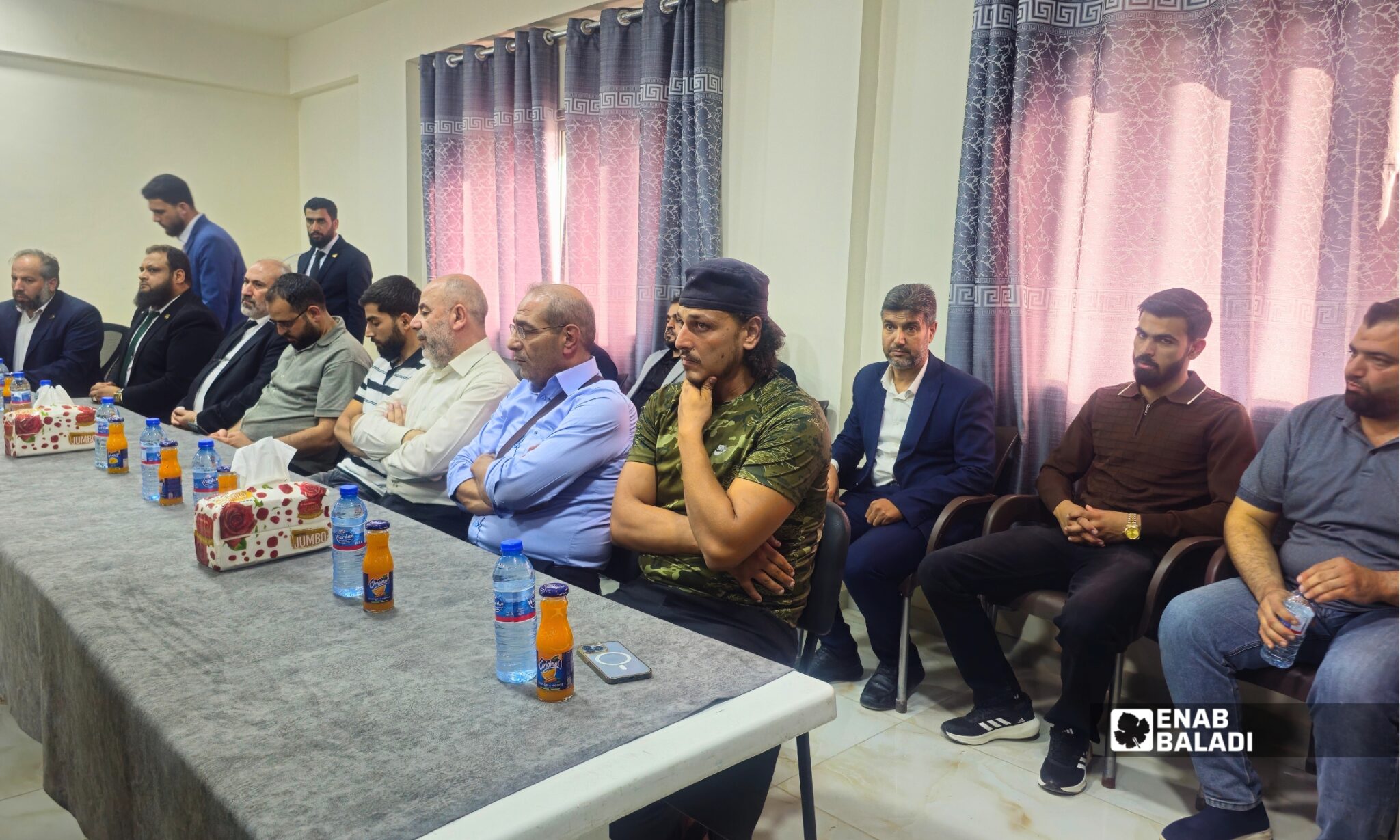
Syrian and Lebanese social affairs ministers meeting with people in Daraya and listening to their needs, October 18, 2026 (Enab Baladi).
Syrian and Lebanese social affairs ministers meeting with people in Daraya and listening to their needs, October 18, 2026 (Enab Baladi).
Syrian and Lebanese social affairs ministers meeting with people in Daraya and listening to their needs, October 18, 2026 (Enab Baladi).
Syrian and Lebanese social affairs ministers meeting with people in Daraya and listening to their needs, October 18, 2026 (Enab Baladi).
if you think the article contain wrong information or you have additional details Send Correction


 A
A
A


 More Society