


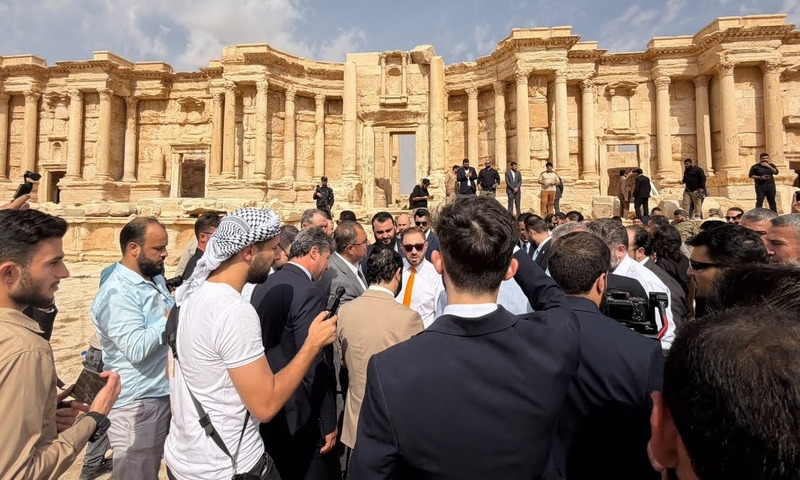
 The rehabilitation plan for the ancient city of Palmyra aims to restore essential infrastructure and damaged facilities to revive tourism and economic activity by next season, October 13, 2026 (Syrian Ministry of Tourism).
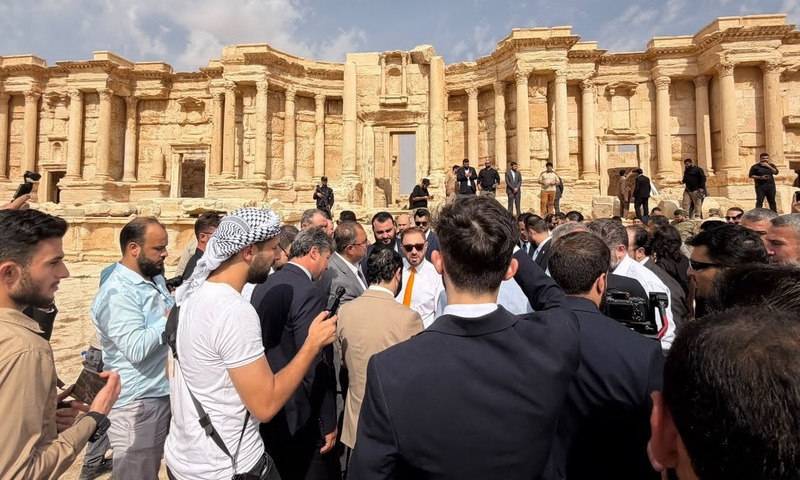
The rehabilitation plan for the ancient city of Palmyra aims to restore essential infrastructure and damaged facilities to revive tourism and economic activity by next season, October 13, 2026 (Syrian Ministry of Tourism).
The Syrian government is considering a plan to prepare the ancient city of Palmyra (Homs governorate, central Syria) to receive visitors by next season, turning the return of tourism into an economic driver that creates jobs and attracts investment.
A government team conducted an extensive field visit to the city on Tuesday, October 13, to assess the rehabilitation of essential infrastructure and damaged facilities, as part of preparations to revive tourism and economic activity by next season.
The ministers of tourism and culture, the head of the General Authority of Civil Aviation and Air Transport, and the governor of Homs took part in the visit. It aimed to coordinate their efforts and ensure the swift implementation of rehabilitation plans and the provision of necessary tourism services.
The visit included a comprehensive assessment of the technical and logistical requirements for rehabilitating and reopening Palmyra International Airport, alongside a survey of damage to hotels and accommodation facilities to schedule their restoration.
The team also examined the condition of damaged archaeological sites and plans to prepare them for visitors, aiming to accelerate the restoration of services and provide what is needed to launch cultural tourism and tourism-related economic activity in the area as soon as the new season begins.
Assessing Palmyra International Airport was central to the field visit, which sought to identify the requirements for its rehabilitation and reopening. The airport is viewed as the main starting point for reviving tourism in the area and attracting more visitors, while making it easier to include the city in international and domestic travel itineraries and tours.
Tourism Minister Mazen al-Salhani said in a statement, a copy of which was received by Enab Baladi, that reviving Palmyra requires work on all aspects of the tourism experience simultaneously and as part of a coordinated effort.
He said Palmyra is one of Syria’s most important cultural destinations. The current vision, he explained, focuses on offering a complete visitor experience befitting its historical standing by combining the reopening of the airport, hotel rehabilitation, the restoration of archaeological sites, and improvements to basic services.
He added that the main objective is to prepare the city to receive visitors by next season, ensuring that the return of tourism becomes an economic driver that creates direct employment and investment opportunities from which local residents can benefit sustainably.
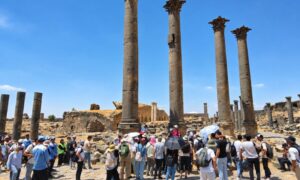
The government visit covered Palmyra’s most prominent archaeological landmarks, including the Arch of Triumph, the Great Colonnade, the Roman Theater, and the Temple of Bel, to identify rehabilitation priorities and safeguard the city’s cultural heritage.
According to the Ministry of Tourism, cooperation between the ministries of culture and tourism aims to coordinate efforts to preserve the sites’ historical value and improve the visitor experience, helping to reintroduce Palmyra as a destination combining exceptional human heritage with modern tourism services.
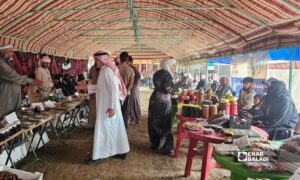
The visit also included field assessments of several hotels and tourism facilities, along with the guest palace, the Bedouin Corner, and the oriental goods market.
Syria received 3.52 million visitors in the first half of 2026, an increase of 111% compared with the same period last year. The number of foreign visitors rose by 448%, while the number of Arab visitors increased by 107%.
According to the Syrian Ministry of Tourism, preliminary third-quarter figures indicate continued strong growth in visitor numbers. This places developing tourism destinations and improving their readiness among the priorities for the coming period, to accommodate rising demand and turn it into investment, employment, and sustainable economic value.
The tourism minister previously announced a vision to reach between 30 million and 40 million visitors annually within the next five years. This makes improving air connections, rehabilitating historical destinations, expanding hotel capacity, and upgrading services central to the priorities of this phase.
if you think the article contain wrong information or you have additional details Send Correction


 A
A
A
A
A
A



 More Economic Reports