


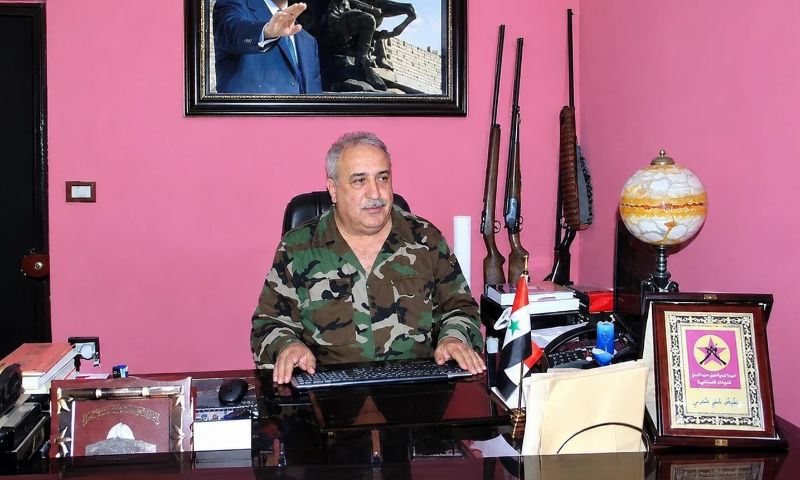
 Mihrac Ural, the main suspect in the 2013 Baniyas massacre
Mihrac Ural, the main suspect in the 2013 Baniyas massacre
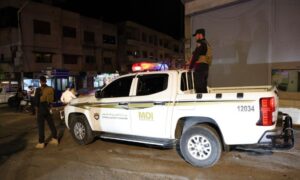
Syria’s General Intelligence Service arrested Ali Kayali, known as Mihrac Ural, the main suspect in the 2013 Baniyas massacre, on Thursday, October 15, while he was attempting to flee across the border, according to the Syrian Arab News Agency (SANA).
Kayali is known as the leader of the Syrian Resistance militia, also called the Popular Front for the Liberation of the Sanjak of Alexandretta, which fought alongside the former regime’s forces.
The Baniyas massacre took place on May 3, 2013, when forces of the former Syrian regime and allied armed groups stormed the Ras al-Nabaa neighborhood in Baniyas (Tartous governorate, western Syria) and carried out mass killings of civilians, including women and children.
Ali Kayali, known as Mihrac Ural, was born in 1956 in Antakya, southern Turkey. He became active in armed leftist organizations in Turkey in the 1970s before moving to Syria and obtaining Syrian citizenship during Hafez al-Assad’s rule in the 1980s.
Ural was associated with the leftist Acilciler organization. He was also involved in activities concerning the Sanjak of Alexandretta, which was incorporated into Turkey in 1939, and advocated its return to Syria.
When the Syrian revolution began in 2011, he led the Syrian Resistance militia, also known as the Popular Front for the Liberation of the Sanjak of Alexandretta, which fought alongside the former regime’s forces in several areas, particularly the Latakia countryside (western Syria).
Ural became widely known because of allegations that he and his group participated in killings and abuses against civilians, particularly along Syria’s coast.
He was also known as the “Butcher of Baniyas,” a reference to allegations concerning his role in the 2013 al-Bayda and Baniyas massacres.
The massacres in al-Bayda (Tartous governorate, western Syria) and the Ras al-Nabaa neighborhood of Baniyas took place on May 2 and 3, 2013, during operations conducted by the former regime’s forces and allied armed groups in Tartous governorate.
Civilians, including women and children, were killed en masse in al-Bayda village and Ras al-Nabaa, amid accounts of summary executions and the burning and looting of homes.
In a report published in September 2013, Human Rights Watch said it had documented the deaths of at least 248 people in the two areas over the two days, including women and children. It noted that many victims were killed after clashes had ended and opposition fighters had withdrawn.
Ural’s name became associated with the massacres because of his leadership of the militia loyal to the former regime and allegations that he incited and participated in the attacks.
Alongside allegations concerning abuses in Syria, Ural was linked to the May 11, 2013, bombings in Reyhanli, a town in Turkey’s Hatay province, which killed 53 people.
Turkish authorities accused Ural of involvement in planning the attacks, which were carried out using two car bombs. Ankara also accused individuals and groups it said were connected to the operation.
In September 2018, Turkish intelligence announced the arrest of Yusuf Nazik inside Syria. Authorities said he had participated in planning the bombings. A Turkish court later sentenced him to life imprisonment.
The Reyhanli case remains one of the main sources of tension between Ankara and Ural, who continued to appear publicly despite armed groups in Syria announcing his death several times during the war.
Ural appeared at the Syrian National Dialogue Congress hosted by the Russian city of Sochi in February 2018, presenting himself as a representative of the Sanjak of Alexandretta.
His participation drew objections from Turkey, which demanded that Moscow hand him over over allegations of involvement in the Reyhanli bombings.
Ural spoke about his contacts with the Kurdish People’s Protection Units (YPG) and declared his opposition to Turkey’s presence in northern Syria, in the context of his position on Afrin (Aleppo governorate, northwestern Syria) and the Sanjak of Alexandretta.
His name resurfaced in early 2026, when Qatar’s Al Jazeera reported, citing Syrian security sources, that groups of his followers had arrived in Tabqa (Raqqa governorate, northern Syria) to support the Syrian Democratic Forces (SDF) during clashes with government forces in the area.
On October 25, 2025, Ural also published an article titled “With Sipan Hemo,” discussing his relationship with one of the SDF’s commanders and their previous meetings.
His name later appeared in connection with statements attributed to Sipan Hemo and published by the newspaper Yeni Özgür Politika in January 2026, before the SDF denied that Hemo had made them.
Ural was reported killed several times during the war, only to appear later in recordings and at public events.
In April 2016, Ahrar al-Sham announced that it had targeted a location where it said Ural was present. Media outlets reported his death at the time, but he later appeared in a video alongside pilot Mohammad Soufan, whom Turkey had released and handed over to the former Syrian regime.
His convoy was also hit by a roadside bomb in the Latakia countryside in 2018. His group later announced that he had been targeted in another attempted attack during a field visit.
if you think the article contain wrong information or you have additional details Send Correction


 A
A
A
A
A
A


 More Politics