


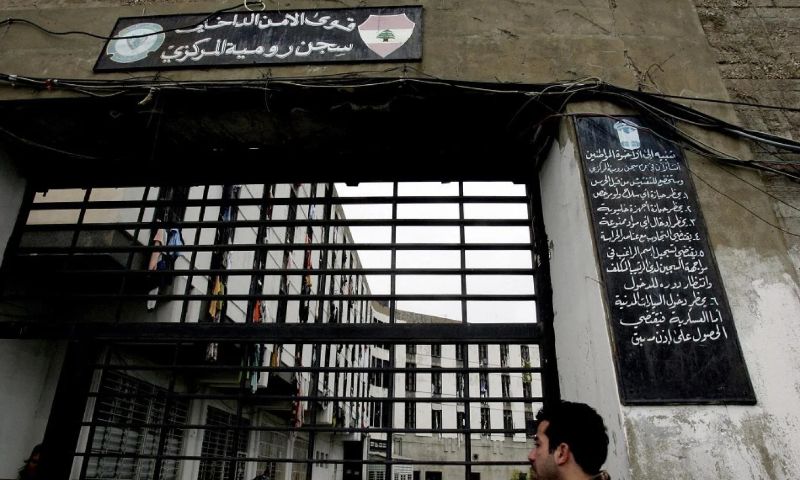
 Roumieh Prison in Lebanon, where many Syrian detainees are held, July 17, 2021 (AFP)
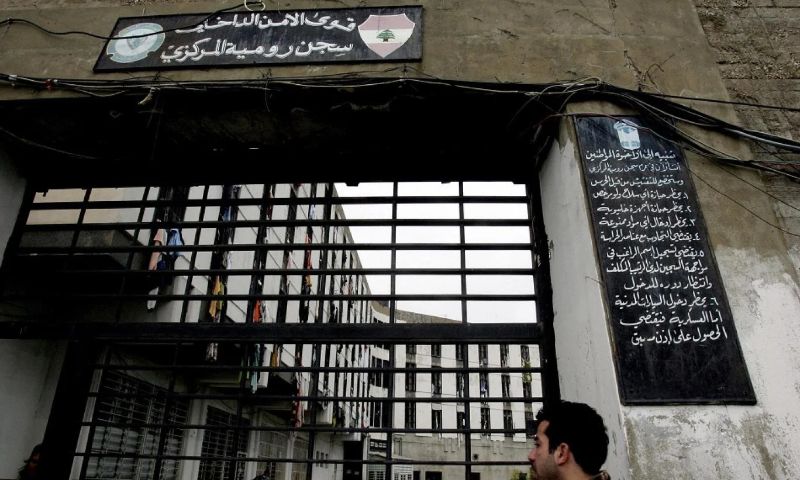
Roumieh Prison in Lebanon, where many Syrian detainees are held, July 17, 2021 (AFP)
Hundreds of prisoners in several Lebanese prisons, including Syrian detainees, ended a 30-day hunger strike during which they also refused medication on Monday, October 12, following the Constitutional Council’s ruling on a challenge to the general amnesty law. Some prisoners expressed disappointment with the council’s interpretations of provisions in the law.
Around 600 prisoners had entered their second month on strike in protest against the suspension of the general amnesty law. Meanwhile, the number of prisoners on strike in critical medical condition had risen to 77 by midday Monday, according to a spokesperson for prisoners in Lebanon, who requested anonymity.
The prisoners’ spokesperson told Enab Baladi that the decision to end the strike came after the fate of the general amnesty law became clear, noting that some prisoners were disappointed with certain interpretations issued by the Constitutional Council.
He argued that these interpretations affected the substance of several provisions in the law and effectively amended them, rather than simply clarifying how they should be applied.
He added, “We congratulate everyone who will be covered by the amnesty law, and we hope the prison doors will open for them as soon as possible,” stressing that ending the strike did not mean an end to efforts to secure justice for the remaining prisoners.
The spokesperson said the prisoners’ struggle would not end here and that they would continue doing everything possible, using the means available to them, until the last person unjustly imprisoned was released.
During the strike, the prisoners appealed to media outlets to continue covering their health and humanitarian conditions. A banner raised inside the prison read, “We have no party-affiliated media or public relations firms. We have this makeshift banner and a pen. Keep us in the spotlight. Keep your eyes on the prisons.”
Around 600 prisoners in Buildings B and D of Roumieh Prison participated in the strike, alongside prisoners in Joub Jannine, Baalbek, and Rashaya, demanding a final decision on the general amnesty law and an end to the suspension of its implementation.
The strike followed weeks of waiting to learn the law’s fate while a challenge was pending before the Constitutional Council, whose ruling on the law drew objections from some prisoners.
Despite the end of the strike, the prisoners’ spokesperson confirmed that efforts to secure justice for those excluded from the amnesty law would continue, stressing that they would keep demanding the release of those he described as unjustly imprisoned.
Syrian prisoners in Lebanon’s Roumieh Prison had announced on September 13 that they were beginning an indefinite strike refusing food, drink, and medication in protest against the suspension of the general amnesty law in Lebanon.
A statement issued by the prisoners and addressed to the public and officials said the strike included all detainees, including those with chronic conditions such as heart disease, diabetes, and high blood pressure. They held the political actors they accused of obstructing the general amnesty process responsible for their safety.
The escalation followed the Constitutional Council’s suspension of the general amnesty law on September 10, after a challenge submitted by the Strong Lebanon bloc, led by MP Gebran Bassil.
The suspension prevented anyone from benefiting from the law’s provisions until the Constitutional Council ruled on the challenge.
In their statement, the prisoners explained that they had decided to strike in protest against their continued detention and what they described as being denied the opportunity to return to their families and communities. They said their case had become a bargaining chip in political and partisan negotiations.
They noted that some of those participating in the strike had chronic illnesses.
They also confirmed that they were refusing medication alongside food and drink, an escalation carrying health risks, particularly for patients who rely on regular treatment.
The statement said that years of prolonged detention had prevented some prisoners from being part of their families’ lives and raising their children, adding that some detainees had died during their imprisonment.
The announcement of the strike followed a series of actions inside Roumieh Prison after the Constitutional Council’s decision to suspend the general amnesty law.
On September 11, Syrian prisoners in Building B of Roumieh Prison staged a protest rejecting the challenge to the law. They held communal prayers in the prison courtyard, raised banners, and chanted slogans about the issue.
This was preceded by tensions inside the prison following the Constitutional Council’s decision, with videos circulating that were said to show protests and a fire being lit inside Roumieh. Prisoners also chanted slogans against Bassil over the challenge to the law.
Lebanon’s parliament had passed the general amnesty law in August, before the Constitutional Council temporarily suspended its implementation pending a ruling on the challenge within the legally prescribed period.
if you think the article contain wrong information or you have additional details Send Correction


 A
A
A
A
A
A





 More Politics