


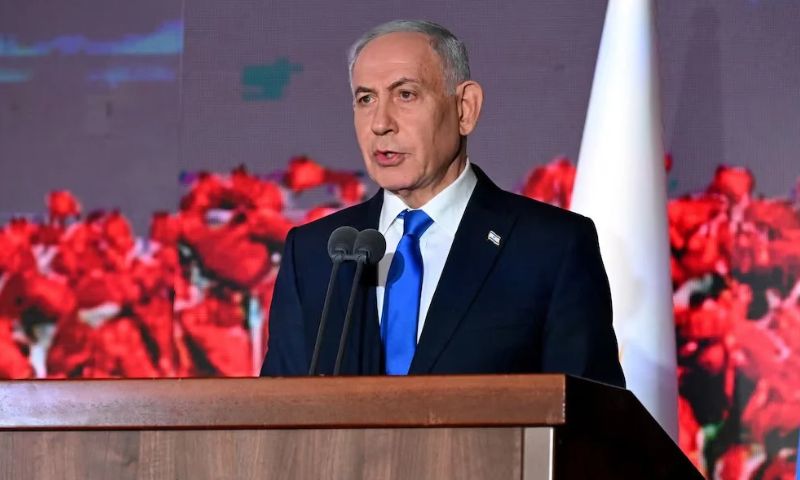
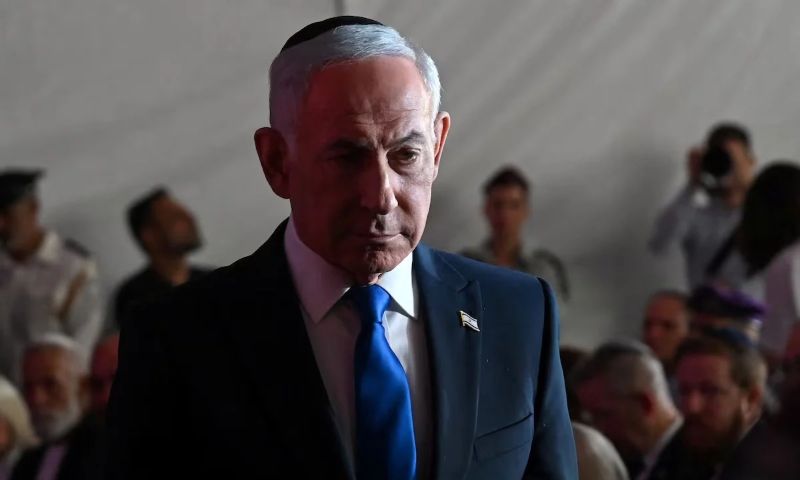
 Israeli Prime Minister Benjamin Netanyahu, October 5, 2026 (Reuters)
Israeli Prime Minister Benjamin Netanyahu, October 5, 2026 (Reuters)
Israeli Prime Minister Benjamin Netanyahu said he held a phone call with Syrian President Ahmed al-Sharaa during the military escalation in Syria in July 2025, after Israel bombed the Syrian Defense Ministry headquarters and the vicinity of the presidential palace in Damascus.
Speaking on Thursday, October 15, Netanyahu described the conversation as “very short and very decisive,” saying it helped stop the killings in the predominantly Druze governorate of Suwayda (southern Syria) during clashes that erupted there that month.
The Times of Israel quoted Netanyahu as saying he initiated the call with al-Sharaa after the Israeli strikes, adding that the killings of Druze stopped following the conversation.
Netanyahu made the remarks during a meeting with Likud party members devoted to the Druze community, according to the Israeli newspaper. Syria had not confirmed the reported call.
There had been no Syrian confirmation of or comment on Netanyahu’s claims at the time of publication.
According to the newspaper, the statement marked the first public disclosure of a direct phone conversation between Netanyahu and al-Sharaa, who took power in Syria in late 2024 following the fall of Bashar al-Assad’s regime on December 8 that year.
The call Netanyahu described came during the military escalation in Syria in July 2025, against the backdrop of clashes in Suwayda governorate between local Druze groups and government forces.
During those events, Israel launched airstrikes on sites in Damascus on Wednesday, July 16, including the Defense Ministry headquarters and the vicinity of the presidential palace. It said at the time that its intervention aimed to protect the Druze in southern Syria and prevent government forces from advancing in the area.
Avichay Adraee, the Israeli military’s Arabic-language spokesperson at the time, said that “the military struck the entrance gate to the Syrian regime’s General Staff compound in the Damascus area.”
Syria’s state-run al-Ikhbariya television reported that “two civilians were injured in an attack by the Israeli occupation in central Damascus.”
The Defense Ministry, meanwhile, did not officially announce any injuries or deaths among its personnel.
On July 16, Israeli Defense Minister Israel Katz demanded that the Syrian army withdraw its forces or face continued Israeli military escalation.
In a statement carried by Israeli media outlets, including The Times of Israel, he said: “The Syrian regime must leave the Druze in Suwayda alone and withdraw its forces.”
“As we have made clear and warned, Israel will not abandon the Druze in Syria and will enforce the demilitarization policy we have decided on,” Katz added.
“The Israeli military will continue attacking the Syrian government’s forces until they withdraw from the area, and will soon escalate its response to the regime if the message is not understood,” Katz said.
Earlier, during a discussion hosted by the Atlantic Council in New York on September 22, Syrian President Ahmed al-Sharaa outlined his vision for Syria’s future during the transitional period and Damascus’s position on foreign military deployments and relations with Israel.
Al-Sharaa said Israel continued its repeated attacks and its occupation of Syrian territory into which it had advanced a week after the fall of Assad’s regime. He added that Israel was also continuing its incursions, arrests, and repeated bombardments.
He said peace with Israel could not be achieved while Syrian territory remained occupied, adding that restoring Syria’s rights was a prerequisite for lasting peace in the region.
Al-Sharaa explained that Syria had chosen diplomacy, pursuing dialogue and seeking help from friendly countries, including the United States. He noted that several meetings and rounds of discussions had been held with Israel.
He said Israel had withdrawn from the agreement because of circumstances specific to it, stressing that Syria remained engaged in the process and hoped to reach a result as soon as possible.
He noted that direct dialogue with Israel had begun about a year or more earlier, focusing on the area into which Israel had advanced after December 8, 2024. He said the dialogue was based on Israel returning to the 1974 lines and reaching a security agreement.
The Syrian president did not rule out Syria entering long-term discussions on lasting peace and the Golan Heights if a security agreement between Syria and Israel succeeded. He stressed that the Golan Heights were Syrian territory, noting that more than 130 countries had supported that position in the latest United Nations vote and that there was no debate or dispute over the territory’s sovereignty.
He stressed that neither the Syrian nor the US president had the right to give the Golan Heights to anyone, as its people held the rights to the land.
Al-Sharaa added that Israeli concerns were being discussed, but that those concerns did not justify everything Israel was doing. He called for an international committee to examine Israel’s concerns and assess which were serious and which were unfounded, so that the region would not enter a cycle of conflicts and wars over unclear fears and anxieties.
Al-Sharaa said Israel was taking the wrong approach by shaping its policies toward Syria based on what had happened in Gaza. He argued that exaggerated fears created risks and called on Israel to respect the security of others.
if you think the article contain wrong information or you have additional details Send Correction


 A
A
A
A
A
A





 More Politics