


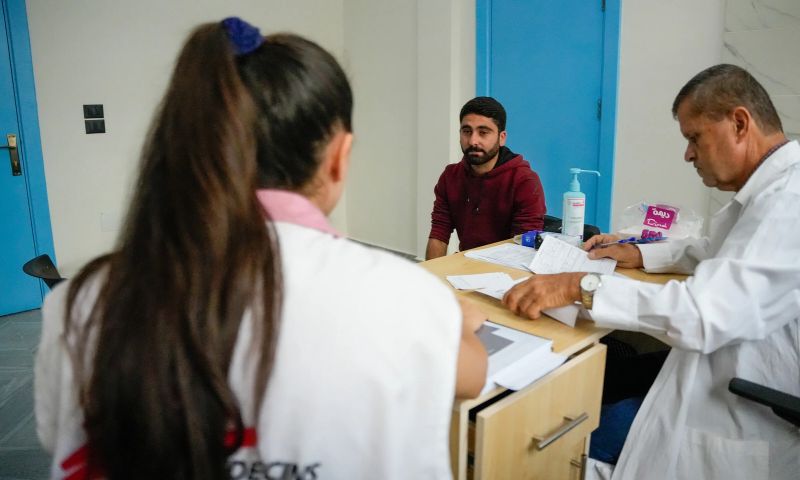
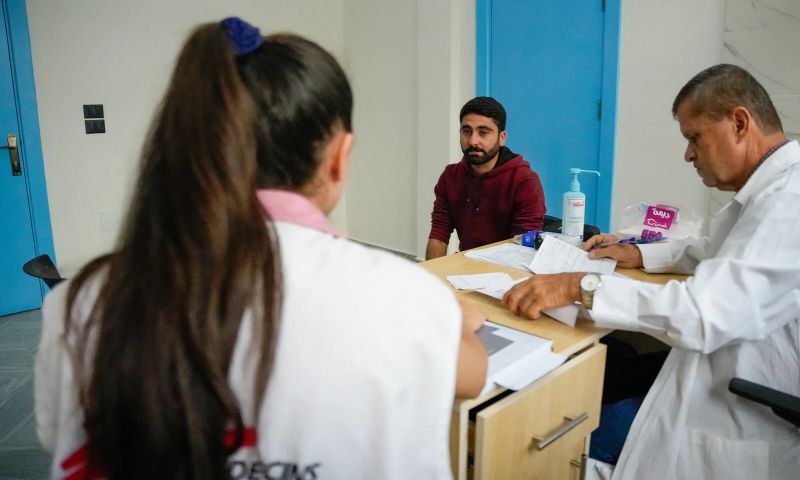
 A Syrian patient receives a medical consultation at a Doctors Without Borders (MSF) health center, October 26, 2026 (MSF).
Doctors Without Borders (MSF) said it is working alongside Syrian health authorities at more than 20 primary healthcare centers across ten governorates.
In a report published on Monday, October 26, the organization said it had supported more than 20 primary healthcare centers across ten governorates during 2026, including Aleppo, Idlib, Raqqa, al-Hasakah, Deir Ezzor, Homs, Daraa, Damascus countryside, Latakia, and Suwayda.
MSF-supported primary healthcare centers provided more than 216,000 general outpatient consultations between January and September 2026.
The organization explained that access to healthcare remains difficult for millions of people across Syria following years of conflict, displacement, and deterioration of health services.
It noted that gaps in services, shortages of medicines and equipment, and the condition of healthcare facilities continue to affect the care available to communities. It stressed that functioning primary healthcare services are essential for people recovering from years of conflict.
MSF said it supports teams from Syria’s health directorates by providing medicines and medical supplies, laboratory services, training, rehabilitation, and improvements to patient triage and flow.
The support also includes follow-up care for people living with chronic conditions, such as diabetes and hypertension, for whom continuity of treatment and regular access to medicines are particularly important.
MSF said nearly 15,000 general outpatient consultations, more than 1,500 sexual and reproductive health consultations, and over 240 referrals had been provided at the public family medicine center in Tsil (Daraa countryside, southern Syria) as of September 2026.
The organization added that its team works alongside Health Directorate staff to support free medical consultations, sexual and reproductive healthcare, mental health activities, the provision of medicines, and patient referrals.
MSF noted that the Al-Qutaylibiyah Primary Healthcare Center in Latakia governorate had experienced shortages of medicines before the organization began providing support.
The center’s director, Dr. Nagham Al-Alouni, said patients could undergo medical examinations at the public health center but often had to purchase most of their medicines themselves from private pharmacies, leaving them to bear most of the costs.
The World Health Organization (WHO) estimated that 12.8 million people in Syria needed health assistance as of June 2026, while access to healthcare remained a major challenge.
According to the organization’s assessment through its Health Resources and Services Availability Monitoring System (HeRAMS), only 39% of assessed primary healthcare centers were fully functional, compared with 59% of assessed hospitals. Healthcare costs, geographical availability, and resource shortages continued to limit effective access to services.
WHO noted that high out-of-pocket healthcare costs remain a major barrier to accessing medical services across Syria, while economic hardship further compounds these challenges.
Persistent inflation, unemployment, and loss of income are affecting families’ ability to meet their basic needs, prompting some to delay seeking healthcare or forgo it altogether.
For families already facing financial pressures, the ability to seek medical treatment depends on the combined costs of transportation, consultations, medicines, and diagnostic tests.
if you think the article contain wrong information or you have additional details Send Correction


 A
A
A


 More Society