


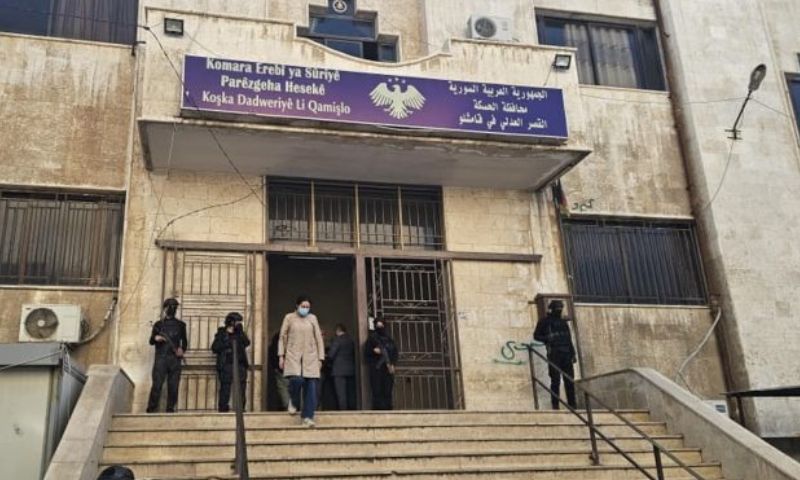
 The reopening of the courthouse in Qamishli, November 15, 2026 (North Press)


 A
A
A
The courthouse in Qamishli (al-Hasakah governorate, northeastern Syria) has resumed operations after a nearly two-year closure, allowing residents to file complaints and lawsuits and complete judicial procedures. The reopening follows a period of difficulty accessing judicial services amid disputes over integrating the Autonomous Administration’s judicial institutions into Syrian state institutions.
Al-Hasakah Governor Nour al-Din Ahmad reopened the Qamishli courthouse on Sunday, November 15, in the presence of Qamishli district director Jihan Hassam, the governorate’s public prosecutor and judicial adviser, Ghazi al-Sheikh Ibrahim, and several judges.
The reopening followed a series of measures to reorganize judicial work in the governorate after understandings were reached between the Syrian government and the dissolved Syrian Democratic Forces (SDF) on integrating institutions. Implementation was accompanied by disputes over the management of courthouses and the integration of judges and court staff.
Speaking at a press conference after the reopening, public prosecutor Ghazi al-Sheikh Ibrahim said his meeting with courthouse staff addressed the resumption of work at the judicial complex serving Qamishli and its surrounding areas. He said work would follow the previous procedures, with pending cases pursued and files accumulated during the closure addressed.
He added that residents of the Qamishli district could now visit judicial offices to file complaints and lawsuits and have documents authenticated, as well as submit complaints to the public prosecution in accordance with applicable laws and procedures.
Al-Sheikh Ibrahim stressed that efforts were underway to restore the courthouse to full operation despite the circumstances facing the region. He said judicial offices would receive residents’ applications concerning lawsuits, complaints and the authentication of judicial documents.
Following the reopening ceremony, the public prosecutor met with courthouse staff to discuss working procedures and the progress of cases after integration. Meanwhile, the al-Hasakah governor announced the formation of a six-member follow-up committee to oversee the integration of the court, judges and lawyers.
The Qamishli courthouse reopened about a month after several judges resumed work at the courthouse in al-Hasakah city. That process began in mid-October as part of the Justice Ministry’s efforts to reactivate judicial institutions and bring them under a unified administrative and legal authority in the governorate.
In April, the Syrian government announced that it had taken over the al-Hasakah courthouse in preparation for reopening it. This coincided with the arrival of a Justice Ministry delegation headed by Attorney General Judge Hassan al-Turba, which met with officials, judges and former staff of the Autonomous Administration’s justice councils.
However, the handover encountered disputes over how courthouses would be managed and judges integrated. Ahmed al-Hilali, spokesperson for the presidential team overseeing implementation of the January agreement, previously told Enab Baladi that the Qamishli courthouse had not been handed over, judges and staff had been prevented from entering the al-Hasakah courthouse, and the ministry had not received lists of judges and employees to be integrated.
Al-Hilali said the government’s plan involved receiving lists of justice council personnel and integrating them according to their specializations, qualifications and experience, while regularizing the status of judges and lawyers within established legal frameworks.
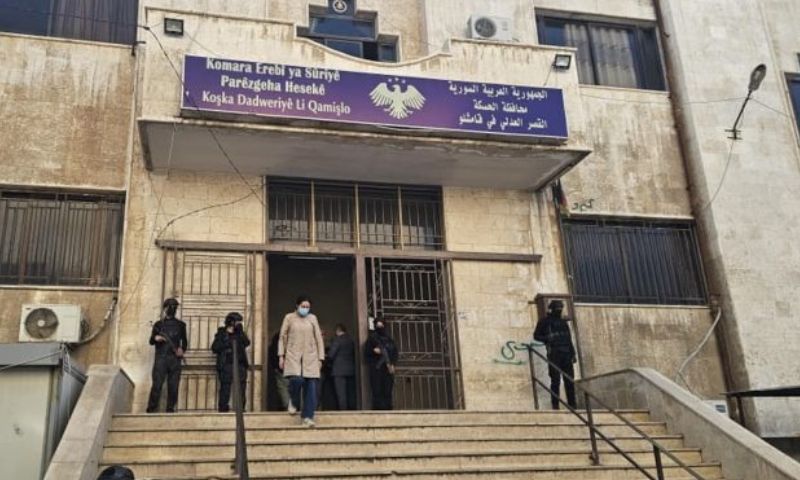
The disputes extended beyond administrative and legal matters to the institutions’ identity and signage. In May, protests erupted at the al-Hasakah courthouse after Kurdish was removed from its sign. Protesters stormed the building and smashed the sign in opposition to its use of Arabic and English only.
The sign was repeatedly removed and reinstalled over several days amid disagreement over the use of Kurdish in official institutions, creating another obstacle to reopening the courthouse and restoring its operations.
During the preceding period, residents of al-Hasakah governorate faced difficulties completing procedures requiring visits to courts and judicial offices, particularly those involving personal status matters, marriage registration, the legal validation of contracts and the adjudication of cases, as well as procedures requiring the authentication of official documents.
The suspension of courthouse operations delayed procedures involving residents’ legal and civil rights. Meanwhile, the procedures followed by different judicial authorities did not provide all residents with a clear and reliable way to complete their paperwork, particularly in cases requiring court judgments recognized by state institutions.
Lawyer Youssef Khalaf told Enab Baladi that reopening the courthouse was of direct importance to residents because it allowed them to use official judicial channels again to file complaints and lawsuits and pursue their rights before the courts.
According to Khalaf, the significance of the move extends beyond accepting new lawsuits to reviving stalled cases and allowing those involved to approach the relevant judicial authorities and pursue the associated legal procedures.
The lawyer said having a functioning court and a clearly defined judicial authority would help residents complete procedures requiring the authentication of documents and records. It would also reduce the need for lengthy waits or administrative alternatives that fail to meet the legal requirements of certain procedures.
Among the files requiring follow-up, according to Youssef Khalaf, are personal status cases, contracts and civil disputes. These involve the rights of individuals and families, and delays in resolving them can prolong legal uncertainty for those concerned.
Khalaf said the successful resumption of work depended on the courthouse’s ability to receive residents regularly, provide sufficient judicial and administrative staff, and establish clear procedures for handling both old and new lawsuits, ensuring that the reopening goes beyond merely restoring the building’s administrative operations.
Zubair Dawoud, a Qamishli resident affected by the courthouse closure, described the difficulties residents faced while it was out of operation. He said the suspension of judicial work amounted to more than the closure of a government office, affecting everyday matters involving individuals’ rights and legal obligations.
Dawoud added that marriage registration, the legal validation of contracts and the pursuit of lawsuits were among the procedures most affected by delays. Those involved had to wait without knowing when procedures would resume, while some files remained pending because they required a court visit or judicial documents and authentication.
He noted that some procedures could not easily be postponed because they involved family and civil rights or required official documents establishing a particular legal status. This created additional difficulties, especially for people whose cases were already before the courts when work stopped.
Dawoud believes reopening the Qamishli courthouse allows residents to resume following up on their cases, but practical measures are needed to address the backlog and clarify the status of stalled lawsuits so that those involved do not have to start again or resubmit paperwork and repeat procedures they have already completed.
Ahmed Suleiman, another resident affected by the suspension of judicial procedures, described a different aspect of the hardship: the impact of court closures on procedures requiring legal validation, particularly contracts and the rights arising from them.
Suleiman told Enab Baladi that the absence of a functioning judicial authority that residents could approach regularly had made some procedures more complicated. Residents could not complete steps requiring court intervention or obtain official authentication, affecting the interests of property owners and parties to contracts, as well as people pursuing lawsuits or legal claims.
He added that the problem went beyond postponed visits to include difficulties following the stages of litigation and knowing which authority to approach to resolve disputes, amid overlapping jurisdictions arising from the presence of multiple judicial authorities in the governorate.
Suleiman hopes the courthouse’s reopening will end the uncertainty facing people with pending procedures. He also hopes the resumption of operations will be accompanied by a clear process for accepting old files and scheduling their review and resolution, while easing procedures for residents seeking to register contracts or establish their legal rights.
The reactivation of courthouses in al-Hasakah and Qamishli forms part of a broader process to reintegrate government institutions in the governorate following changes in territorial control in early 2026. The Syrian army took control of the southern and eastern countryside and parts of the western countryside, while the SDF withdrew to the main cities, including al-Hasakah and Qamishli.
On January 29, the Syrian government and the SDF reached an agreement to integrate the Autonomous Administration’s military, security and service institutions into state institutions. Implementation began gradually in February amid disputes and obstacles affecting several areas, including the judiciary.
With work resuming at the al-Hasakah courthouse and the Qamishli courthouse reopening, the reorganization of the judiciary is entering a new phase. Its progress depends on the Justice Ministry’s ability to unify judicial procedures and address cases left unresolved during the period of administrative division.
For residents, the practical outcome of the courthouse’s reopening remains tied to their ability to complete legal procedures and regain access to the courts to pursue their rights after a lengthy disruption of judicial services in the governorate.
if you think the article contain wrong information or you have additional details Send Correction








 More Society