


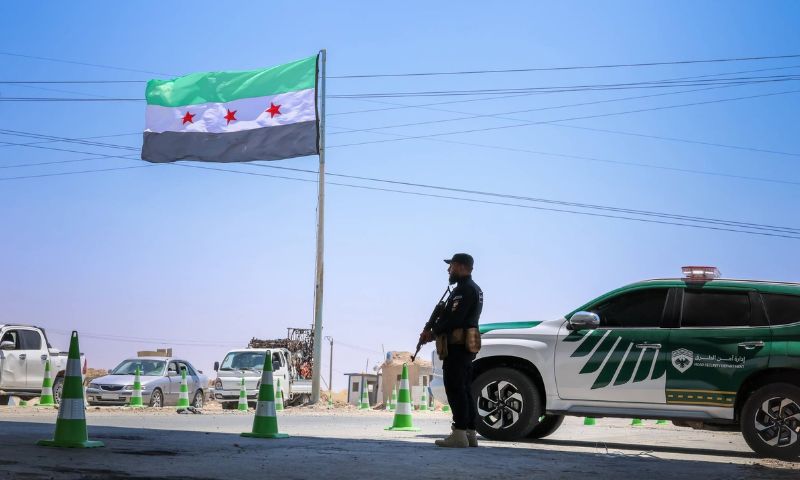
 Road Security personnel deployed at the entrance to al-Hasakah city, July 15, 2026 (Internal Security Forces).
Road Security personnel deployed at the entrance to al-Hasakah city, July 15, 2026 (Internal Security Forces).
The Syrian government is preparing administrative and security arrangements for al-Hasakah city (northeastern Syria) in the coming days, an informed source told Enab Baladi.
The source said on Sunday, August 16, that the Syrian government is preparing to establish full security control over the city in order to resume the operation of government institutions, regulate the administrative situation, and end the existing dual administration and disorder.
The source said the arrangements follow unrest in al-Hasakah governorate during the first organized trip to return displaced people from Ras al-Ain to their areas, adding that the measures are intended to prevent a recurrence of the recent security incidents and continued lawlessness.
According to the source, al-Hasakah city is experiencing disorder and overlapping administrative authority, and the government is working to address the situation in the coming days in a way that would allow government and public service institutions to resume operations.
The source added that establishing security control is primarily intended to reopen government institutions and schools as the new academic year approaches, as well as to create suitable conditions for displaced people from al-Hasakah and Ras al-Ain to return to their areas of origin.
The source said the return of displaced people is directly linked to security and administrative stability, as organizing return operations requires a safe and stable environment and measures to prevent incidents that could obstruct residents from returning to their areas.
The source said bringing the situation in al-Hasakah city under control would end the overlapping administrative and security authorities, restore the operation of institutions, and curb the disorder and security breakdown the city has experienced in the recent period.
According to the source, the measure also seeks to prevent a recurrence of the incidents that accompanied the first organized return trip for displaced people from Ras al-Ain and to ensure that return operations continue in an orderly manner.
The return of hundreds of families from al-Hasakah city to Ras al-Ain on August 10 turned into tensions that spread from the city to several areas of al-Hasakah governorate and reached Ain al-Arab (Kobani), in the eastern Aleppo countryside, that evening.
The developments began after several families returning to Ras al-Ain were assaulted. Protests and roadblocks then took place in al-Hasakah, Qamishli, Amuda, al-Darbasiyah, Tell Tamer, and Maabadah, including the storming of Internal Security headquarters and attacks on public and private property.
The developments ended on August 11 with local authorities announcing legal measures against several people involved, while the Internal Security command in Aleppo announced that calm had returned to Ain al-Arab after its forces deployed in the city.
Following the Ras al-Ain incidents, protests spread to several cities and towns in al-Hasakah governorate.
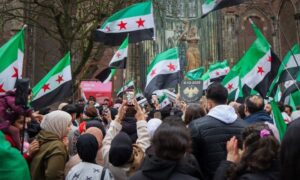
Al-Hasakah, Qamishli, Amuda, al-Darbasiyah, Tell Tamer, and Maabadah witnessed protests and blockages of main roads, while demonstrators also staged a protest outside the al-Hasakah governorate building.
In al-Hasakah and Qamishli, groups stormed Internal Security headquarters, removed Syrian flags from some buildings, and raised Kurdish flags.
Vehicles and other property were damaged on some streets in Qamishli, while roads were blocked in al-Hasakah, Qamishli, Tell Tamer, and Maabadah.
Internal Security Forces reinforced their presence at several locations in al-Hasakah and Qamishli in an effort to contain the tensions, maintain security, and protect residents and public and private property.
The unrest widened when members of the SDF-affiliated Revolutionary Youth Movement forced shopkeepers in al-Hasakah market to close their businesses, according to Enab Baladi’s correspondent.
Security forces also closed the road to Qamishli airport with earthen barriers, while protesters in Tell Tamer blocked the M4 international highway using burning tires.
Al-Hasakah, Qamishli, and Ras al-Ain remained tense during the evening hours amid security deployments in several areas.
On Monday evening, the protests spread to Ain al-Arab (Kobani), in the eastern Aleppo countryside.
Enab Baladi’s correspondent reported that protesters stormed the district administration and Internal Security headquarters in the city and removed Syrian flags from the buildings they entered.
On August 11, the Internal Security command in Aleppo announced that calm had returned to Ain al-Arab following the end of security operations, after several people attacked government headquarters in the area.
The command said its forces entered the city to prevent disorder, preserve security and stability, protect residents, and secure government institutions and public facilities.
It also announced that 19 security personnel were injured while carrying out their duties and that seven people accused of causing the unrest were arrested for further legal proceedings.
Social activist Suleiman Dawoud told Enab Baladi that bringing the situation in al-Hasakah under control is important because the city needs a clearly defined administrative and security authority responsible for managing the city and its institutions, particularly as responsibilities continue to overlap among more than one party.
According to Dawoud, the continued dual administration directly affects residents’ lives, including public services, schools, and security, and makes everyday problems more difficult to address as the city prepares for a new phase linked to residents returning to their areas of origin.
Dawoud added that any security arrangements should be accompanied by clear administrative and public service measures, because restoring security alone would not address the causes of tension if institutions remain inactive or responsibilities continue to be divided among different parties.
Lawyer Mohammad al-Ghanem, meanwhile, told Enab Baladi that any measures to bring the situation under control should take place within a clear legal framework that guarantees the protection of residents and public and private property and prevents disputes related to return or administration from turning into local confrontations.
Al-Ghanem said security stability is an essential condition for organizing the return of displaced people, but a successful return also requires addressing legal issues related to homes, property rights, and occupancy, while ensuring that neither returnees nor current residents face pressure or attacks.
The expected arrangements come amid a continuing administrative and security division in al-Hasakah governorate, nearly seven months after the start of a process to integrate institutions between the Syrian government and the Syrian Democratic Forces (SDF).
Administration and territorial control in the governorate remain divided between the two sides, with responsibilities and the authorities overseeing service, security, and civilian sectors continuing to vary.
Since the beginning of this year, the Syrian government has controlled large areas of southern and eastern rural al-Hasakah and parts of its western countryside, while SDF control has remained concentrated in major cities, including al-Hasakah, Qamishli, al-Malikiyah, al-Darbasiyah, Amuda, and others.
On January 29, the Syrian government and the SDF agreed to begin integrating military, security, and public service institutions into government ministry structures, with gradual implementation of the agreement beginning in February.
However, signs of administrative division remain present in several sectors, according to residents of al-Hasakah city and its countryside. The authority managing institutions and facilities varies from one area to another, while most civilian and public service institutions remain out of operation.
if you think the article contain wrong information or you have additional details Send Correction


 A
A
A
A
A
A



 More Politics