


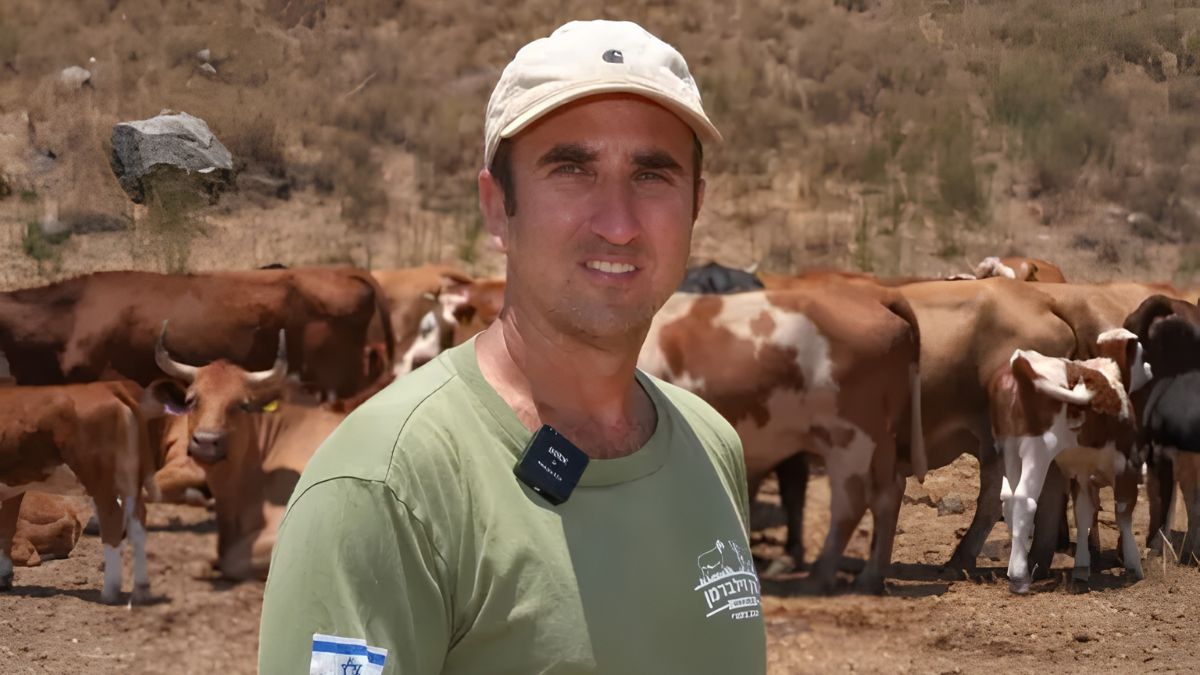
 Israel establishes a cattle pen in the buffer zone in southern Syria, July 3, 2026. (Israeli Yedioth Ahronoth)
Israel establishes a cattle pen in the buffer zone in southern Syria, July 3, 2026. (Israeli Yedioth Ahronoth)
The Israeli newspaper “Yedioth Ahronoth” revealed details of Israel’s “Cow Company” project in the buffer zone between the occupied Syrian Golan and Quneitra Governorate (southwestern Syria).
The newspaper said the project began about six months ago in cooperation between the Israeli army and Hashomer Hachadash, to deploy about 140 head of cattle across an area estimated at around 10,000 dunams, located between the Israeli fence and the 1974 ceasefire line.
According to the newspaper, the project falls within the Israeli military establishment’s security plans to control the area by creating a permanent civilian presence.
Yoel Zilberman, founder of Hashomer Hachadash, told the newspaper that until the end of 2025, the area had seen a daily presence of Syrian shepherds and their livestock, but the introduction of the herd pushed them away from the area.
“Yedioth Ahronoth,” citing Israeli army officers, added that the project achieved its goals after the area became free of Syrian shepherds. The officers said the deployment of the herd and the construction of new fences, about 22 kilometers long and partly equipped with electric wires, restored effective control over the border, according to them.
Enab Baladi’s correspondent in Quneitra said Israel established the “Cow Company” on lands west of the Wadi Tuaym area in southern Quneitra, adding that part of it lies in the occupied Golan and the other part in the buffer zone.
The correspondent noted that the area is considered partly occupied because it is difficult to reach, as residents would need to cross the valley, exposing them to the risk of sniper fire.
The correspondent added that Syrian shepherds have not reached the area since the days of the former regime, noting that it is a fertile area with dense pastures.
Enab Baladi has discussed the difficulties facing livestock shepherds in Quneitra, focusing on their suffering under systematic restrictions imposed by the Israeli army and their search for ways to secure a livelihood under harsh conditions.
Enab Baladi previously met several shepherds in the governorate, located in southwestern Syria on the edge of the occupied Syrian Golan, to discuss the difficulties they face through daily stories of people forced to change their way of life and confront challenges to preserve their only source of income.
Khaled Shamsi al-Rahil, from the village of Kudna in southern rural Quneitra, said Israeli restrictions forced him to move his sheep and cattle to a farm about 15 kilometers east of his home near the Bariqa dam.
Al-Rahil spoke about his daily suffering, stressing that residents’ movement is restricted because their homes are close to the barbed wire separating them from the occupied territories.
He added that depriving them of grazing and destroying wide areas after Israel sprayed toxic substances had made the situation worse.
The occupation authorities did not stop at these measures, but also resorted to arbitrary arrests in the area. Khaled recalled the arrest of his brother, Hamza, adding a psychological and social burden on the family.
Israeli measures also affected other villages in the same way. Enab Baladi met the head of the farmers’ association in Asha, who confirmed that grazing had become very limited in the village, pushing many livestock breeders to move to nearby areas.
Examples include farmer Mohammad Mohsen al-Ali, who moved to Kudna, and Mohammad Ali Mohammad, who moved with his seven children to the area around Bariqa to graze livestock on the eastern side.
Farmer Ayman Diyab al-Ali also left his village in search of better pastures.
The Israeli army has advanced into southern Syria since the fall of the Assad regime on December 8, 2024.
It has set up several military positions in Quneitra and western rural Daraa, in addition to daily military movements in the area that include house searches, arrests, checkpoints, and land bulldozing.
Israel refuses to withdraw from the area, citing security concerns over possible operations launched against it from the Syrian border. The Syrian government, meanwhile, has affirmed that it does not intend to pursue military options with Israel and is focusing on political solutions to address the file.
if you think the article contain wrong information or you have additional details Send Correction


 A
A
A
A
A
A


 More Politics