


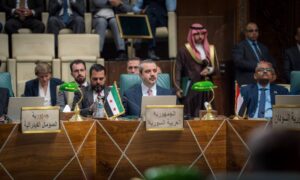
 An official Syrian Egyptian meeting in the Egyptian capital, Cairo, on May 3, 2026. (Ministry of Foreign Affairs, International Cooperation, and Egyptians Abroad)
An official Syrian Egyptian meeting in the Egyptian capital, Cairo, on May 3, 2026. (Ministry of Foreign Affairs, International Cooperation, and Egyptians Abroad)
Reports of Egyptian reservations over the nomination of Muhammad Taha al-Ahmad as Syria’s ambassador to Cairo have renewed attention on the nature of relations between the two countries, at a time when Syrian-Egyptian ties remain marked by political caution despite continued communication between the two sides at different levels.
Egyptian media outlets, citing what they described as an informed source, reported that Cairo had expressed reservations over appointing al-Ahmad as Syria’s ambassador to Egypt, along with reservations concerning several members of the Syrian diplomatic mission nominated to work at the Syrian embassy in Cairo.
According to Egyptian media, Egyptian authorities have not formally notified Damascus of a rejection, but have sent unofficial messages indicating that they do not accept al-Ahmad’s appointment to the post.
The reports raise questions about the background of Egypt’s position, and whether the reservations are linked to the proposed ambassador himself and his background, or reflect a broader approach governing Cairo’s relationship with the new Syrian administration.
The controversy over the ambassador file comes amid a complex course in Syrian-Egyptian relations in the recent period.
Egypt’s approach toward the new Syrian administration has been marked by caution and restraint, with Cairo continuing to monitor political developments inside Syria and their regional implications.
Although there is no rupture between the two countries, the level of political and diplomatic openness between them has remained limited compared with some other Arab states. This makes any step related to the level of diplomatic representation subject to wider political scrutiny and interpretation beyond its administrative or protocol dimension.
The current controversy raises the question of whether the issue is specifically related to the person nominated as ambassador, or whether it reflects the continued presence of political and security concerns that prevent relations between the two countries from moving to a more advanced level.
The file also raises questions about the two sides’ ability to overcome the current diplomatic obstacles and find a formula that ensures continued political communication without allowing disputes related to diplomatic representation to become an additional factor obstructing the development of relations.
Egyptian journalist and politician Qutb Al-Arabi believes Egypt’s reservations over the Syrian ambassador proposed by Damascus are primarily due to considerations related to his political background.
Al-Arabi told Enab Baladi that the Egyptian reservations “did in fact happen,” attributing them to what Cairo describes as the nominee’s background linked to Islamic currents, whether connected to the Muslim Brotherhood or other Islamic currents.
He added that Egyptian authorities view any figures classified within political Islam currents with sensitivity.
According to al-Arabi, the current Egyptian regime was politically founded on confronting these currents, foremost among them the Muslim Brotherhood, and also adopts a reserved position toward other Islamist political forces.
Al-Arabi explained that Cairo does not want, from its perspective, to receive an ambassador seen as having an Islamist background, because this could be interpreted domestically as a contradiction with the policies the Egyptian state follows toward these currents inside the country.
He added that Egyptian authorities are keen not to send contradictory messages to local public opinion or to their supporters, by fighting political Islam groups domestically while accepting figures affiliated with these currents to represent other countries on Egyptian territory.
Al-Arabi suggested that the Egyptian reservations may have achieved their goal, pointing to information indicating that Damascus has moved toward nominating another figure for the position.
According to al-Arabi, the new name under consideration has a different background, which may make his chances of acceptance by the Egyptian side greater. He expected Cairo not to raise similar objections if this nomination is officially approved.
The issue of Syria’s new ambassador in Cairo dates back to efforts launched by Damascus in recent months to reorganize its diplomatic representation in several countries.
In this context, the Syrian government nominated the director of the Arab Affairs Department at the Foreign Ministry, Muhammad Taha al-Ahmad, to serve as Syria’s ambassador to Egypt, and informed Cairo of the nomination through approved diplomatic channels, according to Asharq al-Awsat, citing a source familiar with the file.
According to the source, al-Ahmad was among the most prominent names proposed for the post, benefiting from his academic background in Egypt, where he holds a master’s degree from Cairo University, before the Syrian Foreign Ministry officially approved his nomination.
However, the appointment process faced complications after Cairo informed Damascus, through unofficial channels, of its reservations over the proposed candidate, without issuing a public position or formal rejection so far.
The source added that Damascus held to al-Ahmad’s nomination, which led to the disruption of some arrangements related to the work of the Syrian diplomatic mission in Egypt.
Al-Ahmad appeared alongside Syrian Foreign Minister Asaad Hassan al-Shaibani during his visit to Cairo in early May, where he participated in following up on the files under discussion with Egyptian officials, in a step observers considered an indication that Damascus continued to deal with him as its main nominee for the post.
According to the source, the complications are not limited to the ambassador’s post. Egyptian authorities have not granted entry visas to several members of the Syrian diplomatic mission nominated to work in Cairo, even though, legally, their appointments do not require the approval of the host state, as is the case with ambassadors.
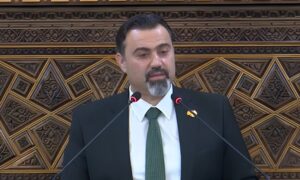
Muhammad Taha al-Ahmad currently serves as director of the Arab Affairs Department at the Syrian Foreign Ministry, after holding several positions in the Salvation Government in recent years before moving to work in the institutions of the new Syrian state.
He was also tasked last June with chairing the committee overseeing the People’s Assembly elections.
if you think the article contain wrong information or you have additional details Send Correction


 A
A
A
A
A
A





 More Politics