


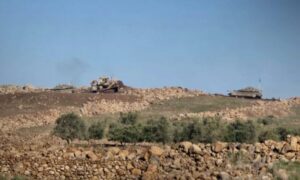
 SDF fighters prepare to withdraw from al-Hasakah’s southern entrance, 10 February 2026 (Reuters)
SDF fighters prepare to withdraw from al-Hasakah’s southern entrance, 10 February 2026 (Reuters)
The 30 January understandings between the Syrian Democratic Forces (SDF) and the Syrian government have begun to take effect on the ground in al-Hasakah governorate (northeastern Syria). The measures include reciprocal withdrawals and the restructuring of security and administrative bodies, alongside continued transfers of Islamic State group (ISIS) detainees out of Syrian territory.
Informed sources inside the SDF told Enab Baladi that both sides are continuing to withdraw from positions in the southern outskirts of al-Hasakah city toward previously agreed points.
Under the deployment plan, the SDF is pulling back from the city’s perimeter toward the interior, while the Internal Security Forces (Asayish) take over security duties on key routes. These include the Tal Abyad road (al-Hasakah–Raqqa) and the al-Hasakah–al-Shaddadi road, up to 15 kilometers from the city. In return, Syrian government forces have begun preparations to withdraw toward al-Shaddadi (southern al-Hasakah countryside).
As part of the repositioning measures, Enab Baladi’s correspondent observed on Monday, 9 February 2026, that around 110 SDF fighters left Ain al-Arab/Kobani (northern Aleppo countryside, near the Turkish border) for al-Hasakah, traveling in 20 military vehicles and accompanied by ambulances, to reinforce the agreed points in the governorate.
The Asayish leadership met with officials from the Syrian government’s internal security forces in al-Hasakah city on Tuesday, 10 February 2026, to discuss mechanisms for deploying security personnel in areas set to be cleared of military presence.
Talks focused on setting mechanisms for police-like security forces to manage day-to-day security inside neighborhoods, forming joint checkpoints at the city entrances, and regulating deployments in towns in the southern al-Hasakah countryside following the withdrawal of military units.
SDF commander Mazloum Abdi said in recent press statements that employees of the Autonomous Administration would remain in their posts, while its institutions would be integrated into the structures of ministries within the Syrian government.
On the military side, Abdi announced plans to form an SDF affiliated “military division” made up of three brigades deployed across al-Hasakah, al-Qamishli (northeastern Syria), and al-Malikiyah (Derek) (northeastern Syria, in al-Hasakah governorate). The division would operate within administrative frameworks under the Ministry of Defense, in line with the agreement.
Regarding border crossings, Abdi said the Simalka crossing with the Kurdistan Region of Iraq would retain its current management, while a delegation from the Border Crossings Authority would be present in Damascus to oversee sovereign matters.
In parallel with these arrangements, the SDF ended the service of dozens of fighters from the Arab component within its ranks, disarming them and confiscating their military IDs without providing financial compensation.
These measures followed a meeting held in al-Hasakah on Sunday, 8 February 2026, that included SDF representatives and Brigadier General Hamza al-Hamidi, head of the Operations Authority in the Syrian army, to discuss mechanisms for integrating personnel into regular forces.
Field information in al-Hasakah indicates the current demobilizations aim to limit integration into the new brigades to Kurdish fighters, especially after cases of Arab fighters defecting in al-Raqqa and Deir Ezzor in recent months and heading to Syrian government run “settlement” centers.
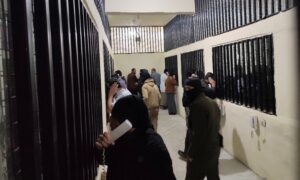
On the ground, Enab Baladi’s correspondent in al-Hasakah observed an International Coalition convoy escorting six buses from the Unknown Soldier roundabout (al-Hasakah city) toward al-Sinaa Prison in the Ghuwayran neighborhood (al-Hasakah city), where ISIS members are held.
These movements come within ongoing operations to transfer the detainees from Syrian territory to Iraq, in coordination among the parties involved.
if you think the article contain wrong information or you have additional details Send Correction


 A
A
A
A
A
A


 More Politics