Amir Huquq | Marina Marhej | Christina al-Shammas | Mohammad Deeb Bazt
The recent decision to amend electricity tariffs has sparked wide controversy among citizens and production sectors, from factories to small workshops, especially amid the harsh living conditions Syrians are facing.
On 30 October, Syria’s Ministry of Energy published the details of a decision to raise electricity prices across four brackets, saying the changes “take into account social categories and different consumption levels.” The hike is part of a government plan that aims to reform the electricity sector and improve services at a time when the sector is reportedly incurring losses estimated at one billion US dollars annually, amid funding and infrastructure challenges in most areas, according to the ministry.
Following the price increase, electricity has become the main topic of conversation for Syrians at all levels, while the government’s plan to address public concerns remains unclear.
Enab Baladi conducted a poll to gauge Syrians’ views on the new electricity tariff and to what extent it is compatible with income levels in Syria.
Of 2,550 respondents, 83% said the new tariff is not compatible with their income, while 17% considered it appropriate.
Enab Baladi also canvassed views on the street and spoke with specialists, associations, and relevant bodies to provide a broader reading of the expected impact of the decision to raise electricity prices on people’s lives, prices, and costs across productive sectors.
How low income households are coping with the “nightmare” of the electricity tariff brackets
With the continued erosion of purchasing power in Syria and the difficult living conditions many people face, news of the revised electricity tariff has stirred a wave of debate and anger, as Syrians say it will directly affect their daily lives.
While some see the higher prices as necessary to address deficits in the electricity sector and develop it, others question how individuals will actually be able to pay their bills.
For Samer al-Ali, a government employee, the anticipated electricity bill has become a “nightmare”, forcing him to weigh what must be paid against what his family can give up, just to pay the bill on time, while his monthly salary fails to cover even his household’s most basic needs.
For him, the issue is no longer simply about having power at home, it has turned into a “daily battle for survival”, as he put it. Every improvement in electricity supply now means another jump in costs, unless his income changes and the government follows through on its promises to raise monthly wages.
Amal al-Rifai, a housewife from the al-Midan neighborhood of Damascus (the Syrian capital), spends most of her time thinking about how to rationalize electricity use at home, fearing her monthly bill will exceed the threshold of 300 kilowatt-hours, which she has set for herself as a “red line that must not be crossed.”
Amal is no different from many other citizens who now carefully calculate the hours they run electrical appliances at home. They hesitate to turn on the water heater just to take a shower, plan laundry cycles for specific days of the week, and turn household management into a continuous monitoring operation of appliances, fearing that any small mistake will push the meter up to a level the family cannot afford.
“People no longer worry about power cuts but about consuming electricity itself, after the bill became a major item that threatens the balance of the household budget every month,” she told Enab Baladi.
According to figures the ministry posted on Facebook, electricity tariffs are now divided as follows:
-
First bracket: 600 Syrian pounds per kilowatt-hour, for consumption up to 300 kilowatt-hours over a two-month billing cycle, with a stated government subsidy covering 60% of the actual cost.
-
Second bracket: 1,400 Syrian pounds per kilowatt-hour, covering middle and high income households and small projects that consume more than 300 kilowatt-hours over a two-month cycle.
-
Third bracket: 1,700 Syrian pounds per kilowatt-hour, applied to users exempt from scheduled power cuts, such as government institutions, companies, and factories that require round-the-clock electricity.
-
Fourth bracket: 1,800 Syrian pounds per kilowatt-hour, applied to large factories and high electricity consumers, such as smelting plants and similar heavy industry facilities.

Replacing the damaged transformer at al-Husseiniyah substation no. 3 (near Damascus) with a new 400 kilovolt transformer, 3 November 2025 (Ministry of Energy/Telegram)
A third of the salary goes to electricity
Secretary of the Consumer Protection Association and economic expert, Abdul Razzaq Habza, told Enab Baladi that the mismatch between the new electricity tariff and citizens’ income is “self-evident”, noting that wages do not exceed 1.5 million Syrian pounds at most.
He added that anyone earning one million pounds will pay around 300,000 pounds for electricity, which is roughly one third of their salary, something he considers incompatible with current income levels in any way.
Habza pointed out that any increase in energy sources in general, whether gasoline, diesel, fuel oil, or electricity, directly or indirectly affects consumers’ income and living conditions. He believes that higher electricity prices in particular will have a direct impact on household consumption.
He explained that citizens are now barely able to secure their basic food needs, and that food itself has become a burden that is difficult to afford in the first place. He noted that he has previously argued that people’s monthly income should range between five and seven million Syrian pounds before even thinking of raising electricity prices, simply so that they can remain alive.
Price hikes, expected fears
Zaid Lutfi, a red meat shop owner in the Tabbaleh market in Damascus (the Syrian capital), says that raising prices is no longer a choice he makes, but a necessity imposed by costs. Every kilo of meat he offers his customers passes through a long chain of expenses, from refrigeration and transport to monthly electricity bills.
Zaid finds himself facing a dilemma. If he does not raise prices, he will lose his capital, and if he does, he will lose some of his customers. However, he believes that continuing to sell at old prices will inevitably lead to closing his shop sooner or later.
Consumer Protection Association secretary, Abdul Razzaq Habza, said that rising electricity prices will be immediately reflected in the prices of goods and raw materials, as factories and shops are forced to raise prices automatically.
He explained that businesses that depend on refrigeration, such as butcher shops and stores selling chicken, eggs, and other sensitive food items, will raise their prices by an estimated 10 to 15 percent because of electricity costs.
He also noted that the poultry sector is heavily affected, since it requires electricity in summer for cooling and in winter for heating, which creates an additional increase in prices.
The association has previously called for exempting factories, particularly the agricultural sector, from electricity charges, since agriculture relies on power for pumping water, irrigation, and extraction processes, as well as for producing agricultural raw materials that are themselves affected by higher electricity costs. In the end, traders, farmers, and industrialists cannot absorb these losses, so they add the increase to the final cost, which is then passed directly to citizens, according to Habza.
Rising electricity prices will be immediately reflected in the prices of goods and raw materials, as factories and shops are forced to raise prices automatically.
Abdul Razzaq Habza,
Secretary of the Consumer Protection Association and economic expert
“No impact” on goods
The Director of Consumer Protection and Food Safety at the General Directorate of Internal Trade and Consumer Protection, Hasan al-Shawa, believes that the latest decision has not affected commodity prices in the markets, saying no increase has been recorded since it was issued, according to data from the Price Monitoring Division, which tracks price movements in all provinces.
In an interview with Enab Baladi, he said that the higher cost of electricity has not created a noticeable difference in retail prices, because its impact is spread across a large number of items and units within a single shop, which he argues does not justify raising prices. He stressed that the directorate monitors price indicators daily through the Price Monitoring Division, which collects data from ten different sources for each basic item, allowing it to detect any change in prices immediately.
Al-Shawa added that Syrian markets are currently seeing a marked decline in the prices of several basic commodities after a period of increases. He said merchants have shown a high level of awareness in dealing with current economic conditions and that there is a general sense of national responsibility among both citizens and traders to maintain price stability and protect consumers.
The latest decision has not affected commodity prices in the markets, and no increase has been recorded since it was issued, according to data from the Price Monitoring Division, which tracks prices in all provinces.
Hasan al-Shawa
Director of Consumer Protection at the General Directorate of Internal Trade
What about monitoring?
Regarding measures to protect consumers, Habza said that market inspection will not be effective under current conditions, because producers and traders justify higher prices by citing rising costs, especially in the context of a free market economy.
“In a free market, traders set the prices they deem appropriate based on their costs plus a profit margin, unlike in the past when there were official price lists and set rules for calculating cost and profit,” Habza said.
He noted that violations today are mostly limited to failing to post prices or issues of fraud and misrepresentation, while higher prices in themselves are not considered a violation.
Habza explained that the association has called for setting an upper limit on profit margins, so that a trader is not allowed to buy a commodity for 10,000 pounds and sell it for 30,000, but rather for a more reasonable increase, around 15,000 pounds, in order to prevent exploiting higher electricity costs as a pretext for excessive price hikes.

Iron smelting work inside a blacksmith workshop in the al-Kallaseh industrial area in Aleppo city (northern Syria), 2 November 2025 (Enab Baladi)
Sustainability opportunities and threats to social stability, a double impact
Although it is part of a government plan to reform the electricity sector and improve its financial and technical sustainability, the decision on electricity prices may worsen living crises, especially for low income groups, and increase pressure on the private sector, which bears the bulk of production and operating costs, according to economic analysts interviewed by Enab Baladi.
Economic expert Dr. Abdulrahman Mohammed, a professor at the Faculty of Economics at Hama University (central Syria), believes that adjusting electricity tariffs is a first step within a broader plan to reform the sector. He explained that the government aims through this measure to ensure continuity of service and prevent the collapse of the power system, which requires striking a balance between actual costs and revenues.
Mohammed believes that despite this goal, the decision will inevitably affect people’s purchasing power. He noted that average monthly income in Syria does not exceed about 75 US dollars, and that around 90 percent of the population lives below the poverty line, which means any increase in electricity bills becomes an additional burden on households, particularly the poorest.
He expects the higher cost of electricity to spill over into transport, production, and food prices, potentially fuelling inflation and further limiting families’ ability to meet their basic needs.
Thus, the expected economic impact of the revised tariff will be twofold, Mohammed said. On one hand, it may help improve the sustainability of the electricity service and increase supply hours, while on the other, it could add to living pressures and drive up the prices of goods and services.
Economic expert Mohammad al-Hallaq described the tariff increase as an “economic ordeal” that touches the core of the social contract and threatens the stability of society as a whole, pointing out that price rises are no longer a mere service issue, but a crisis that affects Syrians’ daily lives.
Al-Hallaq said that the first tariff bracket, which is supposed to be subsidized, has reached around 180,000 Syrian pounds, while prices in the higher brackets have doubled. He added that people are already unable to pay the lowest bills, so “how will they pay second bracket bills?”
“We are heading toward a real crisis that threatens the social fabric if no action is taken to soften the shock,” he warned.
Impact on the private sector
According to al-Hallaq, the increase will also hit the private sector. He explained that any rise in energy costs is reflected in profit margins. A trader or industrialist who used to make a profit of only 5 percent will now be forced to raise prices to cover extra expenses, not to reap higher profits, as is often believed.
Al-Hallaq believes recent government measures did not take into account the situation of private sector employees. “Even if we assume the government compensates public sector staff with specific amounts, what about the hundreds of thousands working in the private sector? Is this sector currently able to raise wages or absorb the new burdens?” he asked.
He pointed out that the investment climate in Syria is marked by instability and legal uncertainty, which obstructs the creation of new jobs and contributes to rising unemployment.
Al-Hallaq said that about 80 percent of private sector establishments are struggling or barely covering their costs, while no more than 20 percent are in good shape, mostly export-oriented companies or those with strong brands. He warned that some small firms may be forced to reduce their workforce or even close down entirely.
The increase will hit the private sector, and any rise in energy costs affects profit margins. A trader or industrialist who used to make a profit of only 5 percent will be forced to raise prices to cover additional expenses, not to seek bigger profits, as is often believed.
Mohammed al-Hallaq
Economic expert
Speaking about wages, al-Hallaq stressed that raising the minimum wage in the public sector will push the private sector to raise wages as well, which in turn increases operating costs.
Any wage increase automatically means higher taxes and social security contributions, he explained. If the minimum wage becomes one million Syrian pounds, for example, the employer will have to pay around 24 percent extra on top of that amount, which is a heavy burden on small and medium sized companies.
He added that the government describes workers’ wages in Syria as “low”, “and I say they used to be competitive, but they are no longer so. We cannot talk about cheap labor under such harsh living conditions.”
One billion dollars in annual losses
Two government sources previously told Enab Baladi that keeping electricity prices unchanged costs the government around one billion US dollars a year, due to longer power supply since the fall of the former regime, from almost two hours to eight hours per day. This has driven up the costs of producing electricity and importing the gas and fuel oil needed to operate power plants.
Each kilowatt-hour of electricity costs 0.14 US dollars, about 1,600 Syrian pounds, while it is currently sold to consumers for just 10 Syrian pounds, around 0.0009 US dollars. This, the sources said, is causing major losses in the electricity sector.
The Syrian government does not plan to completely remove subsidies on electricity, but rather to restructure them in a way that improves the quality of the service, at prices closer to the actual cost.

Solar panels on the rooftops of buildings in Damascus (the Syrian capital), 7 November 2025 (Enab Baladi/Noor Hamza)
A shock for industrialists..
higher operating costs and a loss of competitiveness for Syrian products
The decision to raise electricity tariffs for industrial subscribers has sparked discontent in industrial circles that rely on energy as a core component of the production process. Many see the timing as inappropriate amid difficult operating conditions and unstable prices for fuel and other production inputs.
Workers in Aleppo’s industrial sector (northern Syria) believe the decision will directly increase operating costs and weaken the competitiveness of local products in both domestic and foreign markets, especially given the significant gap in energy prices between Syria and neighboring countries.
Industrialists told Enab Baladi that raising the industrial electricity tariff to 1,700 Syrian pounds per kilowatt-hour (about 0.15 US dollars) came as a shock to manufacturers who had been hoping for a price reduction, not an increase, particularly after the government had, a few months earlier, fixed the price at 1,500 Syrian pounds (about 0.13 US dollars) per kilowatt-hour following the cancellation of the 21.5 percent electricity tax.
They said the latest move came without prior warning or consultation and at a time when the industrial sector has yet to recover from its accumulated crises. Electricity, they stressed, is a key input in the production process, like raw materials, and any rise in its cost directly affects the efficiency and continuity of factories.
They added that the new tariff weakens the competitiveness of Syrian products in foreign markets, given clear differences compared with neighboring countries where electricity is sold at much lower prices. While the price in Jordan is around eight cents per kilowatt-hour and in Egypt around four cents, the cost in Syria has reached the equivalent of 14 cents.
A threat of halting production
Tayseer Darkalt, head of the committee for the al-Arqoub industrial zone in Aleppo (northern Syria), believes the impact of the decision varies from one sector to another. In engineering industries, electricity costs do not exceed 10 percent of total expenses, while in chemical industries and metal smelting they can reach about 40 percent.
On this basis, he said, some factories’ monthly bills will rise by more than five million Syrian pounds, which will erode profit margins or even force some facilities to shut down completely.
Darkalt pointed out that sectors such as textiles and leather were already suffering from weak demand and high prices of raw materials and fuel, and that higher electricity costs could push what remains of them to close, especially since many factories are currently operating at only one tenth of their productive capacity.
He warned that continuing to raise prices without any improvement in people’s purchasing power will lead to a state of stagnation, as the ability to sell local goods declines, which in turn means production will stop and job opportunities will shrink.
The return of “taxes”
Textile manufacturer Abdulmonem Rayhawi said the industrial sector is suffering from unstable economic decisions. After considerable effort, industrialists managed to abolish the electricity tax, only to see the price rise again to 1,700 pounds per kilowatt-hour, effectively reintroducing the tax. This now amounts to about 15 US cents according to the exchange rate, which he describes as extremely high by regional standards.
Rayhawi believes the current electricity price will increase operating costs for factories, which may lead to additional inflation and higher wages for workers. In turn, manufacturers will be forced to raise the prices of their products, pushing the production wheel back toward a semi-paralyzed state and leaving industry stuck in a difficult circle between costs and marketing.
Impact on operating costs
“At a time when we are trying to revive the markets, the government appears to be fighting the national product instead of supporting it,” industrialist Mahmoud Sheikh al-Kar told Enab Baladi. He explained that any change in the industrial business environment, whether in energy prices or the exchange rate, negatively affects facilities that need long periods of stability before they can recover.
Dr.Mohamad Ourfali, a businessman and lecturer at the University of Damascus (the Syrian capital), said that setting electricity prices for industrial and commercial subscribers will add new burdens on manufacturers, who are already facing competition from imported products that receive support in their countries of origin, as well as higher local fuel prices.
He explained to Enab Baladi that electricity is directly reflected in the variable costs of production, meaning any increase in its price will immediately impact operating costs. He noted that the new tariff might be acceptable only if the national product is protected against imported goods.

Replacing the damaged transformer at al-Husseiniyah transformer station no. 3 (near Damascus) with a new 400-kilovolt transformer, 3 November 2025 (Ministry of Energy/Telegram)
Syrians search for alternatives
The latest increase in electricity prices, coupled with a widening gap between monthly income and living costs, has pushed people to recalculate their power consumption and brace for electricity bills that will arrive at the end of each billing cycle as yet another burden on households. Many have begun looking for sustainable alternatives that can provide energy without relying entirely on the public grid.
Solar power systems top these alternatives, especially after being used initially as a temporary solution to bridge hours of scheduled cuts. Once installed, they can generate electricity at an almost zero running cost, making them a long term investment that provides energy independence and effectively puts a permanent cap on electricity bills.
Solar energy as a sustainable alternative
According to the alternative energy company “xnetron”, solar power systems can cover all of a household’s electricity needs if properly designed and installed.
A typical family with basic appliances such as a refrigerator, lighting, television, fans, and a washing machine can install a system made up of four to six solar panels, a lithium battery, and an inverter with a capacity of 4 to 6 kilowatts. This allows all electrical loads to run during the day without relying on the public grid, while at night the system switches to battery power to cover night time consumption.
The company’s sales manager told Enab Baladi that with good energy rationing at night, households can almost completely dispense with the public grid, cutting their electricity bill by more than 90 percent. In extreme cases, she said, batteries can be charged from the grid for only one or two hours.
She noted that heavy loads such as air conditioners and washing machines are better operated during daylight hours, unless the system is expanded and its capacity increased, in which case the household could fully disconnect from the grid.
On the possibility of benefitting from solar energy in winter, the sales manager said solar panels actually perform better in winter than in summer, as they rely on sunlight, not heat, to generate power.
She revealed that a new product will soon be launched on the market, an immersion heater rod for water heating that runs on solar power and consumes only 500 watts, compared to around 3,500 watts for conventional rods. She said this step would help ease the load on household solar systems.
She also recommended replacing traditional lighting with energy saving bulbs, and using inverter type appliances such as air conditioners, refrigerators, and washing machines, as they consume less power and are better suited to work with solar systems.
“Amperes”, a backup solution for electricity
Issam Hallak, a resident of the al-Sayyid Ali neighborhood in Aleppo (northern Syria), told Enab Baladi that the decision is not necessarily negative, explaining that when compared with the cost of neighborhood diesel generator subscriptions, known locally as “amperes”, the difference in cost is clear. The average subscription for one “ampere” is around 280,000 Syrian pounds per month (about 24 US dollars) and only allows for lighting and a television for limited hours, whereas the public grid, even under the second tariff bracket, can run most household appliances within reasonable limits and at a relatively lower cost.
By contrast, Ibrahim Raslan, who lives in the al-Zebdiya neighborhood in Aleppo (northern Syria), believes the decision will double the burden on low income families. He considers “amperes” a necessity that people can no longer do without, while higher public electricity prices will make combining the two systems a heavy financial load, “especially given low monthly incomes and the instability of regular grid supply hours.”
Ahmad Darbis, who operates a diesel generator providing “amperes” in the al-Jamiliya neighborhood in Aleppo (northern Syria), said residents remain divided over whether to keep their subscriptions after the decision to raise the price of household electricity. Some, he noted, have kept their subscriptions out of fear of high public electricity bills, while others have cancelled them as grid supply has improved to some extent.
He told Enab Baladi that public electricity “has indeed improved”, but is still not available 24 hours a day, prompting some families to maintain a single “ampere” subscription as a backup solution, despite its high cost compared with their monthly income.
Ahmad added that a portion of residents have turned to installing solar power systems to secure their basic needs, arguing that people now face “several options, all of them expensive”, and that for some households, the “ampere” remains a necessity, even if it is no longer the cheapest option.
Proposals to ease the burden
Dr. Abdulrahman Mohammed proposed a pricing scheme that would divide electricity tariffs geographically according to living standards. “You could set 800 Syrian pounds (about 0.07 US dollars) per kilowatt-hour in affluent neighborhoods, 600 Syrian pounds (about 0.05 US dollars) in middle income areas, and 100 Syrian pounds (about 0.009 US dollars) for the first 200 kilowatt-hours in rural areas and poorer neighborhoods, so that the variation in financial capacity between areas is taken into account,” he said.
He also called for direct support to poor families, the launch of awareness and consumption rationalization programs to help reduce bills, and using revenues from higher prices to develop infrastructure and improve the stability of electricity supply.
For his part, economist Mohammed al-Hallaq stressed the need for partnership between the government and the private sector in making economic decisions. “You cannot tackle a crisis of this magnitude without involving chambers of commerce and industry and popular committees in the discussions. Top down solutions only widen the trust gap between citizens and the government,” he said.
Dr Mohammed believes that adjusting electricity prices is an unavoidable economic necessity to ensure the sector’s continuity, but that it comes with significant challenges related to households’ ability to bear rising financial burdens.
He argued that it is essential for the government to adopt effective strategies that safeguard the sustainability of electricity services without placing extra burdens on citizens, something that requires a careful balance between economic and social objectives.
Economist al-Hallaq said Syria now needs a realistic vision that preserves social stability. “We cannot emerge from any crisis unless we face it with dialogue and transparency, not by glossing it over,” he said.
The reality of electricity in Syria remains complex, where the need for power intersects with households’ purchasing power, especially among low income families. Citizens find themselves caught in a difficult equation between cost and necessity, forced to weigh temporary fixes against long term investments to secure their daily electricity needs.


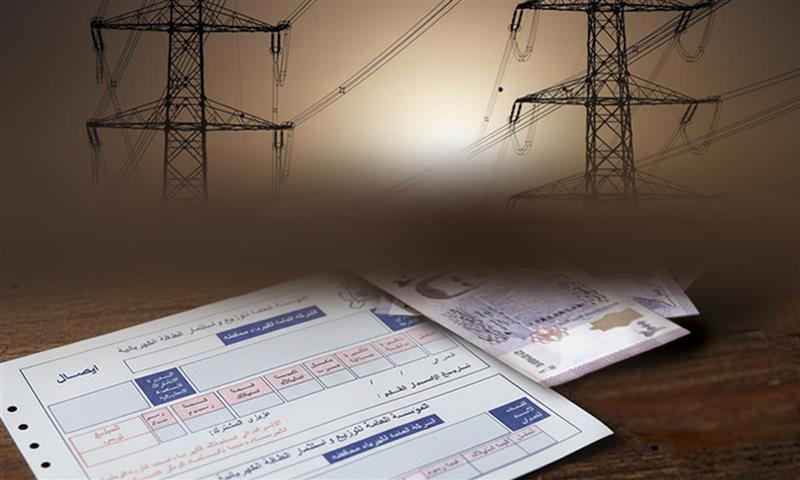
 Many Syrians object to the Energy Ministry’s new electricity tariff brackets (Enab Baladi/AI edited)


 A
A
A
A
A
A







 More In-Depth