


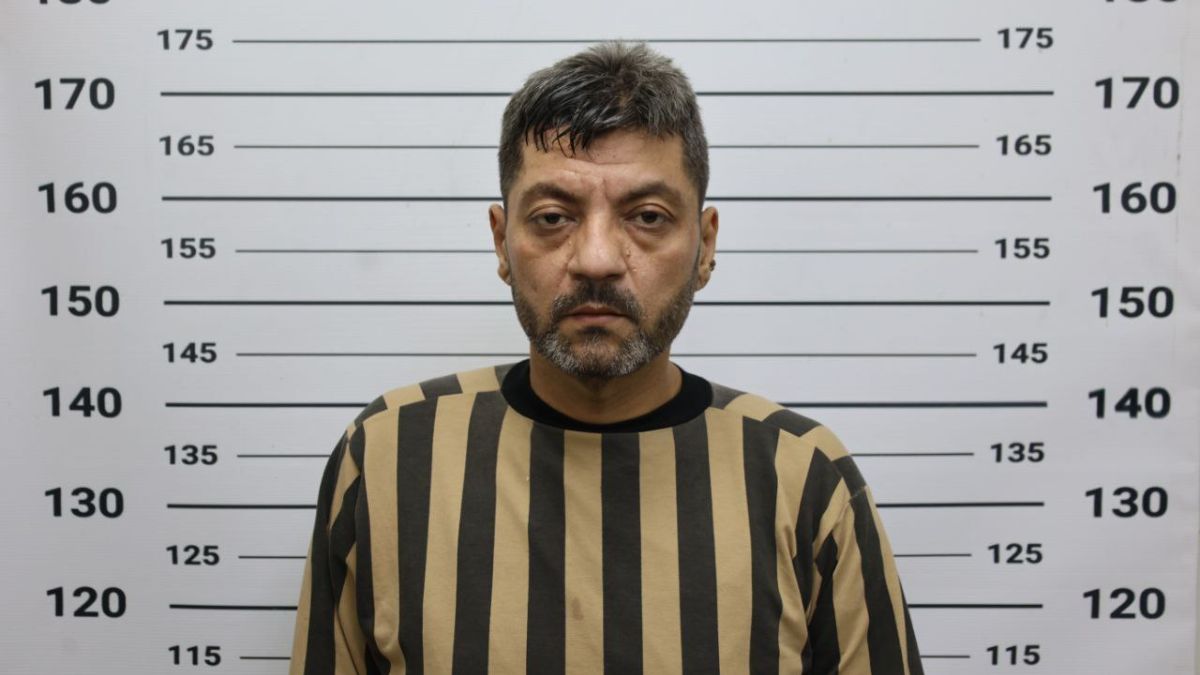
 Interior Ministry arrests Namir al-Assad, October 16, 2025 (Ministry of Interior)
Interior Ministry arrests Namir al-Assad, October 16, 2025 (Ministry of Interior)
The Ministry of Interior announced on Thursday, October 16, 2025, the arrest of Namir Badiʿ al-Assad, a cousin of the deposed president Bashar al-Assad, in a security operation in rural Latakia.
The Ministry’s press office told Enab Baladi that Namir was detained with several of his escorts in a raid in al-Qardaha (Latakia governorate, western Syria).
In a statement, the head of Internal Security in Latakia, Brig. Gen. Abdulaziz al-Ahmad said that, based on precise information and field surveillance, Internal Security units in the al-Qardaha area, in cooperation with the Counter-Terrorism Branch, arrested Namir Badiʿ al-Assad, the younger brother of Wasim Badiʿ al-Assad, and members of his “gang.”
According to the statement, the operation followed the gang’s killing of citizen Rabeeʿ Hamisha and an attempt to kidnap the child Ammar Hamisha at a gas station in the village of Dabiqa in al-Qardaha countryside (Latakia governorate, western Syria).
Interior Ministry investigations indicated that Namir exploited his kinship with the former president to form and run organized “terrorist” networks implicated in murder, kidnapping, extortion, and armed robbery against civilians in several provinces. The statement also said he oversaw captagon manufacturing, distribution, and smuggling to neighboring countries, and was involved in the armed attack in March on sites belonging to the Internal Security Forces and the Ministry of Defense in the town of Salanfa (al-Haffah district, Latakia governorate, western Syria).
The Ministry added that Namir was referred to the Counter-Terrorism Directorate to complete investigations and take the necessary legal measures, with a view to referring him to the competent judiciary.
Namir Badiʿ al-Assad was born in 1982 in Syria. He hails from the family of the deposed president, Bashar al-Assad, and is the younger brother of Wasim al-Assad.
He seized the “al-Haram” money transfer company in central Damascus in 2005 and, since then, has moved in and out of prisons.
In early 2007, he led an uprising inside Damascus Central Prison (ʿAdra) that lasted several days; he was then punished with solitary confinement and transferred with other ringleaders to the Saydnaya Military Prison, according to documentation by researcher and writer Hossam Jazmati.
Namir has been accused of multiple felony cases, including kidnapping, theft, rape, and forming an armed gang. He was sentenced to death twice and received three life sentences.
His name has long been linked to illicit activity, including monopolies and control over public and economic projects on Syria’s coast. Arab and Western media reports have also addressed his ties to large-scale corruption files and to influential networks that smuggled resources and weapons between Syria and neighboring countries in recent years.
According to records leaked by the “Zaman al-Wasl” website, warrants were issued against him for rape and armed threats in 2006; three warrants for robbery and theft in 1999, 2002, and 2003; and two morality warrants for illegal gambling in 1997. He was also wanted on a charge of “coercing others to act to their financial detriment” in 2003, and a “special wanted” card for the Communications Directorate per a 2005 bulletin.
On June 21, the Ministry of Interior arrested Wasim al-Assad, another cousin of the deposed president.
In a statement published on its official channels, the Ministry said that, in a tightly planned operation, the General Intelligence Directorate, in coordination with relevant Interior Ministry units, lured Wasim al-Assad and arrested him.
Wasim is considered one of the most prominent captagon traffickers and was implicated in several crimes during the former regime period. The European Union sanctioned him with an asset freeze and travel ban as part of international efforts to hold individuals involved in human rights abuses and illicit activities accountable.
Since the fall of the Assad regime, the new authorities have signaled a drive to combat the captagon industry and trade, reassuring Gulf states and others about the file. The Ministry of Interior continues to announce the uncovering of captagon labs, the pursuit and arrest of traffickers and producers, and the seizure and destruction of pills.
if you think the article contain wrong information or you have additional details Send Correction


 A
A
A
A
A
A





 More Politics