Mowaffak al-Khouja | Lama Diab| Mohammad Kakhi
The Syrian army dissolved automatically with the fall of Bashar al-Assad’s regime at dawn on December 8, 2024, as most senior commanders accused of involvement in the killing of Syrians fled the country, leaving a vacuum within the military institution.
During the Victory Conference on January 29, the dissolution of the military factions that had fought against Assad’s regime was announced, with the goal of merging them into a single structure under the Ministry of Defense.
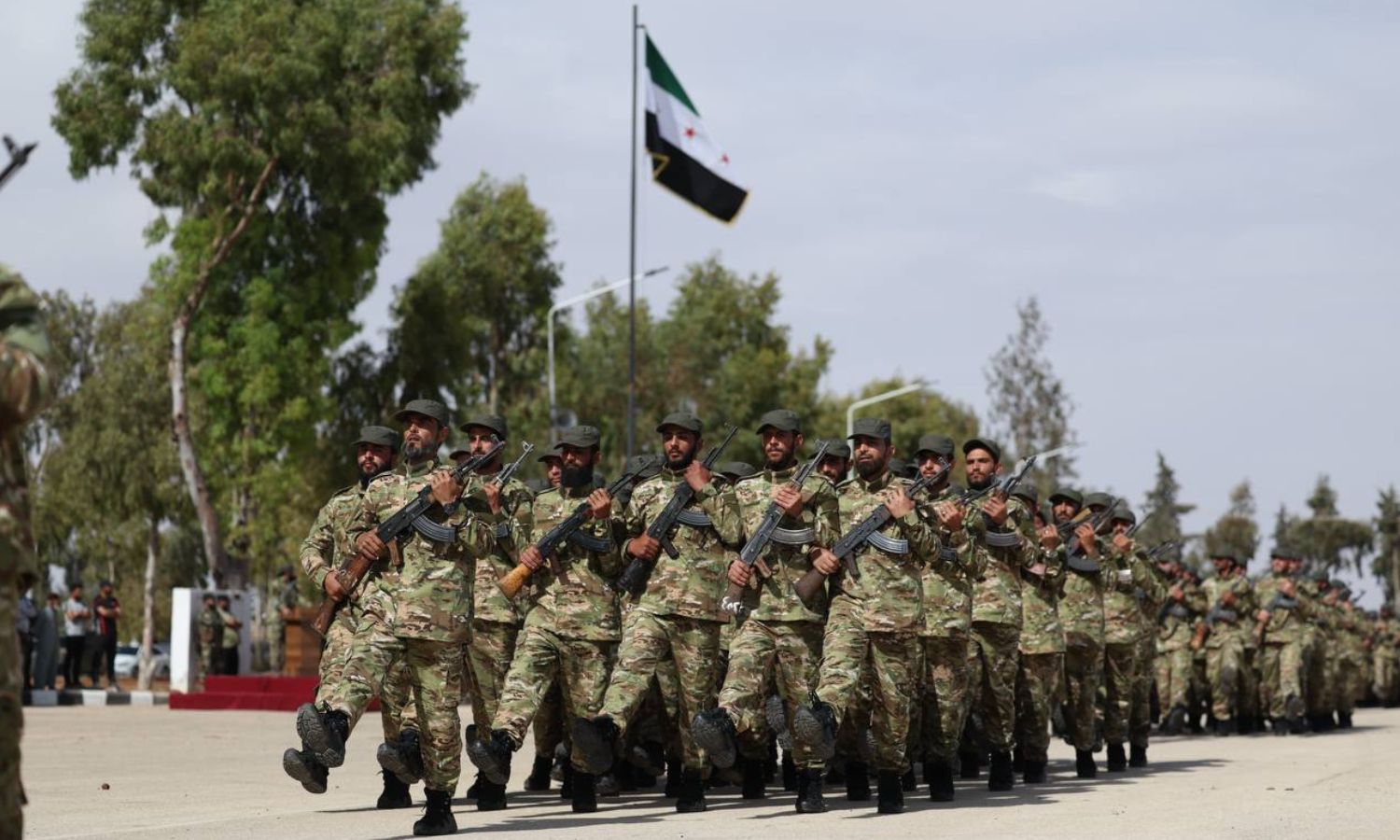
These merged factions now form the core of the new Syrian army, with all their diverse orientations and loyalties. The initiative has drawn wide attention as it represents a key step toward achieving stability, security, and national unity.
The Ministry of Defense is working to establish a volunteer-based Syrian army founded on a national doctrine and a clear system for granting military ranks based on training and merit, in order to build professional armed forces. This marks a major shift in the army’s structure and identity.
However, the new military institution which follows a hybrid approach combining Eastern and Western models unlike the previous army that was aligned with the Eastern bloc faces a race against time to lay down its foundations amid internal and external challenges.
Enab Baladi explores in this report the structure of the new Syrian army, which is still in the process of formation, reviewing the steps taken so far with input from researchers and military experts, and examining its strengths and weaknesses.
Structure and doctrine
Combining East and West
According to military affairs researcher Rashid Hourani, the Ministry of Defense began forming the new military institution after the dissolution of the former regime’s army, following principles tailored to Syria’s circumstances and the challenges of the current stage.
He explained that the ministry relied on two main groups. The first is composed of local expertise from revolutionary factions. The second is made up of external expertise led by Turkey. This reflects the mutual military visits and coordination between officers from both countries.
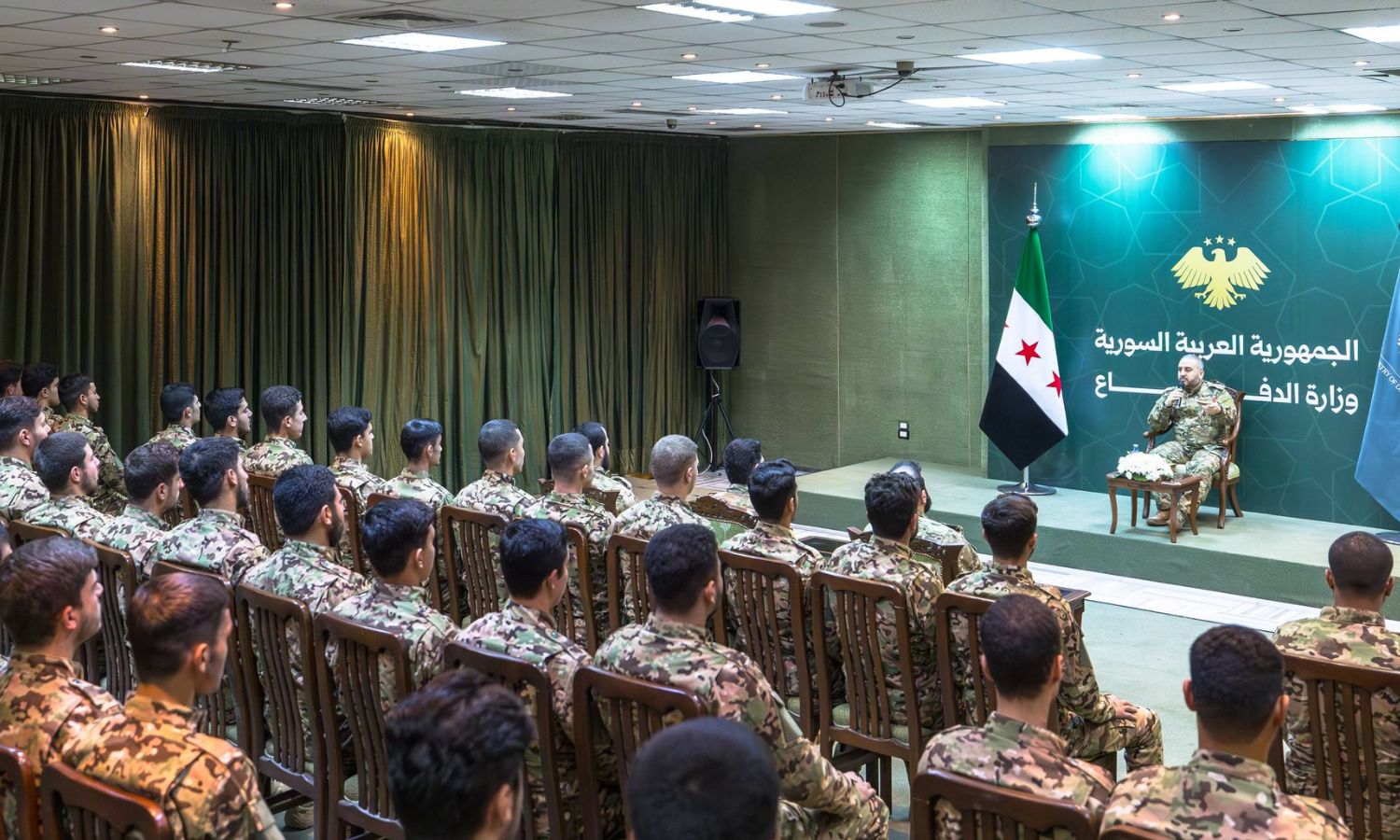
Syrian Defense Minister Marhaf Abu Qasra announced in a post on X on October 22 that groups of officer cadets were being sent to study at military academies in Turkey and Saudi Arabia.
Abu Qasra said these academic and military exchanges aim to develop cooperation, nurture capabilities, and prepare cadres with knowledge of the latest weapons systems and modern warfare methods.
Hourani added that the army’s structure follows internationally recognized standards, organized by division, brigade, and battalion. However, the process remains incomplete due to the country’s conditions, the shortage of manpower caused by the large number of Syrians abroad, and the existence of areas still outside state control.

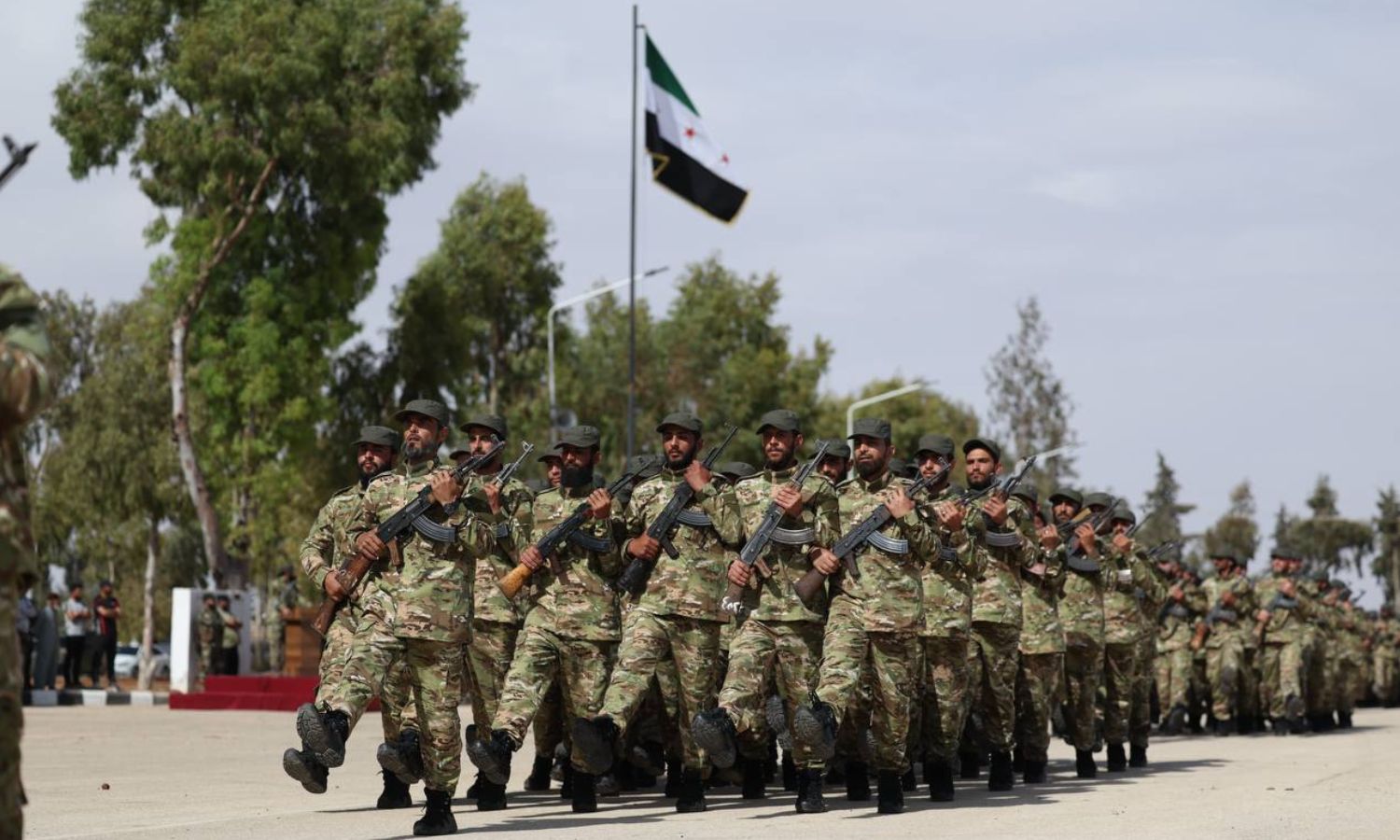
During the graduation ceremony of the 56th Division of the Syrian Army – June 1, 2025 (Syrian Ministry of Defense)
From Russia to the West and NATO
According to Colonel Khaled al-Mutlaq, a military researcher, military doctrine is an unwritten constitution that defines the direction of a country’s armed forces and forms the foundation on which modern armies are built.
As al-Mutlaq wrote in the newspaper Elaph, doctrine determines how military power is used to achieve political and strategic goals, influenced by history, culture, geography, technological development, and available resources.
Mutaz al-Sayyed, a researcher and journalist at the Syrian Center for Security and Defense Studies (Misdad), told Enab Baladi that global military doctrine is divided into two main schools: the Eastern (Russian) doctrine and the Western (NATO) doctrine.
Syria’s new leadership, under a declared government plan, seeks to adopt a hybrid national doctrine based on loyalty to the state rather than to a party or individual. It aims to integrate the advantages of the Western doctrine in technological efficiency, rapid deployment, and maneuverability, while drawing from the human and societal resilience found in the Eastern doctrine.
This requires updating training curricula, introducing modern military sciences, and maintaining field endurance and a long-war combat mindset.
All the new plans, according to al-Sayyed, emphasize enhancing the role of artificial intelligence and the use of drones for reconnaissance and attacks. The goal is to build a professional army capable of rapid intervention anywhere in Syria and safeguarding national borders.
Military researcher Rashid Hourani said the new army must foster a positive relationship with the Syrian people, unlike the previous regime’s forces, and should play a role in promoting civil peace. The defense minister has made similar statements several times.
The army’s function beyond doctrine
Military analyst Brigadier General Ahmad Hamadeh believes the Syrian army needs more than a defined combat doctrine. It requires the right doctrine, organization, experience, weapons, advanced training, and a proper combat hierarchy.
Hamadeh told Enab Baladi that both Eastern and Western schools define combat doctrine as a set of systems, instructions, and beliefs that enable an army to fight an enemy or achieve objectives derived from the nation’s overarching principles. In other words, doctrine defines the army’s goals and the reasons it fights.
Beyond doctrine, members of the new army must receive extensive training, as no fighter can perform effectively without gaining the skills, experience, and knowledge needed to apply them on the battlefield—whether on land, at sea, or in the air.
This includes different forms of defense and offense, urban and mountain warfare, ambushes, and combat in special environments and forests, each requiring specific tactics and weapons.
Combat doctrine and high morale, Hamadeh said, are decisive in winning battles. They can make a major difference or create balance even when facing an adversary with advanced weaponry.
As for the army’s function, Hamadeh explained that it is not limited to defense. Although it is called the Ministry of Defense, tasked with protecting Syria’s territory and sovereignty, its forces can shift from defense to offense in the event of external aggression or internal threats.
Training, he added, is designed to prepare units for multiple roles beyond defense, driven by the need to safeguard the state, the revolution, the land, and the borders.
The role of defected officers
After the Syrian uprising began in 2011, defections occurred within the army of deposed president Bashar al-Assad. Many defected officers joined the Free Syrian Army, while others stayed away from any armed group.
After the regime’s collapse, the Ministry of Defense formed committees to receive applications from defected officers and organize their records by rank, specialty, and specific criteria. It also recalled those dismissed for security or political reasons.
The ministry told Enab Baladi it considers reintegrating defected officers important due to their accumulated military expertise and knowledge.
The ministry has begun appointing some defected officers to leadership positions under a comprehensive plan to benefit from their skills in building the new Syrian army, with ongoing studies for additional appointments as needed.
According to the ministry, more than 2,000 defected officers have joined the new army out of 3,500 who were interviewed.
Military researcher Rashid Hourani told Enab Baladi that 85 percent of defected officers have been assigned to military departments and units matching their specializations, focusing on organization and training.
Mutaz al-Sayyed said that some defectors have been out of service for long periods, exceeded combat age, or missed periodic qualification, making their roles largely symbolic. Their contributions now focus on training, administrative, logistical, and operational oversight.
Women’s representation in the army
Syrian women volunteered in military colleges for the first time in 1981, following a speech by former president Hafez al-Assad at the graduation ceremony of the third paratrooper class.
Female volunteers trained at the male officers’ war college in 1981 and 1987 until a women’s military academy was established. They did not play combat roles before 2011.
During the Syrian uprising, major changes occurred, and manpower shortages led to increased recruitment of women.
Regarding women’s presence in the new Syrian army, the Ministry of Defense press office told Enab Baladi that the ministry views women as playing a pivotal role in Syrian society across all fields and is developing qualification and training programs that enable their participation in medical, administrative, and technical duties.
The ministry has opened recruitment for academic graduates from engineering and technical institutes to join its workforce.
However, women’s inclusion in combat units is not part of the ministry’s current plan.
Mutaz al-Sayyed said women’s representation in the new Syrian army remains almost nonexistent, limited to administrative and support positions.
Recently, recruitment opened for women in Latakia (northwestern Syria), marking a first step, especially as negotiations between Damascus and the Syrian Democratic Forces (SDF) continue over military integration.
Al-Sayyed said that trained civilian women in first aid, medicine, and military communications technology could contribute to civil-military units supporting the army’s rear bases.
Military researcher Rashid Hourani added that under Assad, women were recruited as a “decorative” element, and their roles did not warrant military ranks. For instance, a mechanical engineer might have been granted a rank. Today, recruitment is based on qualifications rather than rank, allowing women to hold administrative and technological positions.
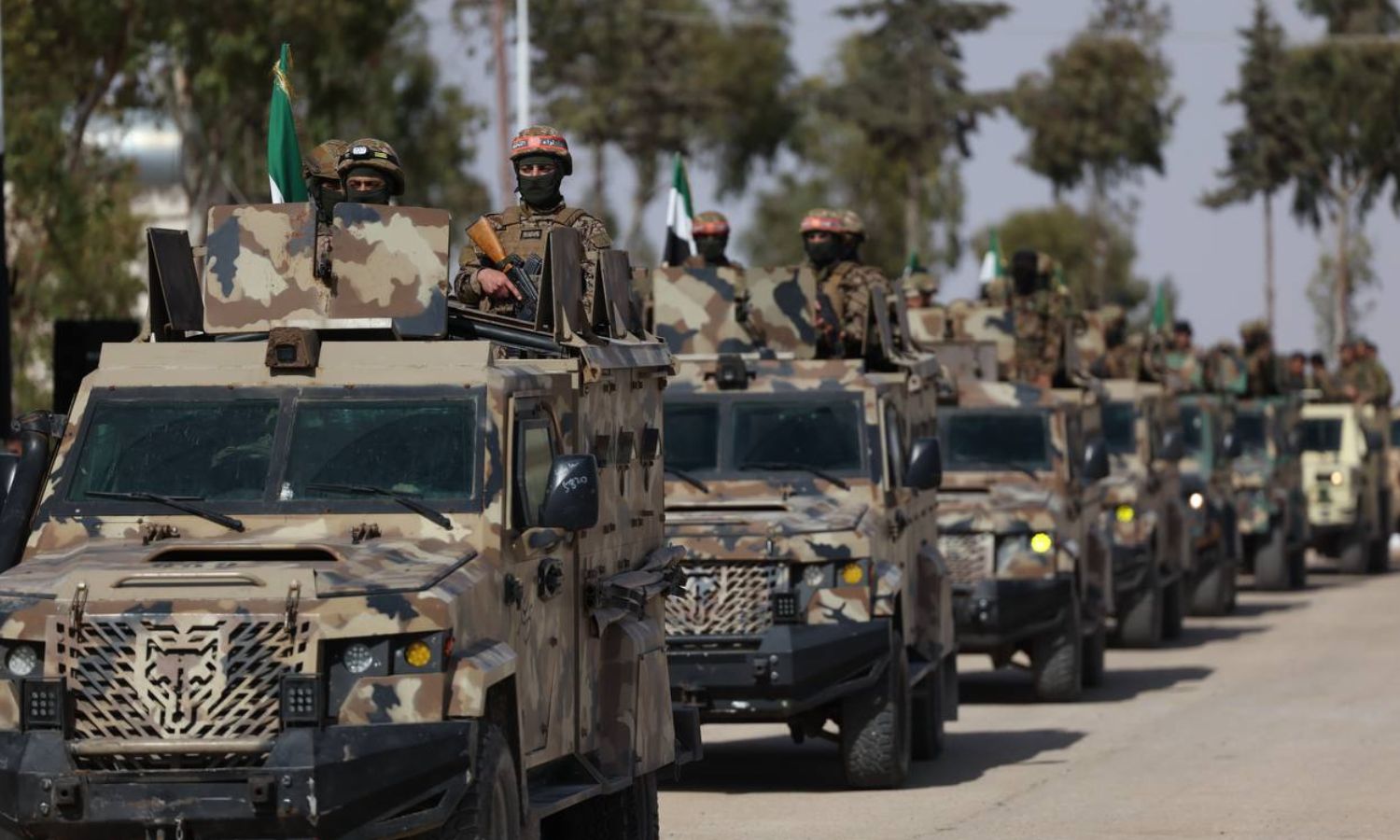
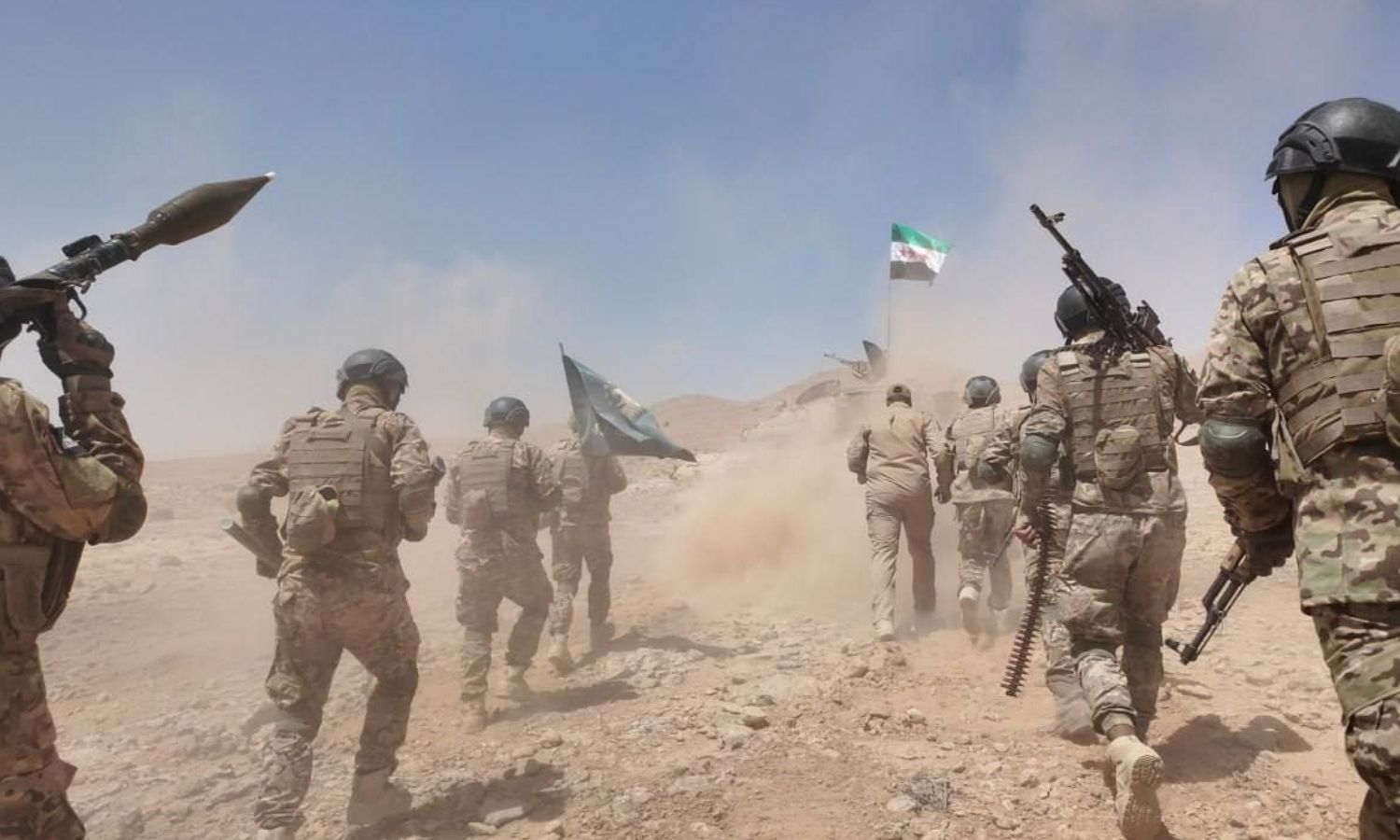
Live ammunition training for the 42nd Division Special Operations Forces of the Syrian Army, July 27, 2025 (Ministry of Defense)
Integration challenges
The ideology of the SDF and Islamist jihadists
The restructuring of the new Syrian army faces several intertwined challenges. The institution, formed from multiple factions that once fought each other and later merged after the regime’s fall, still faces highly sensitive and complex issues.
Chief among these is the integration of the Syrian Democratic Forces (SDF) into an army made up of diverse ideological and doctrinal backgrounds, especially with the presence of foreign fighters among the forces controlling northeastern Syria and the so-called muhajireen within opposition factions.
There is also the Islamist jihadist doctrine long embraced by many opposition groups, most notably Hayat Tahrir al-Sham, regarded as the nucleus of today’s Syrian army, along with the hardline views held by many muhajireen and even some ansar (Syrian fighters).
By contrast, the SDF and its affiliated factions are based on leftist and nationalist principles leaning toward secularism, and they include foreign fighters, most of them Kurds from Turkey.
This raises questions about whether these two forces, with their sharply opposing ideologies, can be integrated into a single, unified national military institution.
Foreign fighters: a local and international debate
The issue of foreign fighters is one of the most complicated challenges facing the new Syrian administration. It has been part of discussions and negotiations between the government and international actors, chiefly the United States and France.
Domestically, foreign fighters have not caused large-scale tensions since the regime’s fall, except for accusations of involvement in violent sectarian incidents along the coast and in Suwayda (southern Syria).
Internationally, the United States set conditions regarding the presence of foreign fighters in the institutions of the new state at the beginning of normalization between Damascus and Washington, later agreeing to their integration on the condition of transparency.
In recent days, the issue resurfaced after the incident at the French fighters’ camp led by Omar Omsen in Idlib (northwestern Syria). It quickly ended with an agreement between the government and the al-Ghuraba faction, but the case revealed that some of these fighters still hold transnational ambitions.
Although their numbers are relatively small compared to the army’s total manpower, media reports estimate around 5,000 fighters of different nationalities, they carried considerable weight during the years of the revolution and in Operation Deter Aggression, which ended Assad’s rule.
The Syrian government has integrated foreign fighters into military divisions, notably the 82nd and 84th, according to Enab Baladi’s findings.
The foreign fighters come from several nationalities, mainly from the Caucasus and Russian republics, as well as a Chinese Uyghur minority affiliated with the Turkistan Islamic Party.
The SDF: three divisions moving toward integration
Under the agreement signed on March 10 between Syria’s transitional president Ahmed al-Sharaa and SDF commander Mazloum Abdi, work is underway to merge the SDF’s military and civil institutions into state structures.
Since negotiations began, several obstacles have emerged, including the SDF’s insistence on preserving its structure and joining the army as a single bloc, while the government insists on integrating its members as individuals.
On October 7, al-Sharaa and Abdi held a second meeting, joined by Defense Minister Marhaf Abu Qasra. The meeting resulted in a preliminary understanding to integrate three SDF divisions into the new Syrian army.
According to political researcher Bassam al-Suleiman, the government requested lists of the three divisions’ members and agreed with the SDF on leadership appointments, indicating a concession by Damascus from its original demand for individual integration.
Al-Suleiman also pointed to pressure from the Kurdistan Workers’ Party (PKK), accused of influencing the SDF, to obstruct the negotiation process.
The SDF was established in 2015, with the People’s Protection Units (YPG) and Women’s Protection Units (YPJ) forming its backbone. These forces are leftist in orientation and have a Turkish Kurdish nationalist component with a clear link to the PKK.
The SDF and its affiliated forces also include non-Syrian fighters, most from Turkey, along with smaller numbers from Iraq and Iran.
In remarks to Reuters published on December 19, 2024, Abdi said that the withdrawal of Kurdish fighters who came to Syria from across the Middle East to support his forces depends on reaching a full ceasefire with Turkey.
Since the March 10 agreement, no mention has been made of the fate of these fighters, who joined for nationalist reasons.
Deployment of combat units
A plan to ensure rapid response and readiness
Before the Syrian uprising, Syria’s military strategy under Assad was built around two main plans to confront potential threats.
The first scenario envisioned a war with Israel, which required nearly half of the Syrian army to be permanently stationed in the south, supported by additional units redeployed from other regions.
The second scenario assumed a two-front war, against Israel in the south and against potential U.S. forces advancing from Iraq in the east.
To meet that possibility, defensive plans focused on protecting the country’s most important population, economic, and political centers: Damascus, Hama, Homs, and Aleppo, in addition to the front with Israel. The sparsely populated eastern desert was effectively deprioritized and treated as terrain that could be abandoned without large-scale fighting.
The Ministry of Defense press office told Enab Baladi that the deployment of the new Syrian army is organized according to a studied plan covering all provinces to ensure rapid response and field readiness.
Geographic distribution takes into account main bases in strategic areas and the establishment of deployment and recruitment points in provincial centers.
Military analyst Brigadier General Abdullah al-Asaad said it would be undesirable to keep forces distributed as they were under Assad, because those deployments aimed primarily at controlling regions and local populations, ensuring suppression of any uprising or rebellion against the old regime.
Al-Asaad argued that the new distribution should be based on the four directions most likely to see infiltration or an external attack, and that tactical and strategic principles should guide force placement.
Brigadier General Ahmad Hamadeh said current force organization reflects the country’s present realities, such as forces in the east of the Euphrates, in Aleppo, and in Damascus. Because the army has not yet been fully reconstituted, its mission and combat doctrine have not been definitively set and its enemy has not been formally classified, today’s deployments align with the presence of regime remnants and separatist forces in certain locations. These forces exist to contain separatist movements or regime remnants and to preserve Syria’s territorial unity.
After formation: the charter and distribution
The Ministry of Defense issued a recruits’ charter for the new Syrian army after announcing the near-complete integration of armed factions into its ranks.
The charter, released on May 30, aims to “entrench values of discipline, commitment, respect for the law, and protection of rights and freedoms to build a professional national army.”
It defines the army’s primary mission as “protecting the homeland and its citizens, defending the country’s sovereignty and territorial integrity, and confronting anything that threatens security and stability.”
The recruits’ charter lists the soldier’s core duties as:
-
Defend the homeland, its sovereignty, and territorial unity.
-
Sacrifice for the security of the nation and its citizens.
-
Protect civilians, especially women and children, under all circumstances.
-
Carry out lawful orders.
-
Respect civil and military laws.
-
Preserve public and private property and treat citizens with dignity without discrimination on the basis of religion, ethnicity, color, or affiliation.
-
Observe rules of international humanitarian law in dealings with the enemy, including the killed, wounded, and captured during operations.
-
Respect the military chain of command and internal discipline.
Defense Minister Marhaf Abu Qasra wrote on X on May 30 that “because the actions of any member of the armed forces necessarily reflect on the entire army, it was necessary to prepare a list of duties and prohibitions that define military conduct and discipline, which all personnel must respect and uphold.”
Since the start of this year, the Ministry of Defense has announced a series of organizational steps aimed at restoring military discipline, integrating armed factions under its umbrella, and forming a unified structure to reestablish the military institution as the backbone of national sovereignty.
The ministry held meetings with more than 130 military units and factions and formed high-level committees to organize human resources data. It also began drafting a modern internal system to rebalance the relationship between administrative and military bodies.
The ministry officially announced the abolition of compulsory conscription and the transition to a voluntary selective army model based on precise recruitment criteria, with growing attention to attracting university and technical graduates to strengthen the army’s intellectual and technological base.
All previous faction names were abolished and merged into 25 military divisions that are being formalized and geographically distributed across the provinces. A Moral Guidance Department was established and about ten new colleges were opened to train officers and absorb returning or newly integrated competencies.
Internal regulations to govern military conduct
The Ministry of Defense press office told Enab Baladi that the ministry formed a committee by decision of the defense minister, including defected officers, legal experts, and human rights specialists, to prepare a manual on the internal system of the Syrian Arab Army and service regulations.
According to the press office, the ministry operates under the constitutional declaration and existing military laws, rules of military conduct and discipline, in addition to executive regulations and ministerial decisions that govern service, discipline, and administration.
Brigadier General Abdullah al-Asaad told Enab Baladi that the ministry’s organizational principles are recorded within service regulations.
These regulations define military frameworks and foundations, officer hierarchy, prohibitions, behavioral codes, and other rules announced earlier by the Ministry of Defense.
Al-Asaad added that the military chain of command is one of the most important points to observe, and that adherence to order and military conduct is essential because an army’s strength lies in its discipline. A commander must command the full obedience of subordinates without hesitation or rebellion.
Brigadier General Ahmad Hamadeh said every military branch should have its own service regulations, such as the air, naval, and ground forces, while all ultimately answer to the General Command of the Army and Armed Forces, which allocates combat tasks and roles.
He explained that the Operations Directorate within the General Staff supervises implementation of these regulations through division, corps, and brigade commanders, as well as subordinate and principal units.

Syrian Defense Minister Marhaf Abu Qasra meets ministry students before their dispatch to Turkey and Saudi Arabia, October 22, 2025 (Ministry of Defense)
Strengths and weaknesses of the new army
Mutaz al-Sayyed, a researcher and journalist at the Syrian Center for Security and Defense Studies (Misdad), highlighted the main strengths of the Ministry of Defense as follows:
It has unified command and control by integrating factions and armed groups into a single structure under centralized supervision, ensuring control over weapons, restoring the state’s monopoly on force, and laying the foundation for institutional cohesion within the military.
It has incorporated all personnel and cadres into a unified database, which facilitates strategic planning, ensures transparency in the distribution of tasks and promotions, and enables quick identification of shortcomings and gaps.
It has issued new codes of conduct that emphasize respect for human rights, public order, and lawful command, reflecting the ministry’s intent to align the army with modern professional ethics and standards.
According to al-Sayyed, the weaknesses lie in several areas:
Some factions still maintain regional and sectarian loyalties and retain parts of their organizational identity and operational autonomy, which delays the broader project of building the army Syrians aspire to.
The integration of the Syrian Democratic Forces (SDF) remains unresolved due to disagreements over mechanisms of integration and SDF’s desire to preserve its existing gains versus the conditions set by central command.
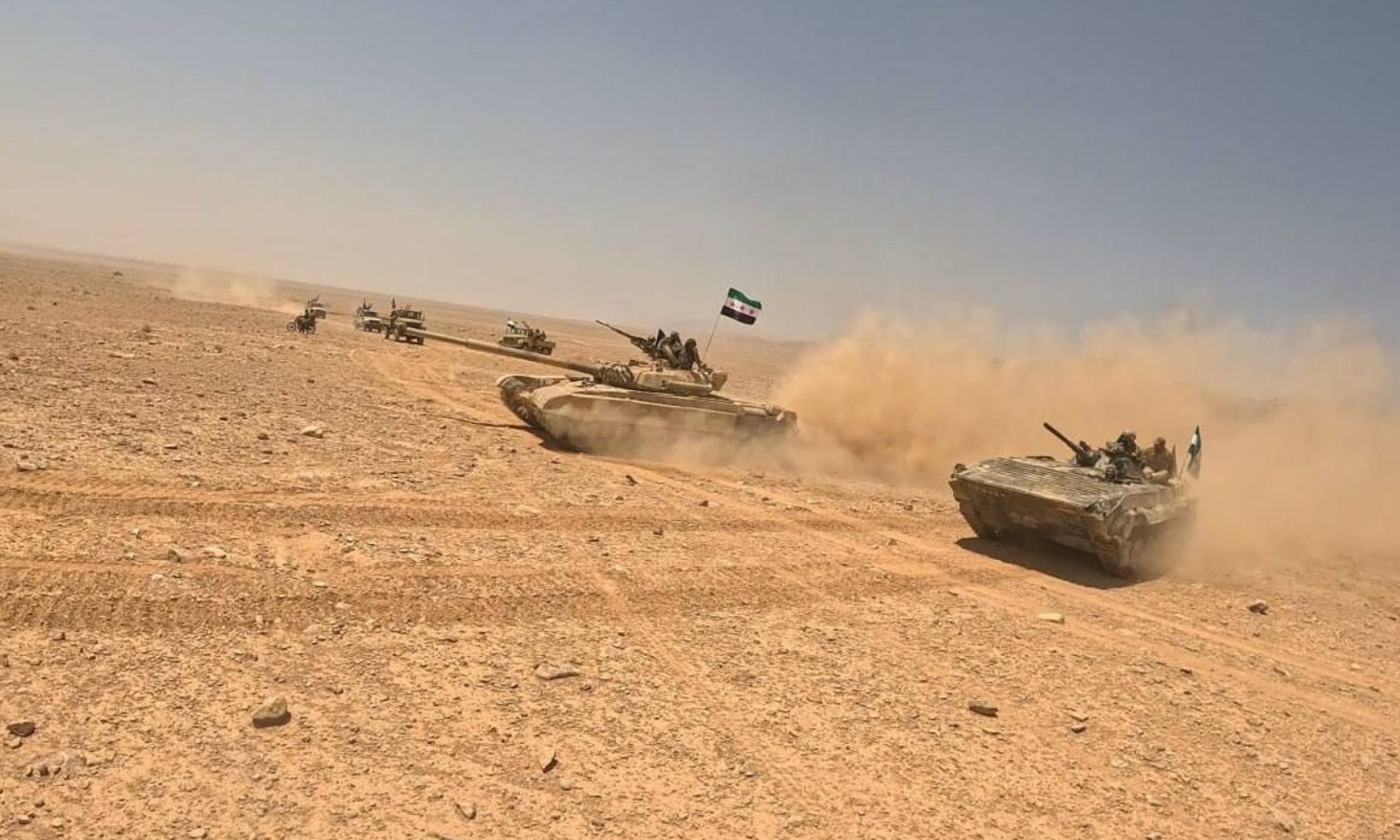
The Syrian army faces an armament crisis caused by the destruction of its former strategic infrastructure during the war and by Israeli strikes, amid the absence of a stable regional partner capable of providing consistent and qualitative rearmament.

Live-fire exercises for the special forces of the 42nd Division in the Syrian army, July 27, 2025 (Ministry of Defense)
Dr. David Chuter:
No stability with multiple armed groups
As a military institution rises on the ruins of a dissolved army, questions remain about the nature of a force that will include two opposing tendencies, secular leftists and jihadist fundamentalists.
British defense and security-sector reform expert Dr. David Chuter, author of Governing & Managing the Defence Sector, told Enab Baladi that the starting point must be what he called the most important goal, state stability.
Chuter said no state can be stable if different armed groups follow different leaders, especially when those groups hold divergent ideologies.
He added that the priority is to place these forces under a unified command structure that enjoys the trust of all parties, even if that trust is limited.
The next step, Chuter said, is to progressively remove those forces’ ability to act independently and accustom them to being part of a single organization.
He warned that the common mistake is to push too quickly and take overly ambitious steps. The key measure, he said, is reaching a situation in which clashes or hostilities between the different forces are unlikely.
Chuter argued that this objective is more important than questions of doctrine or military ideology, which can be addressed later.
He also raised the issue of individual fighters and whether they want to continue a military life. Many want only to return home and start a new life after the conflicts, while others may have previously served in regular armies or developed a taste for military life during fighting.
In this context, Chuter said it is important to make careful decisions on two matters:
First, ensure reasonable representation for all parties so the new army is not seen as belonging to one faction or group. Second, make sure no armed groups of former fighters are roaming the country unchecked.
Past experience suggests it is better to keep as many of these fighters as possible inside the new army, where they can be monitored, rather than leave them outside where they are hard to trace, Chuter noted.
In any case, the new government will face problems with armed groups whatever measures it adopts, Chuter said, citing the recent case of the French al-Ghuraba faction in northern Syria as an example.
In his view, the priority is to avoid more fighting or state collapse by finding a way to integrate different armed groups into a common structure, making a return to combat as difficult as possible and offering incentives for cooperation.
The real difficulty, he added, is that foreigners with resources and savvy will arrive in the country, bringing money and attempting to move quickly.
Dr. David Chuter
Independent security expert
Jihadist groups expert Abbas Sharifa previously told Enab Baladi that the fate of foreign fighters in Syria falls into one of three options. The first is their departure to their home countries or elsewhere, the second is remaining and integrating into Syrian society, and the third concerns the most fanatic fighters, who are likely to leave for other battlefields or be fought.
if you think the article contain wrong information or you have additional details Send Correction
النسخة العربية من المقال
Related Articles
-
Follow us :
In-Depth
-
War drums beat in eastern Syria
2025/10/08
Most viewed
- Trump: We lifted sanctions on Syria at the request of Turkey and Israel
- Syrian–Lebanese joint operations room to manage border tensions
- Why did China abstain from the vote to delist al-Sharaa from sanctions?
- "Lobbying wars" Stall the Repeal of “Caesar" Act
- Damascus denies establishment of U.S. bases in southern Syria