


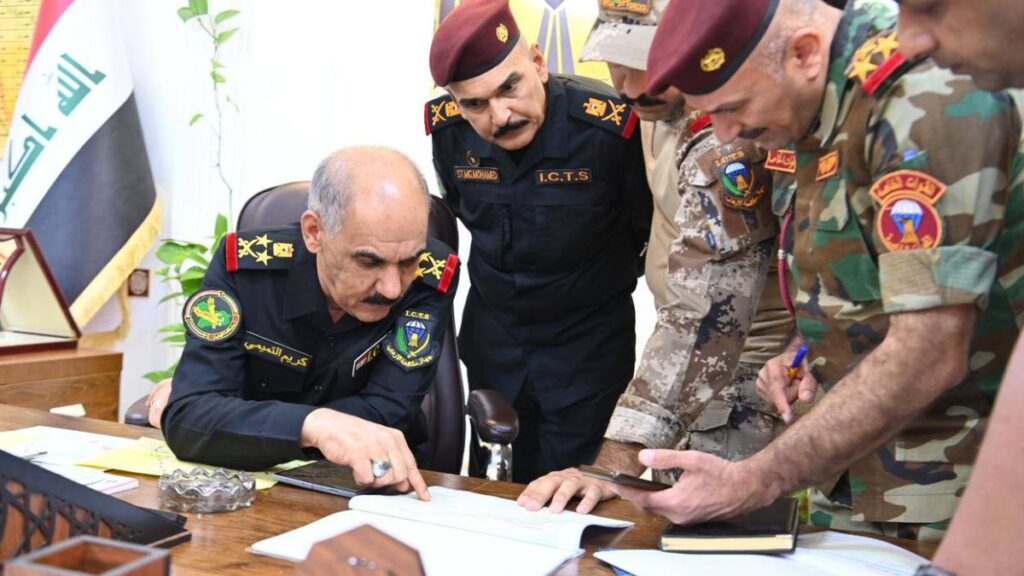
 Iraqi Counter-Terrorism Service, 29 September 2025 (Iraqi Interior Ministry)
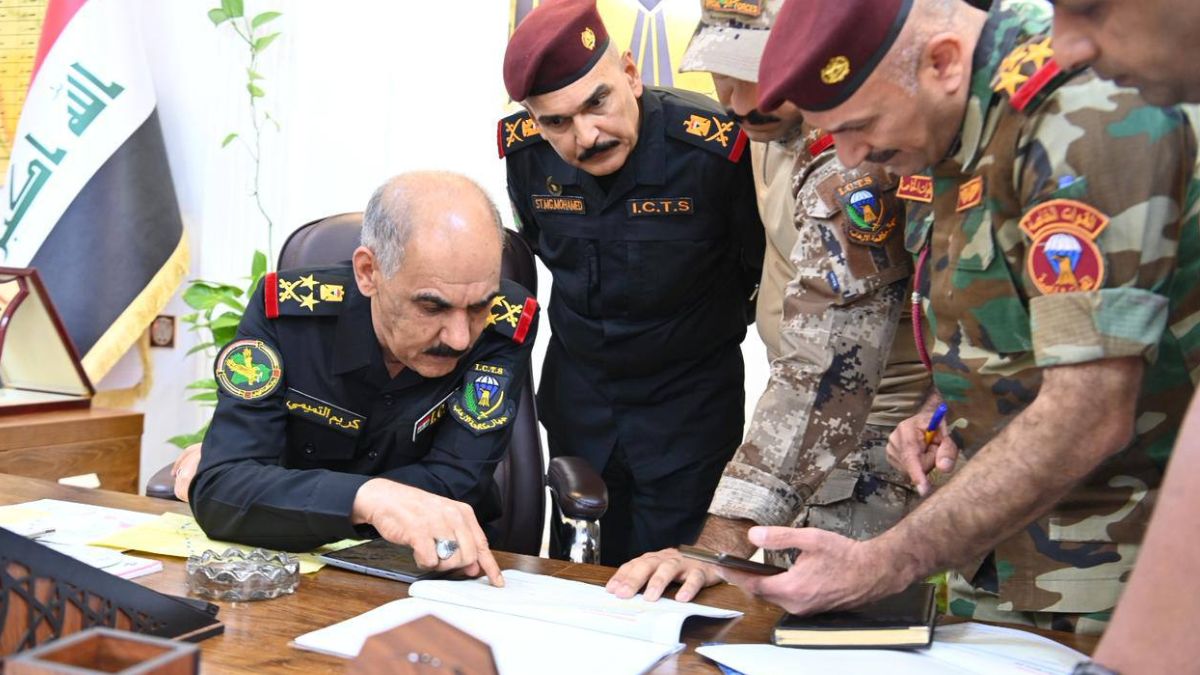
Iraqi Counter-Terrorism Service, 29 September 2025 (Iraqi Interior Ministry)
Syria’s Foreign Ministry said it is following up on the case of a Syrian youth whose alleged sentence of “death by hanging” was reportedly issued by an Iraqi court after a video of President Ahmed al-Sharaa appeared on his Facebook “story.”
A document circulated on social media appears to show a judgment sentencing Mohammad Ahmad Suleiman Hassan (22) to death by hanging, issued by the Najaf Criminal Court in Iraq under Article 4 of the Iraqi Counter-Terrorism Law.
Commenting on the circulated document, Mohammed Taha al-Ahmad, Director of the Arab Affairs Department at the Syrian Foreign Ministry, wrote on X on Monday that “the case is being followed up with the Iraqi government through official channels until the authenticity of the published document is verified and the matter duly pursued.”

A death sentence against a Syrian youth in Iraq for placing a photo of President al-Sharaa on his phone, 27 October 2025 (Al-Mu’tasim al-Kilani)
Mohammad’s brother, Fouad Suleiman, who said he was arrested in Iraq and recently deported to Syria, stated that Iraqi authorities detained him along with his brother in March 2025 while they were in Iraq, later releasing him and keeping Mohammad in custody.
He added that, during a search of Mohammad’s phone, authorities found videos and photos of President Ahmed al-Sharaa, as well as a clip showing Free Syrian Army fighters capturing combatants from Iraq’s Harakat Hezbollah al-Nujaba.
According to Fouad, his brother, now under a death sentence, gave confessions under electric shocks and beatings. He said several accusations were brought against Mohammad, including being part of “sleeper cells of the ‘al-Jolani government’,” “sending coordinates to Syria,” and communicating with the Free Syrian Army before the fall of the former regime.
Fouad also said two other Syrians, Omar Muat Harboush and Mohammad Khorshid, were each sentenced by the Najaf Criminal Court to 15 years in prison. He explained the reason for Harboush’s sentencing was allegedly insulting the former Secretary-General of Lebanon’s Hezbollah, Hassan Nasrallah, and communicating with individuals inside Syria, while he did not clarify the reason for Khorshid’s sentence.
Legal expert in human rights and international criminal law, Almoutassim Al Kilani, announced on Facebook that he sent a petition to the UN High Commissioner for Human Rights, Iraq Office, regarding the Syrian youth’s case.
In his message, al-Kilani called for “urgent intervention regarding grave human rights violations.”
According to the lawyer’s letter, the defendant was subjected during interrogation to severe torture and electric shocks and was forced to sign confessions without knowing their content and without a lawyer present. His case was then referred to court on “terrorism” charges under Iraq’s Anti-Terrorism Law No. 13 of 2005, where he was sentenced to death.

The Syrian youth Mohammad Ahmad Suleiman Hassan
The lawyer said the legal violations in this case included:
At the international level, the ruling violates Article 6 of the International Covenant on Civil and Political Rights (ICCPR), to which Iraq is a party, guaranteeing the right to life and allowing capital punishment only for the “most serious crimes” and after a fair trial.
It also violates Article 7 of the ICCPR, which prohibits torture or cruel, inhuman, or degrading treatment, and contravenes the Convention against Torture (CAT), which Iraq joined in 2011 and which obligates the state to investigate any torture allegations and punish those responsible.
The decision also, according to the lawyer, infringes Article 19 of the ICCPR on freedom of expression, since posting political or media content is not a crime under international law.
Al-Kilani requested that the UN Human Rights Office:
if you think the article contain wrong information or you have additional details Send Correction


 A
A
A
A
A
A




 More Politics