


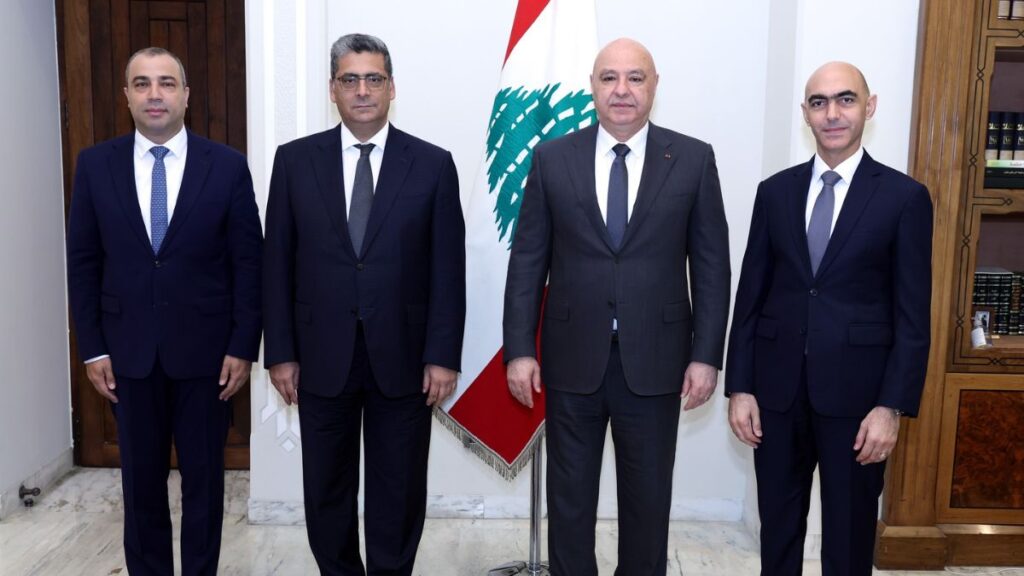
 camera icon Lebanese President Joseph Aoun, with Lebanon’s ambassador to Syria Henry Kastoun to his left, October 24, 2025 (Lebanese Presidency/X)
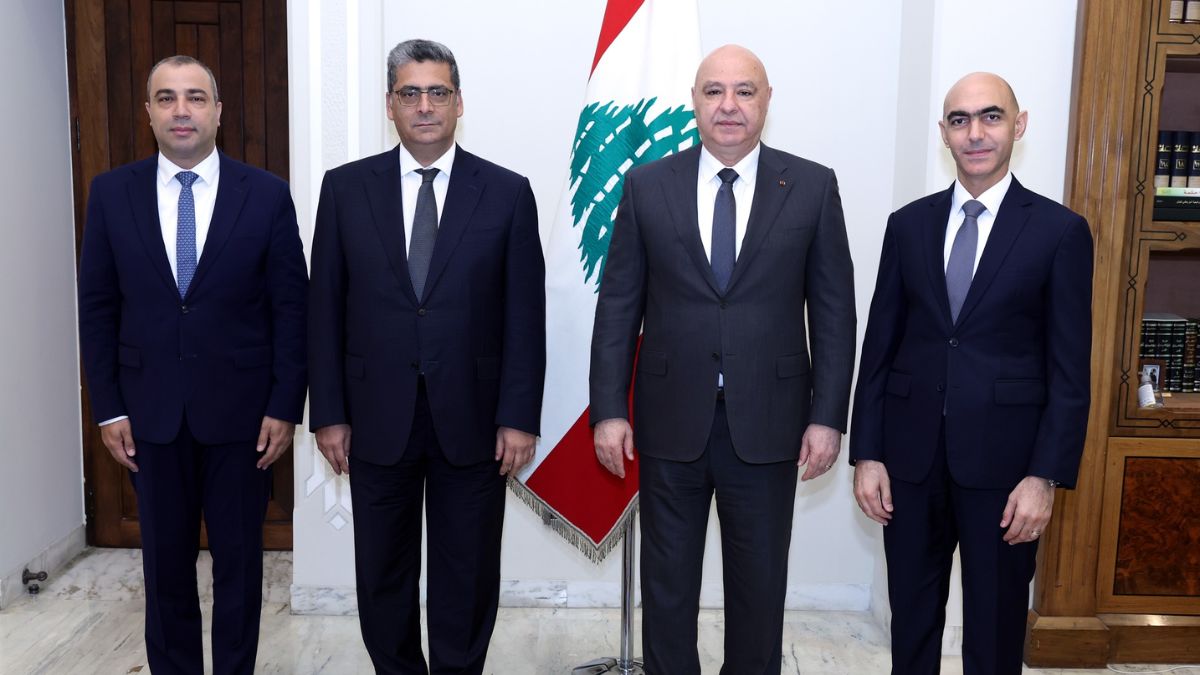
camera icon Lebanese President Joseph Aoun, with Lebanon’s ambassador to Syria Henry Kastoun to his left, October 24, 2025 (Lebanese Presidency/X)
The Lebanese Presidency announced on Friday, October 24, the appointment of diplomat Henry Kastoun as Lebanon’s ambassador to Syria.
President Joseph Aoun, who received three newly appointed Lebanese ambassadors, including Kastoun to Syria, stressed the need to work on strengthening bilateral relations between Lebanon and the countries of accreditation and to attend to the affairs of Lebanese communities abroad.
Kastoun previously served as the representative of Lebanon’s Minister of Foreign Affairs and Expatriates, as well as Consul General at Lebanon’s Consulate in Australia. He was a third-category officer with the Lebanese diplomatic mission in Uruguay, and before he was appointed ambassador to Syria, he served as Lebanon’s ambassador to Liberia.
Syria exercised political tutelage over Lebanon beginning in 1976 with the entry of the Syrian army at the outset of the Lebanese civil war, under an Arab League mandate as the Arab Deterrent Forces. Over time, Syria became a militarily and politically dominant actor in Lebanon.
This tutelage ended in 2005 following the assassination of former Lebanese Prime Minister Rafic Hariri and the subsequent March 14 uprising and international pressure, which led to the withdrawal of the Syrian army in April 2005.
Syria entrenched its tutelage by establishing the so-called “Higher Lebanese–Syrian Council,” created under the “Treaty of Brotherhood, Cooperation and Coordination” between Lebanon and Syria signed in 1991, a turning point in relations between the two countries. The council remained in place until the Syrian army’s exit from Lebanon in 2005, according to opponents of the deposed Assad regime in Lebanon.
The council comprises the presidents of the two republics, the speakers of Syria’s People’s Assembly and Lebanon’s Parliament, and the prime ministers and their deputies in both states.
According to its official mandate, the council sets the general policy for coordination and cooperation between the two countries across political, economic, social, and other fields, and oversees its implementation. Its decisions are binding and enforceable within the constitutional frameworks of each country.
In December 2008, Lebanon appointed Michel Khoury as its first ambassador to Syria, and he officially assumed his duties in July 2009. The deposed Syrian president, Bashar al-Assad, issued a decree in October 2009 to establish diplomatic relations with Lebanon, after bilateral ties had improved.
On October 10, 2025, ahead of Syrian Foreign Minister Assad al-Shibani’s visit to Beirut, Syria informed Lebanon’s Foreign Ministry of its decision to suspend the work of the “Higher Lebanese–Syrian Council” and to restrict all correspondence between the two sides to formal diplomatic channels, in preparation for recasting relations on an equal footing.
if you think the article contain wrong information or you have additional details Send Correction


 A
A
A
A
A
A



 More Politics