


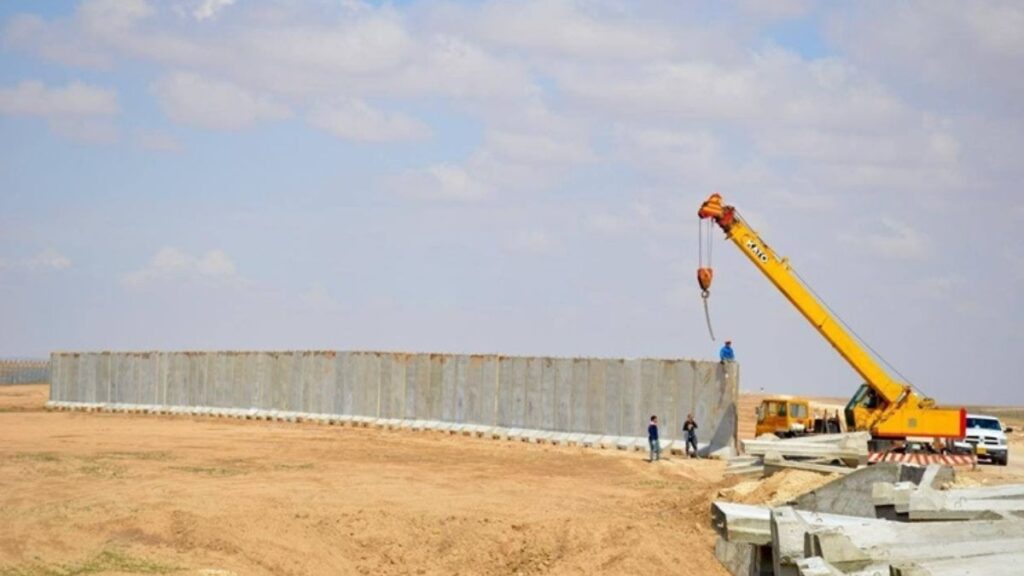
 Iraqi Border Guard adopts construction of walls along the Syria border – September 29, 2025 (Rudaw)
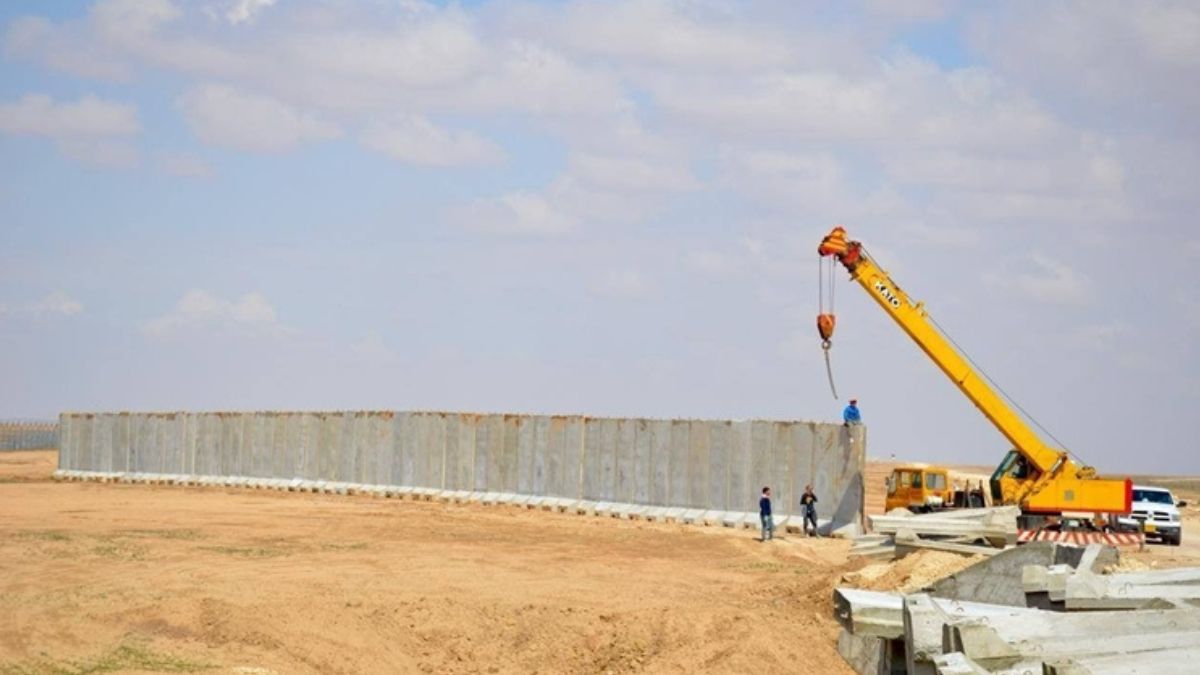
Iraqi Border Guard adopts construction of walls along the Syria border – September 29, 2025 (Rudaw)
Haider al-Karkhi, director of media at the Iraqi Border Guard Command, said the construction of concrete walls on the border with Syria is being carried out under the supervision of the Border Guard Command.
His remarks came in response to reports by media outlets close to the Autonomous Administration in northeastern Syria, claiming that the Kurdistan Regional Government (KRG) was building a concrete wall three meters high and 75 centimeters wide on the border with northeastern Syria.
Speaking to the Kurdish outlet Rudaw on Monday, September 29, al-Karkhi stated that the plan aims to fortify the entire border triangle between Iraq, Turkey, and Syria with a concrete wall, stretching from the Rabia crossing to the Fishkhabour crossing.
He noted full coordination with the KRG government in erecting the wall and in border monitoring operations with Turkey and parts of the Syrian frontier.
Iraq shares 618 kilometers of border with Syria, 335 kilometers with Turkey, and 1,420 kilometers with Iran.
On September 15, the Iraqi Border Guard Command reaffirmed that its borders are fully secured, stressing that “there is no danger beyond Iraq’s borders.” It added that 99% of all Iraqi borders are monitored by surveillance cameras, while the construction of concrete barriers continues.
The command said its borders with Syria are secured with concrete slabs, with plans to extend them by an additional 100 kilometers, noting that the factory producing the slabs will continue operating until all Iraqi-Syrian borders are reinforced.
It also revealed the digging of trenches along the border with Syria behind the concrete wall, monitored daily by drones. Each drone, it said, can cover an 80-kilometer stretch.
The command clarified that Border Guard units hold the frontline, backed by Iraqi army forces and the Popular Mobilization Forces.
Mohammed al-Ahmad, director of the Arab Affairs Department at the Syrian Ministry of Foreign Affairs and Expatriates, denied that Syrians were being barred from entering Iraq, in a statement posted on X on August 1.
This followed rumors circulating on social media that Syrians, including holders of permanent and temporary visas, were being denied entry.
Miqdad Miri, spokesperson for Iraq’s High Security Committee for Pilgrimage Visits, also dismissed the reports, stressing that they were baseless.
He said all individuals with visas, whether for tourism or religious visits, are allowed entry into Iraq in accordance with established legal procedures.
At the time, the committee urged media outlets and the public to verify information before sharing and emphasized its commitment to facilitating the entry of visitors from various countries.
Meanwhile, Iraqi media cited government sources claiming Prime Minister Mohammed Shia al-Sudani had indeed issued a decision to bar Syrians from entering Iraq entirely during the Arbaeen pilgrimage of Imam Hussein.
According to the same sources, the decision was described as a temporary security and administrative measure to control the movement of visitors during major religious events.
Syrian Foreign Minister Asaad al-Shibani represented Syria at the 34th Arab League Summit in Baghdad, while transitional president Ahmad al-Sharaa was absent amid opposition from major political forces, particularly the Islamic Dawa Party led by Nouri al-Maliki.
Iraqi government spokesperson Bassem al-Awadi expressed his country’s desire to strengthen cooperation with the Syrian government.
On February 17, al-Awadi said Iraq was among the first countries to show interest in Syria’s new developments, pointing to clear signals of welcome and readiness to cooperate issued from Baghdad.
He stressed that Iraq’s main approach is non-interference in Syria’s internal affairs, respect for the new political arrangement on the ground, and recognition of the will of the Syrian people and their current administration.
if you think the article contain wrong information or you have additional details Send Correction


 A
A
A
A
A
A


 More Politics