


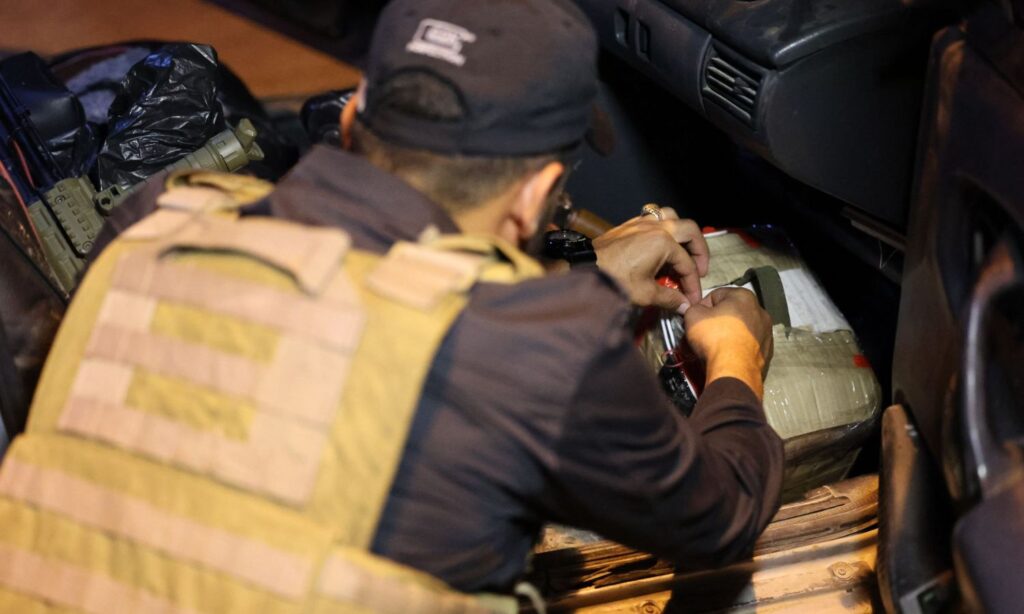
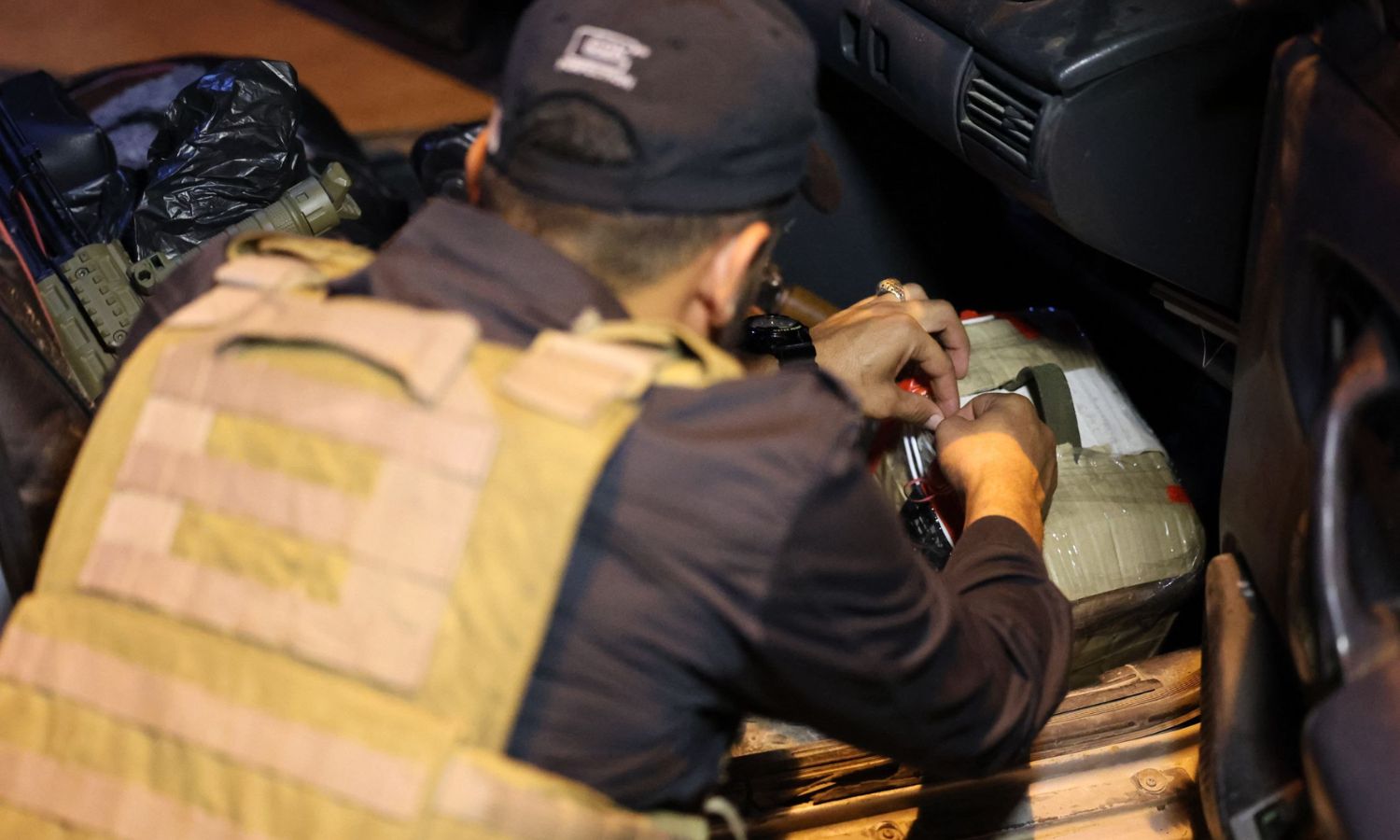
 A member of Syria’s Internal Security dismantles an explosive device that was prepared for detonation at a church in rural Tartus – August 6, 2025 (Syrian Ministry of Interior)
A member of Syria’s Internal Security dismantles an explosive device that was prepared for detonation at a church in rural Tartus – August 6, 2025 (Syrian Ministry of Interior)
The Syrian Ministry of Interior announced the arrest of a cell that was planning to bomb a church in Tartus, western Syria.
According to a statement published by the Ministry on Facebook on Wednesday, August 6, Colonel Abdel Aal Mohammad Abdel Aal, head of Internal Security in Tartus governorate, said that the Internal Security forces apprehended two individuals linked to the former Syrian regime. The pair had allegedly planned to detonate an explosive device at the ST.Elias Maronite Church in the village of al-Khraybat, in the Safita district of rural Tartus.
He added that authorities seized a bomb ready for detonation, as well as papers bearing threats directed at local residents and a black flag.
The operation, according to Abdel Aal, was based on what was described as precise and intensive intelligence and surveillance efforts, which ultimately prevented the attack from being carried out.
The Ministry said the suspects were affiliated with a group it described as “outside the law” (without naming it), and released photos showing the defused explosive device, incendiary leaflets, and a flag commonly associated with the Islamic State (ISIS), which the cell reportedly possessed.
The attempted bombing coincided with the Christian feast of the Transfiguration, celebrated on August 6, during which several churches of various Christian denominations hold religious observances.
The foiled bombing attempt recalls a deadly attack on another church—St.Elias in the al-Dweila neighborhood of Damascus—on June 22. That bombing killed 25 people and injured 63. At the time, the Interior Ministry blamed the Islamic State (ISIS), although discrepancies arose in the official narrative.
Archimandrite Father Malatios Shtaheh told Enab Baladi at the time that worshippers first heard gunfire outside the church before two individuals carrying explosive devices entered and blew themselves up. However, Interior Ministry spokesperson Nour al-Din al-Baba stated that initial investigations revealed the bombing was carried out by a single individual, not two.
if you think the article contain wrong information or you have additional details Send Correction


 A
A
A
A
A
A




 More Politics