


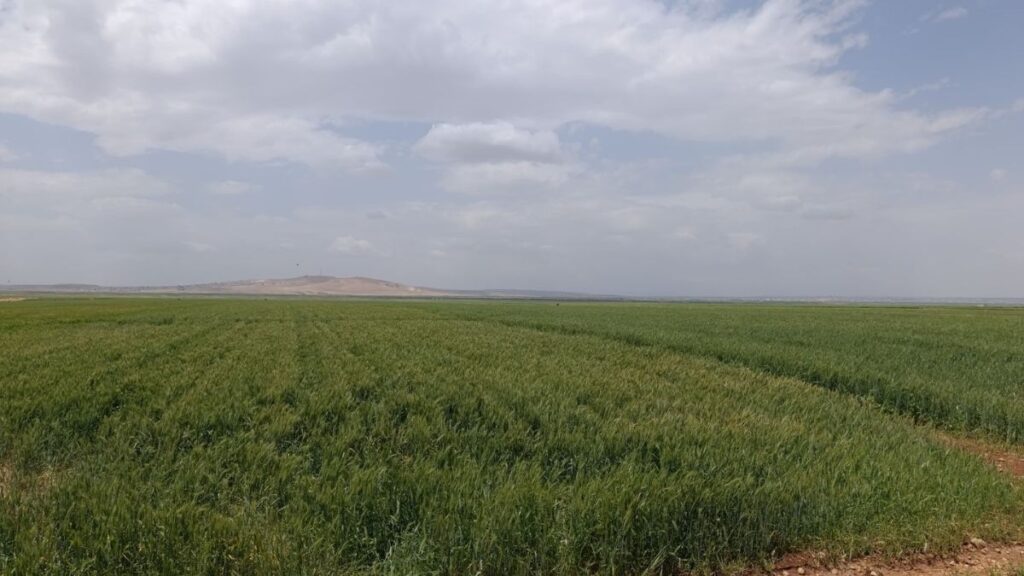
 Wheat fields in farmlands of southern Aleppo countryside, May 13, 2025 (Aleppo Agriculture and Agrarian Reform Directorate/Facebook
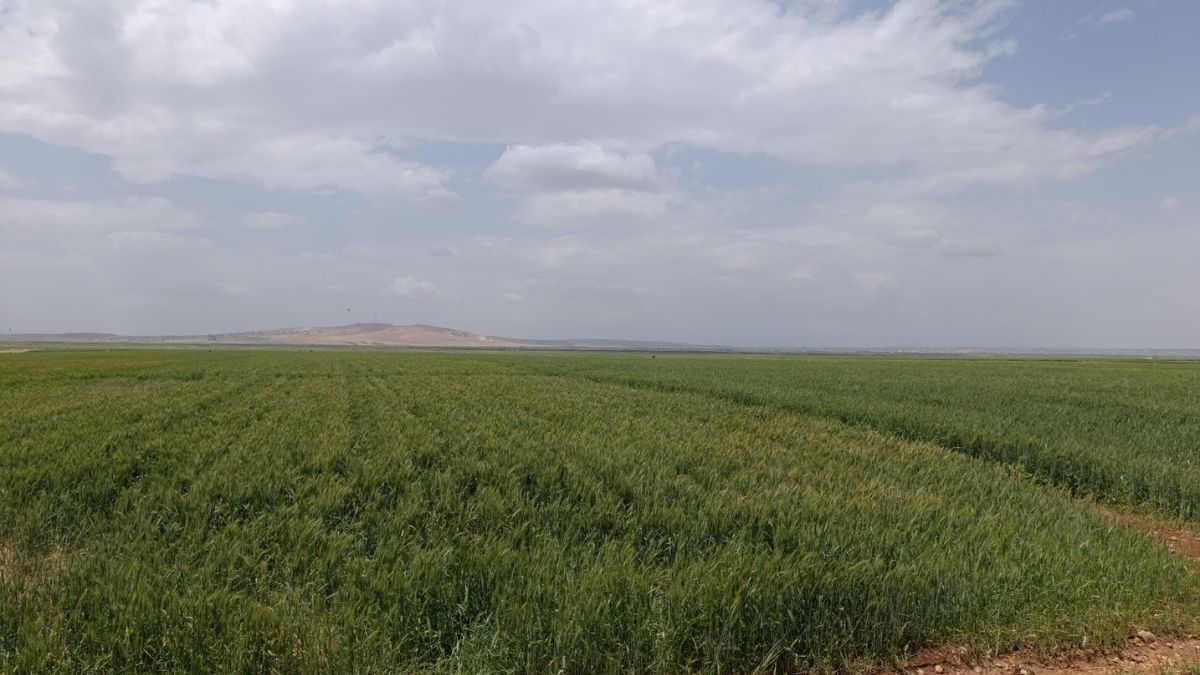
Wheat fields in farmlands of southern Aleppo countryside, May 13, 2025 (Aleppo Agriculture and Agrarian Reform Directorate/Facebook


 A
A
A
A
A
A
Farmers in the Aleppo countryside face mounting challenges threatening the survival of agriculture, their main source of livelihood.
Rising fuel and fertilizer prices, the decline of irrigation networks, and difficulties marketing produce have made this season “exhausting,” according to farmers.
In the village of al-Eiss in southern Aleppo countryside, drought and soaring costs are compounding the strain.
Mahmoud al-Sarhan, a farmer, told Enab Baladi that rain-fed farming suffered a “zero season” this year. Despite plowing and planting crops like cumin, the lack of rainfall and failed attempts at alternative irrigation left fields barren.
Where farmers rely on groundwater wells, high fuel costs have become the main obstacle. Operating pumps requires large amounts of diesel, but returns from crops barely cover these expenses.
The same applies to lands depending on rivers. The water level in the Queiq River has fallen, forcing farmers to use diesel-powered pumps, increasing costs further.
Wheat cultivation has also been affected. al-Sarhan explained that high fertilizer prices and lack of irrigation water forced farmers to water their land only once, instead of the three times required for good yields.
The same challenges have discouraged farmers from growing labor-intensive crops like cotton, which requires repeated irrigation and high costs.
Vegetable farming, often dependent on wells, faces similar obstacles due to the absence of alternative energy systems to operate pumps. Farmers rely on diesel generators, which raise market prices.
Losses increase at the marketing stage as well, with farmers pressured by wholesale traders in Aleppo’s central market, who impose low prices that do not cover basic production costs.
Al-Sarhan called for genuine support, including subsidies for fuel, fertilizers, and pesticides, to ease farmers’ burdens and ensure agricultural continuity.
In Maskanah in eastern Aleppo countryside, farmer Abdullah al-Jassem reduced his cultivated land by half this year due to soaring costs and water shortages.
He described the current season as “exhausting,” citing fuel and fertilizer expenses.
He added that the absence of technical support and agricultural guidance worsened the situation, especially amid recurring droughts.
Some farmers may abandon their lands entirely, while others are working as day laborers in construction or brick factories to support their families.
Without real solutions, farmers await tangible steps from the Agriculture Directorate to help them continue cultivating their lands in coming seasons.
Abdul Razzaq al-Talib, head of the Jabal Samaan Agriculture Department under the government’s Agriculture and Agrarian Reform Directorate in Aleppo, told Enab Baladi that the sector continues to face obstacles preventing recovery after years of war.
He pointed to the high costs of preparing and rehabilitating artesian wells with solar energy systems, which kept them out of production plans, in addition to soaring prices of seeds and fertilizers and the low prices of agricultural products.
Some areas that were former frontlines still suffer from earthen barriers and landmines, preventing farmers from accessing their land.
According to al-Talib, rising fuel and fertilizer prices, along with deteriorating infrastructure, forced farmers to seek cheaper alternatives. Although fertilizers are available in markets, their high cost has led many to use organic manure from cattle and sheep, which is more affordable and sustainable.
The Directorate has worked to rehabilitate public irrigation projects in parts of Aleppo to protect them from encroachment and restore them to service.
As for support programs, he said aid has reached the sector through NGOs providing wheat and vegetable seeds, as well as veterinary services to support livestock. The Directorate also plans broader agricultural planning to assess farmers’ needs, with focus on wheat, barley, and other crops essential to stability and food security.
Al-Talib noted that the Agriculture Directorate and the Ministry of Agriculture have introduced an agricultural calendar to estimate local market needs and ban imports during production periods, aiming to protect domestic output.
But financial market volatility and short crop seasons worsened farmer losses due to oversupply and weak demand.
Climate change also had an impact. Entire rain-fed areas were lost due to drought, while irrigated lands saw reduced productivity because of low rainfall and temperature fluctuations during flowering and grain growth.
The Directorate has held awareness seminars warning farmers of these risks and promoting modern irrigation methods to limit water depletion.
Currently, cultivated lands cover only 60 percent of irrigated areas compared to pre-2011 levels, due to destroyed infrastructure and limited capacity to operate artesian wells.
Rain-fed cultivation covers about 90 percent of remaining farmland, though some areas remain blocked by landmines and earth barriers.
Production has focused on wheat and barley, along with medicinal and aromatic plants and fruit trees that have suffered encroachment during the war.
There has also been expansion in yellow corn and some vegetables in irrigated lands.
Mohammad Jamal Dibban, director of the Aleppo Water Authority, noted in a May 28 seminar on Aleppo’s drinking water situation that low rainfall primarily affects groundwater and wells, and thus agriculture, rather than household water supply directly.
if you think the article contain wrong information or you have additional details Send Correction





 More Economic Reports