The Central Bank of Syria warned against fraudulent operations targeting some of its clients, which resulted in the loss of part of their bank deposits.
In a statement published on its platforms on July 16, the Bank stated that some of its clients had recently fallen victim to fraud, leading to the loss of portions of their deposited funds.
The Bank explained in its statement that the fraud operations were carried out by individuals exploiting clients’ need to liquidate their deposited funds in banks.
The fraud is executed through various methods, a few of which the Bank has identified, including:
- Publishing advertisements on social media platforms claiming to receive money into their bank accounts via bank transfers, then allegedly delivering the funds in cash or through internal transfers in exchange for a specific commission. After the bank transfer is completed, the fraudsters block the clients on social media without delivering any money.
- Sending the client a malicious electronic link, which—once accessed—allows the fraudsters to obtain the client’s account number and password, and then conduct transfers themselves from the client’s account.
- Physically exchanging or handing over banknotes, or providing notifications of completed bank transfers based on the above methods, which are later found to be suspected of forgery or counterfeiting.
- Pressuring individuals to hand over foreign currency in cash with the promise of depositing the equivalent in Syrian pounds into bank accounts, at an attractive exchange rate (significantly inconsistent with the official exchange rate bulletin), followed by the fraudsters disappearing and reneging on the transaction.
The Bank emphasized the need for its clients to exercise utmost caution, avoid responding to such advertisements or clicking on any suspicious electronic links, and refrain from transferring or handing over any money to unknown individuals or entities, to avoid losses to their funds and legal risks that could result from becoming victims of fraud and criminal acts.
It also highlighted the risk of transferring money to unknown individuals, which could subject clients to legal liability if it is later proven that these individuals were involved in money laundering or terrorist financing.
Following the fall of the al-Assad regime on December 8, 2024, Syria faced major challenges, most notably a severe liquidity crisis and a collapse of trust in the banking system.
The Bank’s administration adopted a contractionary monetary policy aimed at controlling inflation and supporting the Syrian pound by restricting the money supply, in addition to lifting previous restrictions on dealing in U.S. dollars
if you think the article contain wrong information or you have additional details
Send Correction


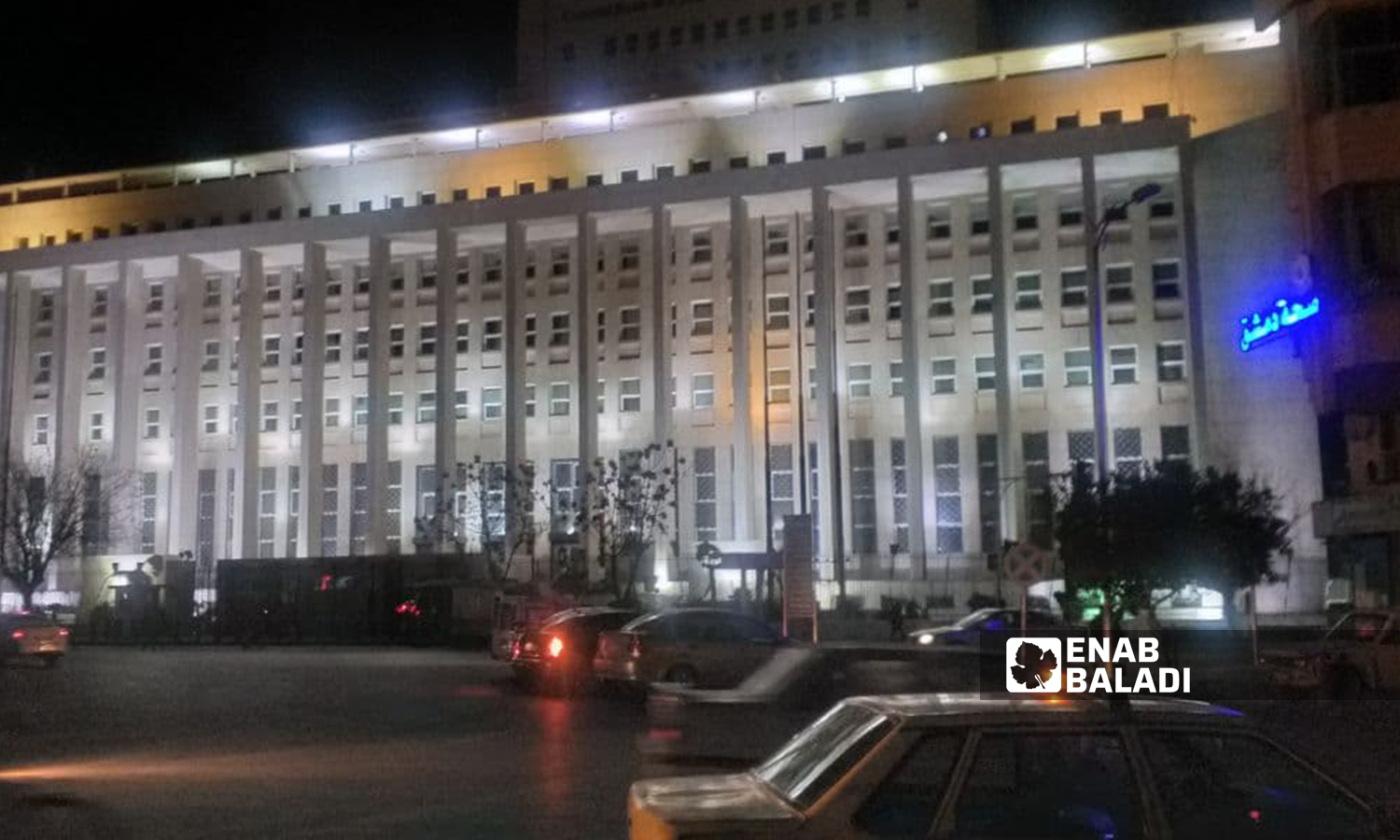
 Central Bank of Syria in Damascus – January 23, 2022 (Hassan Hassan / Enab Baladi)


 A
A
A
A
A
A







 More Economic Reports