

Enab Baladi, Yazan Kur
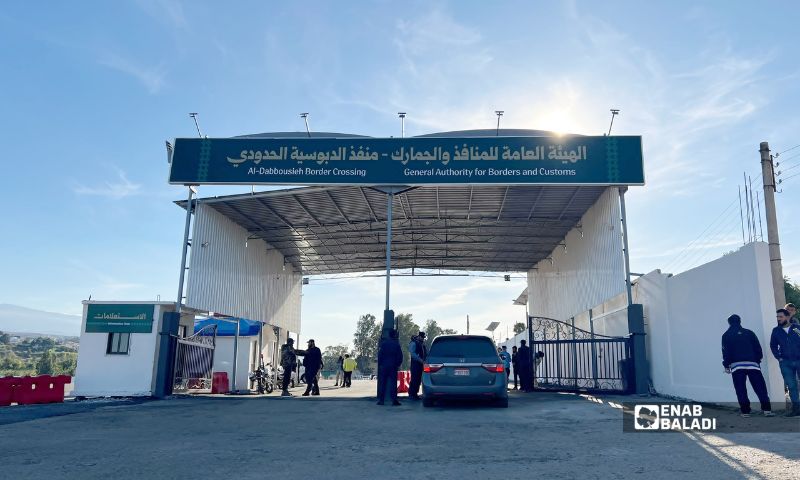
The Dabousiya border crossing between Syria and Lebanon reopened to passengers, commercial trucks and transit freight on Monday, November 9, after nearly two years of closure following an Israeli strike that damaged the bridge connecting the two countries in November 2024. Enab Baladi attended the reopening, which followed the completion of work to rebuild the bridge, rehabilitate administrative and service facilities, and expand freight yards and passenger halls.
The crossing’s reopening has significance beyond restoring cross-border traffic. Its location connects northern Lebanon with central and northern Syria and the Syrian coast, offering shorter routes for residents of Homs (central Syria), Akkar and Tripoli (northern Lebanon), while also helping ease pressure on other border crossings, particularly Masnaa and Arida.
Operations at Dabousiya are resuming as Syria and Lebanon move toward closer cooperation on economic and service-related matters. Officials on both sides have spoken about the crossing’s expected role in stimulating trade, facilitating passenger travel and allowing transit trucks to pass.
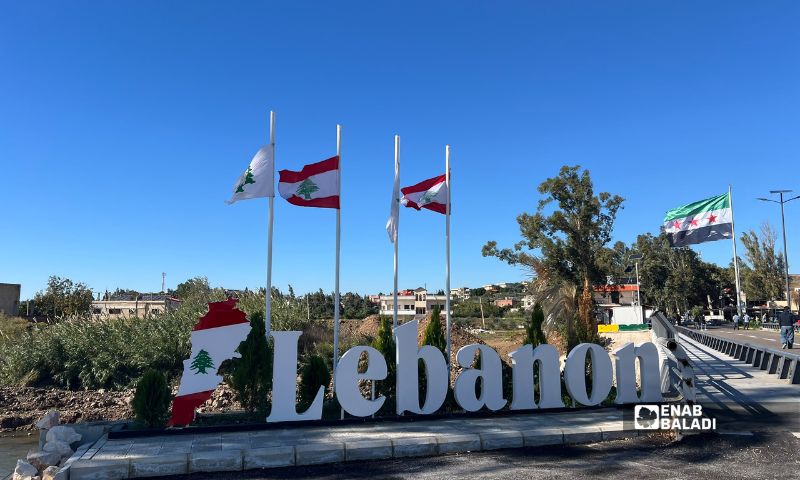
The bridge linking Syria’s Dabousiya crossing and Lebanon’s Abboudieh border post, November 9, 2026 (Enab Baladi/Yazan Kur).
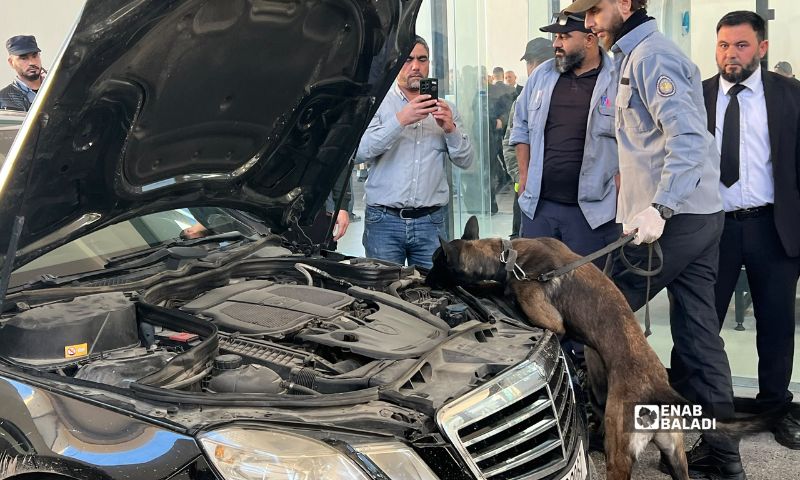
Passenger inspections at the Dabousiya border crossing between Syria and Lebanon in rural Homs governorate, November 9, 2026 (Enab Baladi/Yazan Kur).
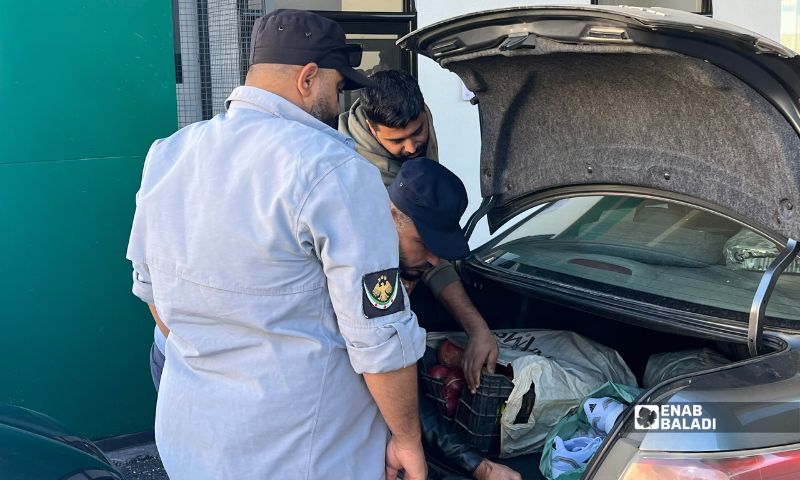
Passenger inspections at the Dabousiya border crossing between Syria and Lebanon in rural Homs governorate, November 9, 2026 (Enab Baladi/Yazan Kur).
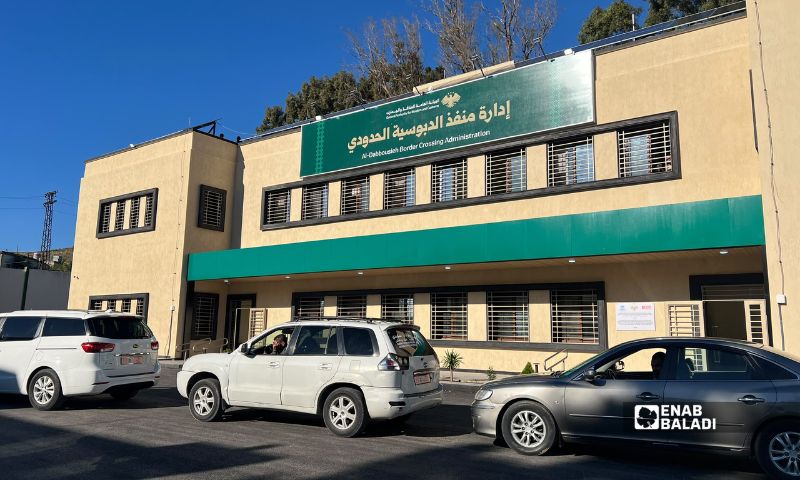
Traffic at the Dabousiya border crossing between Syria and Lebanon in rural Homs governorate, November 9, 2026 (Enab Baladi/Yazan Kur).
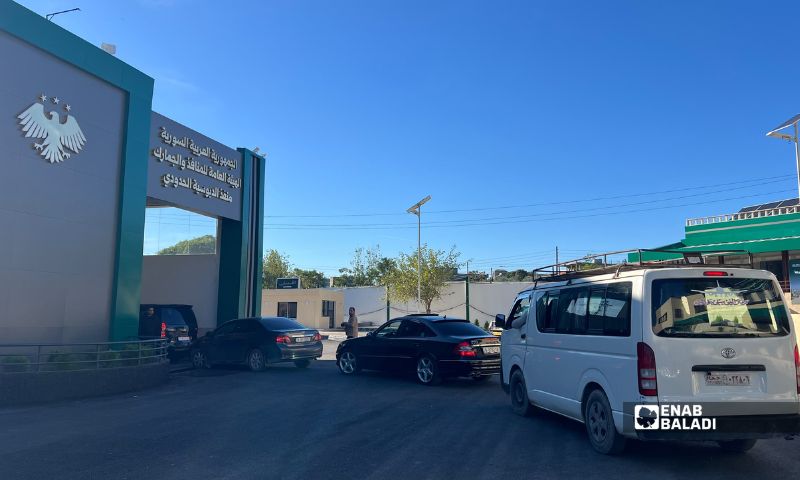
Traffic at the Dabousiya border crossing between Syria and Lebanon in rural Homs governorate, November 9, 2026 (Enab Baladi/Yazan Kur).
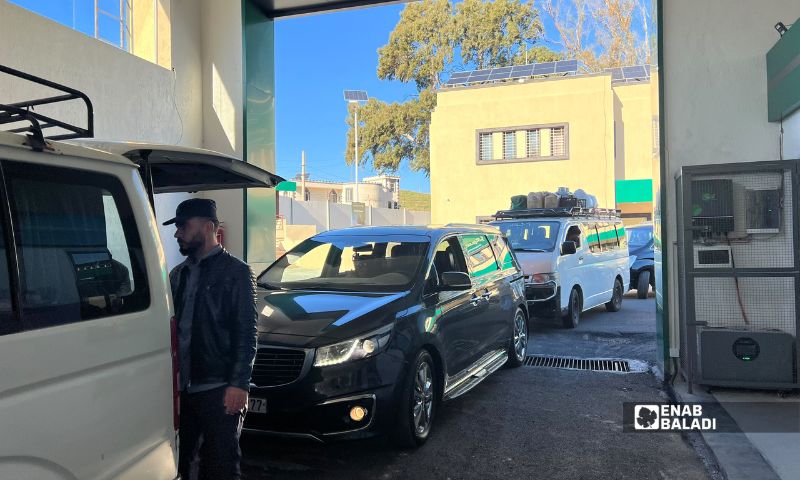
Traffic at the Dabousiya border crossing between Syria and Lebanon in rural Homs governorate, November 9, 2026 (Enab Baladi/Yazan Kur).
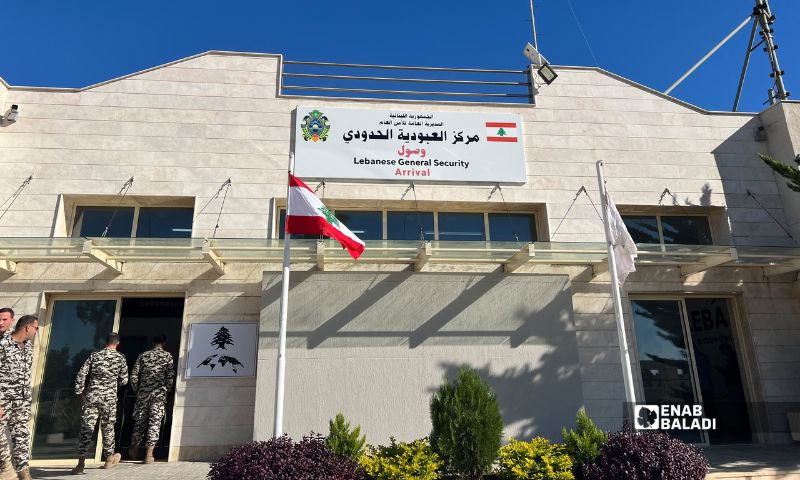
The Abboudieh border post on the Lebanese side, opposite Syria’s Dabousiya crossing in rural Homs governorate, November 9, 2026 (Enab Baladi/Yazan Kur).
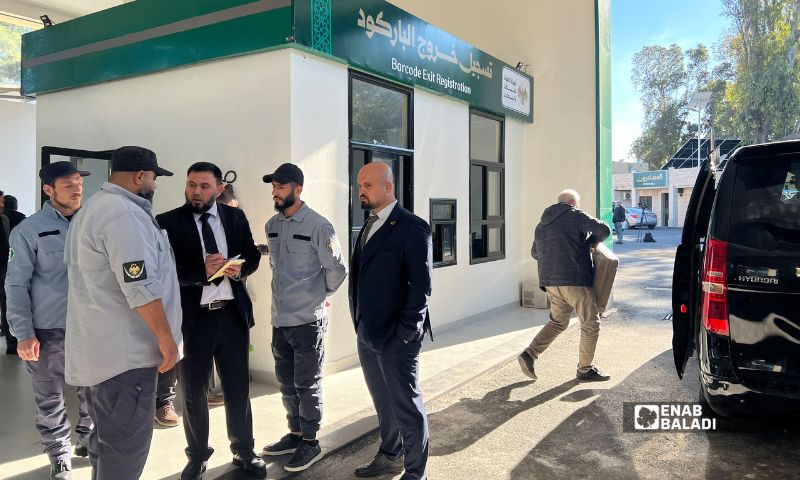
Passenger inspections at the Dabousiya border crossing between Syria and Lebanon in rural Homs governorate, November 9, 2026 (Enab Baladi/Yazan Kur).
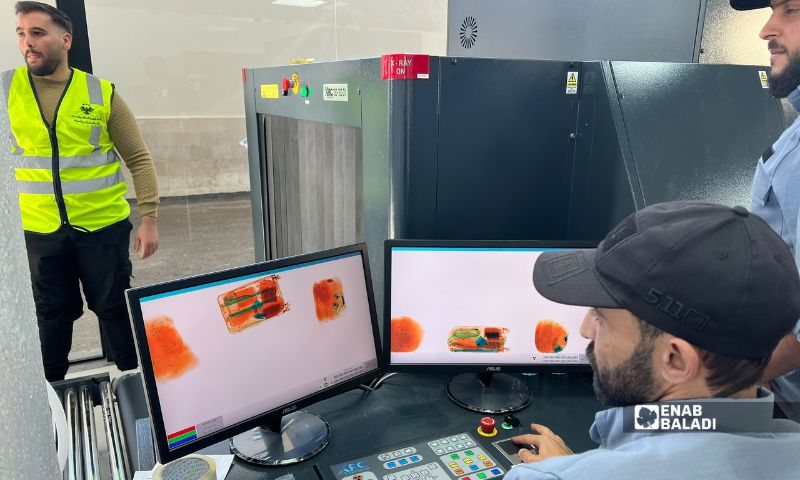
Passenger inspections at the Dabousiya border crossing between Syria and Lebanon in rural Homs governorate, November 9, 2026 (Enab Baladi/Yazan Kur).
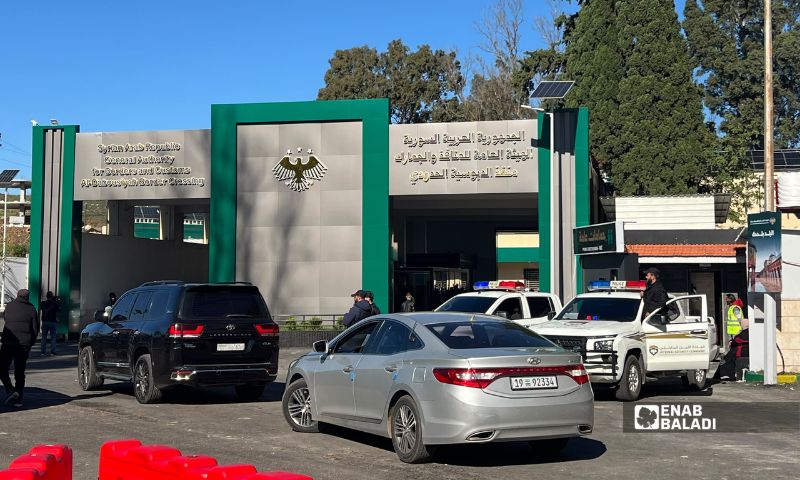
The Dabousiya border crossing between Syria and Lebanon in rural Homs governorate, November 9, 2026 (Enab Baladi/Yazan Kur).
Rebuilding the Bridge and Rehabilitating Facilities
Dabousiya was put out of service after an Israeli strike in November 2024 destroyed the border bridge over the Nahr al-Kabir al-Janoubi river, cutting the road connecting the Syrian side with Abboudieh in northern Lebanon’s Akkar district.
Maher Haj Ahmad, head of public relations at the Dabousiya border crossing, said the crossing had stopped operating because the bridge connecting the two countries was destroyed. Its reopening had long been awaited because of its geographical importance and the needs of nearby residents, he said.
Speaking to Enab Baladi, Haj Ahmad explained that rehabilitation began with rebuilding the bridge over the Nahr al-Kabir al-Janoubi. This took time because of the scale of the project, before work moved on to restoring the administrative buildings and customs office and expanding passenger halls and freight yards.
He added that the expansion aimed to increase the crossing’s capacity. Previously, its yards could accommodate only a limited number of trucks; they can now receive larger numbers of import and export trucks, alongside improvements to services for passengers traveling in both directions.
According to information announced by the relevant authorities during the reopening, the work included restoring arrivals and departures halls, administrative and customs buildings, and laboratory and quality-control facilities. It also included equipping freight yards, truck weighing stations and customs inspection points with X-ray scanning equipment.
According to Syria’s General Authority for Ports and Customs, the rehabilitation and expansion increased the crossing’s area to more than seven times its previous size. The arrivals hall was equipped with 16 service windows and the departures hall with 10, with the crossing declared ready to operate around the clock.
Mazen Alloush, director of the authority’s International Relations and Cooperation Department, told Enab Baladi during the reopening that Dabousiya was the fourth crossing between Syria and Lebanon to enter service. He said the authority’s staff were on hand to facilitate the passage of passengers, commercial convoys and transit trucks.
Alloush said the expansion enabled the crossing to accommodate more than 500 trucks. He noted that plans were in place to complete further expansion during 2027 and prepare new administrative buildings as part of the authority’s plans.
He also announced that preparations were underway to reopen the Arida border crossing in December, making it the fifth crossing operating between the two countries.
A Trade Artery Between the Two Countries
Dabousiya’s return to service has significance beyond passenger travel, given its geographical location and potential role in facilitating goods transport between Syria and Lebanon and linking land routes with ports and markets in both countries.
Lebanese Minister of Public Works and Transport Fayez Rasamny described the reopening as an important step toward strengthening economic activity, trade and connections between the two countries. He said facilities and airports in Syria and Lebanon should complement one another in supporting development and cross-border movement.
Lebanon’s National News Agency quoted Rasamny as saying that bringing the Dabousiya-Abboudieh crossing into operation was part of a broader vision to activate vital facilities, from border crossings to ports and airports.
Rasamny estimated that traffic through the crossing could reach between 8,000 and 10,000 people a day, including arrivals and departures from both countries, in addition to between 150 and 200 trucks daily. He said this movement would stimulate the economy and ease pressure on other facilities and crossings.
For his part, Misbah Khalil, head of Lebanon’s Higher Customs Council, told Enab Baladi that Dabousiya was a vital artery for trade between Lebanon and Syria, as well as between Lebanon and other Arab countries. Operating it would facilitate the movement of goods, people and vehicles and help ease pressure on the Masnaa and Arida crossings, he said.
The crossing’s importance also extends to transit freight. It could serve as a route for goods arriving from other countries through Syrian territory en route to Lebanon, or traveling in the opposite direction, allowing both countries to benefit from their position in regional transport networks.
In this context, former Lebanese MP for Akkar Jamal Ismail told Enab Baladi that reopening Dabousiya could boost economic activity in Akkar and Homs governorates, after a period in which he described economic activity in both areas as weak.
Ismail said the crossing could receive goods coming from Turkey and other countries through Syria, generating revenue through trade. He also pointed to the possibility of Iraqi oil passing through it in the future, which he considered a further economic opportunity for both countries.
He noted plans to reopen the Arida crossing in early December, saying that operating more crossings would expand transport and trade between border areas.
Shorter Distances and Easier Travel
Shorter travel distances are among the most immediate effects of bringing Dabousiya back into operation, particularly for residents of Homs, Akkar and Tripoli, and drivers working routes between the Syrian coast and Lebanon.
Ismail said the reopening shortened the journey between Homs and Tripoli. The trip could take about an hour and a half through the crossing, compared with roughly seven hours using other routes during its closure, he said.
This account is consistent with what passengers and drivers who used the crossing after its reopening told Enab Baladi. They described reductions in the time and effort needed to reach their destinations after having to use longer routes during the closure.
Taha Farmali, a traveler from the al-Hosn area in rural Homs, told Enab Baladi that the crossing was important for residents of his area and neighboring communities because it spared them the burden of the long distances they had been forced to travel while it was closed.
Farmali added that alternative routes were long, with some lacking services and placing an additional burden on passengers. Dabousiya’s proximity to their homes made travel easier and more comfortable, he said.
He said procedures on the Syrian side were straightforward, with immigration, passport and inspection formalities completed without delay, according to his experience crossing the border.
Issam Hatem, a driver working the Dreikish (Tartous governorate, western Syria), Tartous and Beirut route, told Enab Baladi that the journey to the Lebanese capital now took about three hours through the crossing, compared with roughly six and a half hours previously via the Jousiya or Masnaa crossings.
The driver described the crossing’s facilities as good, pointing to smooth procedures and organized processing of paperwork on both the Syrian and Lebanese sides, helping passengers and drivers complete the required formalities.
This is particularly important for transport workers, who incurred additional costs during the crossing’s closure because of longer distances and greater fuel and time consumption, with consequences for transport fares and related services.
Facilitating Returns and Supporting Economic Recovery
According to Michael Ohnmacht, the European Union’s ambassador to Syria, the significance of reopening Dabousiya extended beyond restoring transport and trade. It also had a humanitarian dimension linked to Syrian refugees and displaced people returning to their homes, alongside the role of crossings in supporting infrastructure projects and economic connections between Syria and Lebanon.
Speaking to Enab Baladi while attending the reopening, Ohnmacht expressed the European Union’s satisfaction at the crossing’s return to service. He described it as a positive development in relations between the two countries, with Syrian and Lebanese officials attending, including Lebanon’s minister of public works and transport, the governor of Homs, and border crossing and customs officials.
He explained that the European Union had helped finance work on the Syrian side of the crossing through a program aimed at helping Syrian refugees and displaced people return to their homes in Syria.
He said border crossings played an important role in this process by providing routes for movement between the two countries and facilitating access to the areas to which people were returning.
These remarks place the crossing’s rehabilitation within a broader effort to restore the infrastructure needed for Syrians to return. Return depends not only on willingness or a decision to go home, but also on the availability of roads and border facilities capable of accommodating people’s movement and facilitating their journeys.
In this respect, Dabousiya is one of the facilities that could help people returning home, alongside its commercial and service functions.
On the economic front, Ohnmacht highlighted the crossing’s importance in the context of regional infrastructure and transport projects. He referred to pipelines running from Kirkuk in Iraq to Baniyas on the Syrian coast, and the importance of linking land routes with Lebanon’s port of Tripoli.
The reference to these projects highlights the importance of Syria and Lebanon’s geographical position within regional transport and connectivity networks, where land routes, seaports and energy transport projects intersect.
Developing crossings and roads could facilitate the movement of goods and materials between these facilities and provide more interconnected infrastructure for economic activity, although realizing these opportunities depends on completing the projects and the necessary agreements.
Ohnmacht also linked improving bilateral relations with development opportunities in both countries, saying that the positive trajectory of Syrian-Lebanese relations could help advance economic and social development on both sides. He stressed the importance of economic development in Syria as a factor in strengthening its stability.
The EU representative thus framed Dabousiya’s reopening as more than a technical measure to restore a border crossing, placing it within a process combining easier returns for Syrians, better infrastructure and stronger economic connections between the two countries.
These issues extend beyond the crossing itself, but are affected by its ability to operate and maintain a regular flow of traffic.
Syrian-Lebanese Coordination to Facilitate Crossings
The reopening was accompanied by meetings and coordination between the relevant Syrian and Lebanese authorities to organize traffic and simplify procedures for passengers and commercial trucks.
Haj Ahmad said several meetings had been held between the two sides to agree on a common approach to facilitating crossings. He noted the involvement of Lebanese delegations and officials, including the minister of public works and transport, in following up on rehabilitation and coordinating the crossing’s operation.
Coordination mechanisms are important as the crossing begins receiving passengers and trucks in both directions. Smooth traffic requires compatible procedures among customs, security and administrative bodies on both sides to reduce delays and help organize inspections and customs clearance.
Officials in both countries say the crossing’s operation is part of a broader effort to activate border facilities. This also relates to preparations to reopen Arida and develop cooperation in transport, ports and trade.
What Comes Next?
The actual impact of reopening Dabousiya will depend on the volume of passenger and truck traffic it receives in the coming period, and on the authorities’ ability to keep procedures running smoothly and provide the services traders and drivers need.
Announced Lebanese estimates suggest that the crossing could receive between 8,000 and 10,000 passengers daily and between 150 and 200 trucks, while Syria’s General Authority for Ports and Customs puts its capacity at more than 500 trucks.
These figures are estimates of expected traffic and announced operating capacity. They do not necessarily reflect actual traffic volumes since the reopening.
Stimulating trade also requires addressing challenges related to customs clearance, transport and freight costs, alongside reopening the crossing, and establishing clear coordination mechanisms between the relevant authorities in both countries.
As residents of border areas await the reopening’s effects on their travel and local markets, Dabousiya’s return to service offers an opportunity to reactivate a land route between Syria and Lebanon, expand trade and transit freight, and facilitate Syrians’ return, as the two countries prepare to reopen other crossings, including Arida.
Benefiting from these opportunities will depend on maintaining regular cross-border traffic, completing infrastructure development plans and turning announced expectations into actual movement that benefits passengers, traders and nearby residents, making the crossing part of a broader network of economic and service cooperation between the two countries.
Syrian-Lebanese agreement to activate and rehabilitate border crossings