


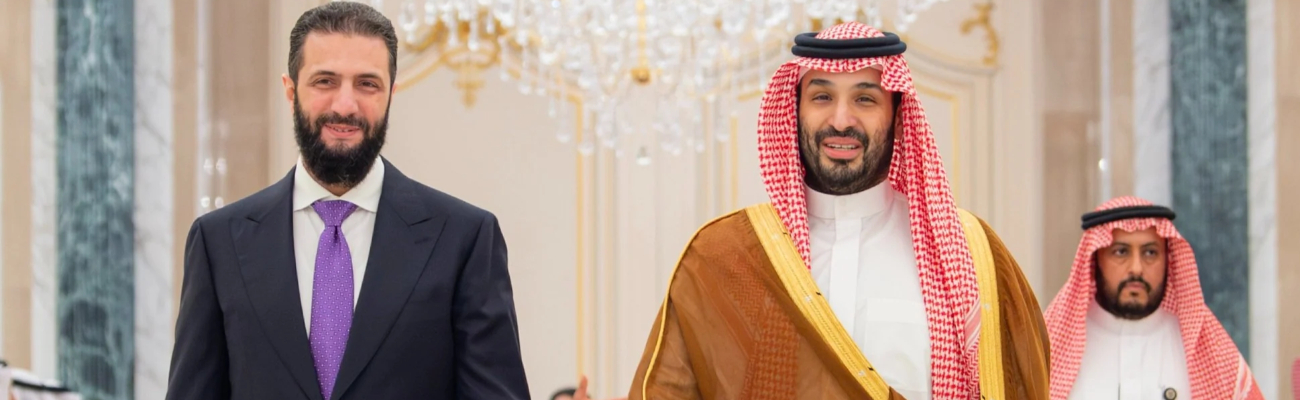
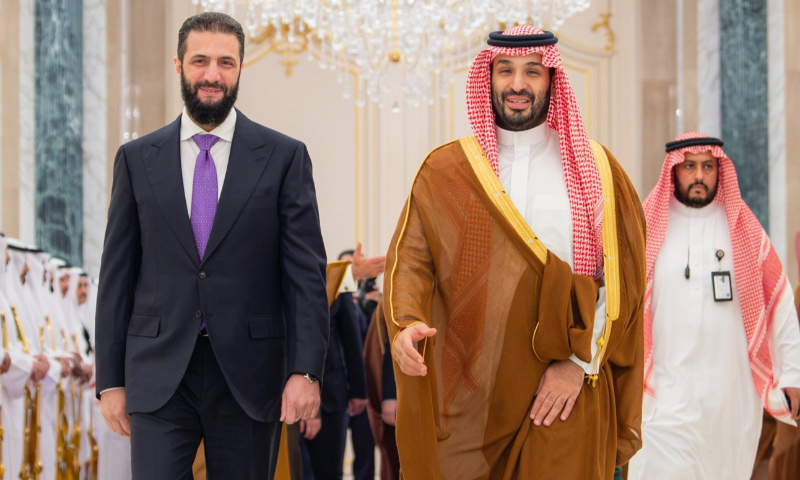
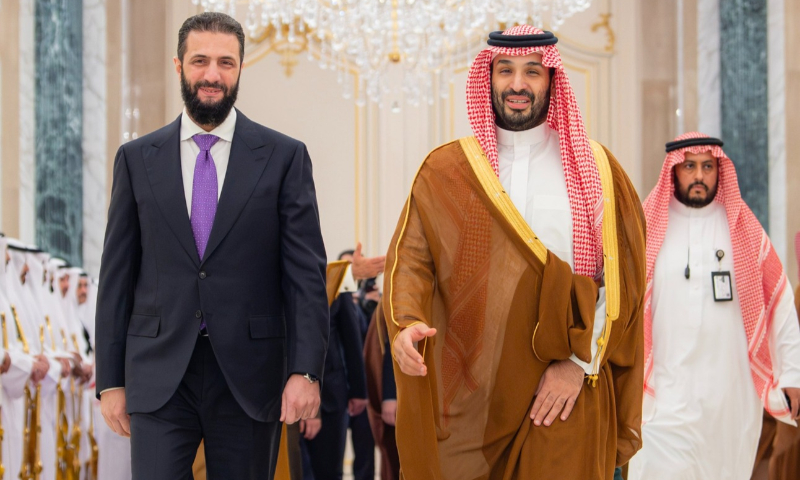
 Syrian President Ahmed al-Sharaa meets Saudi Crown Prince Mohammed bin Salman during a visit to Riyadh, November 4, 2026. (Saudi Press Agency)


 A
A
A
Mowaffak al-Khouja |Mohammad Deeb Bazzet | Mohammed Jaffal
Wars do not always begin on a clearly defined front, and a military agreement does not necessarily send soldiers into battle. But when interests overlap, and regional issues become intertwined, the limits of military cooperation matter more, particularly for Syria, whose army is still reorganizing after years of war.
Riyadh was Syrian President Ahmed al-Sharaa’s first foreign destination after the fall of the former regime, and he has expressed a personal affinity for Saudi Arabia. Relations between Damascus and Riyadh moved beyond diplomacy and politics on November 4, when Syria signed a military agreement in Riyadh that officials say is intended to help rebuild its army. The scope of the military relationship remains unclear, but it could eventually extend to Syrian participation in a war abroad against Ansar Allah, also known as the Houthis.
Although Syrian participation remains unlikely, the question goes beyond sending soldiers to Saudi Arabia or deploying them in Yemen. It touches on a range of international issues, from Damascus’s relationship with Riyadh to its ties with Iran, Lebanon, and the United States.
Damascus and Riyadh’s Shared Interests
The Syrian government signed several agreements with Saudi Arabia during al-Sharaa’s November 4 visit to Riyadh, where he was accompanied by a high-level government delegation.
The military agreement drew particular attention, although its details were not made public. International news outlets, including Reuters and Agence France-Presse, reported limited details about the deal. Reports also raised the prospect of Syrian participation in the war against the Houthis, which Damascus later denied.
Official statements described the agreement as limited to advice, training, and building the Syrian army’s capabilities. They also pointed to reciprocal visits in December.
At a November 9 press conference, Syrian Foreign Minister Asaad al-Shaibani said the military agreement with Saudi Arabia focused on rebuilding Syria’s military institutions. He denied that Syria had reached any agreement with Yemen on a military deployment there.
Al-Shaibani also condemned Houthi threats against Saudi Arabia and said Syria stood with the kingdom in facing those challenges.
His remarks echoed earlier statements of Syrian support for Saudi Arabia in its conflict with the Houthis. They left open the question of whether Damascus might eventually become involved.
What prompted Syria to sign these agreements, particularly the military deal, and what does it stand to gain?
What does Saudi Arabia gain from a deal with a country still rebuilding and recovering, and from a military that is still putting its structures in place after years of armed conflict depleted its capabilities?
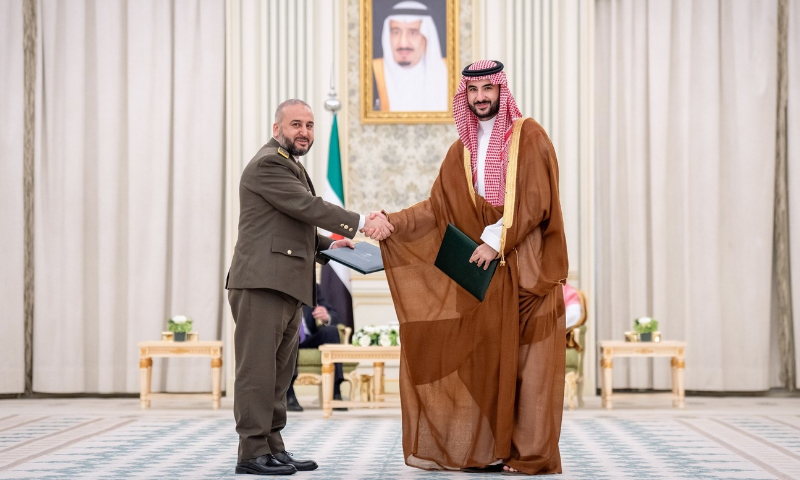
Syrian Defense Minister Murhaf Abu Qasra signs a military agreement with his Saudi counterpart, Khalid bin Salman Al Saud, in Riyadh, November 4, 2026. (Syrian Presidency)
What Damascus and Riyadh Are Signaling
Mohammed al-Yamani, an Egyptian international relations expert, believes the agreement goes beyond conventional military cooperation between two countries. He said its significance lies in its timing and the changes underway in Syria and the wider region.
Speaking to Enab Baladi, al-Yamani said Syria needs to rebuild its security and military institutions after years of war and military and economic exhaustion. It also needs to regain its standing in the Arab world and the wider region.
Saudi Arabia, meanwhile, sees Syria as a pivotal country that cannot be left open to regional and international intervention or allowed to become a source of instability on the edge of the Arab Levant.
Al-Yamani sees two messages in the agreement. The first, from Riyadh to Damascus, is that Saudi Arabia is ready to build a strategic partnership and help rebuild the Syrian state.
The second, from Damascus to Riyadh, is that Syria wants to reengage with the Arab world and is looking for partners that can help it regain the capacity to defend its territory and make its own decisions.
The Houthis and Regional Security
Al-Yamani said Saudi Arabia faces growing security challenges amid its confrontation with the Houthis. They include threats to oil facilities, airports, and other infrastructure, as well as risks to shipping in the Red Sea and the Bab al-Mandab Strait.
Riyadh therefore sees its security as part of an interconnected regional system that extends beyond its borders. Turmoil in Yemen, the Red Sea, Iraq, or Syria could directly threaten Saudi interests.
Bringing Syria into Saudi security cooperation has geopolitical significance, al-Yamani said. Syria lies at the heart of the Arab Levant and provides a strategic link between the Gulf, Iraq, Jordan, Lebanon, Turkey, and the Mediterranean.
In al-Yamani’s view, Riyadh also recognizes that relying entirely on outside powers, including the United States, offers no guarantees for regional security.
Damascus needs Arab partners that can provide training, expertise, and institutional support while allowing Syria to avoid complete dependence on international or regional powers whose priorities may differ from its own.
“Saudi Arabia wants a stable Syria and wants to prevent it from once again becoming an arena where regional powers settle scores. The better able the Syrian state is to manage its security and institutions, the fewer opportunities outside actors or armed groups will have to exploit a security vacuum.
“The concern goes beyond rivalry with any one regional power. It is about preventing a collapse of the balance within Syria and a return to the chaos that has already cost the region dearly.”
Mohammed al-Yamani
international relations expert
Politically, al-Yamani said Syria needs to emerge from years of isolation and rebuild its ties with Arab countries based on mutual interests.
He said Saudi Arabia carries considerable political and economic weight and has influential relationships with the United States, Europe, the Gulf states, and other international powers.
A closer partnership could help Damascus strengthen its political legitimacy, broaden its international ties, and secure more support for reconstruction, investment, and the lifting of economic restrictions.
Economic Agreements
Alongside the military agreement, Syria and Saudi Arabia signed economic and financial deals. Among them were six concessional development loan agreements worth more than $403 million, signed by Syria’s Ministry of Finance and the Saudi Fund for Development, to finance public services and development projects in Syria.
Al-Yamani said Saudi Arabia wants to play a central role in rebuilding the Syrian state, with a role that extends beyond financial assistance.
Financial assistance can help a country overcome economic crises, he said. A military and security partnership gives both sides shared strategic interests and establishes long-term channels for communication and coordination.
Riyadh is therefore seeking a lasting role in Syria’s new institutions for cooperation and a voice in shaping future security relationships in the region.
The Mecca Alliance
The military agreement revived discussion about whether Syria might join the “Mecca Alliance,” which includes Saudi Arabia, Turkey, and Pakistan.
Syria has openly expressed interest in joining. Its foreign minister previously said talks were underway on the matter.
Abdullah al-Asaad, a lecturer in international relations, considers Syrian membership unlikely. He said decisions to join a military alliance depend on several factors, including military history, the types of weapons involved, and the threats facing countries with shared regional or international objectives.
Al-Asaad told Enab Baladi that the Syrian army is currently focused on putting its own house in order and building its internal structures. It is not preparing to enter external alliances, he said.
Al-Yamani believes the agreement cannot be separated from discussions about Syria joining regional defense arrangements, particularly the Mecca Alliance. He distinguishes three levels of coordination:
- Military cooperation, involving training, exchanges of expertise, advice, and coordination between the two defense ministries.
- Security and defense cooperation, involving intelligence sharing, coordination of positions, and development of joint capabilities to address threats.
- A defense alliance, involving mutual obligations concerning member states’ security. Depending on the agreement’s terms and implementation, an attack on one state could be treated as an attack on the others.
Scenarios for the Agreement and Signs of Change
Al-Yamani outlined three main scenarios for the agreement’s future.
- A gradually developing defense partnership. This is the most realistic scenario in the near term, he said. The agreement would continue to cover training, professional development, exchanges of expertise, and military advice, while cooperation expands into counterterrorism, border security, and the development of Syrian military institutions. Saudi Arabia would continue supporting reconstruction and investment in vital Syrian sectors.
This scenario would serve both countries’ interests at the lowest political and military cost and give Damascus a chance to rebuild its capabilities without entering new conflicts.
- A move toward a regional defense alliance. Relations could develop into a mutual defense agreement, potentially leading Syria to join the Mecca Alliance or a similar regional security arrangement. This would give Damascus greater strategic weight while placing it under more complex regional obligations.
- The agreement falters amid competing regional interests. The partnership could face setbacks if regional confrontations escalate, disagreements emerge over Syria’s military role, Damascus comes under Israeli or international pressure, or the Syrian government fails to address domestic security challenges.
Political and economic cooperation might continue in that case, while military cooperation declines.
Signs of Change
Al-Yamani said several indicators could reveal whether the agreement is simply a framework for military cooperation or the beginning of a genuine strategic alliance.
These indicators could show the direction of the relationship in the coming months and years:
- The nature of the training programs the two countries launch.
- The extent of Saudi involvement in rehabilitating the Syrian army.
- The scope of intelligence and counterterrorism cooperation.
- The nature of coordination on Houthi threats and Red Sea security.
- Damascus’s position on joining the Mecca Alliance.
- The extent to which Saudi economic support is tied to rebuilding Syrian state institutions.
- Israel’s position on closer Syrian-Saudi military ties.
- Damascus’s ability to bring military formations under a single national command.
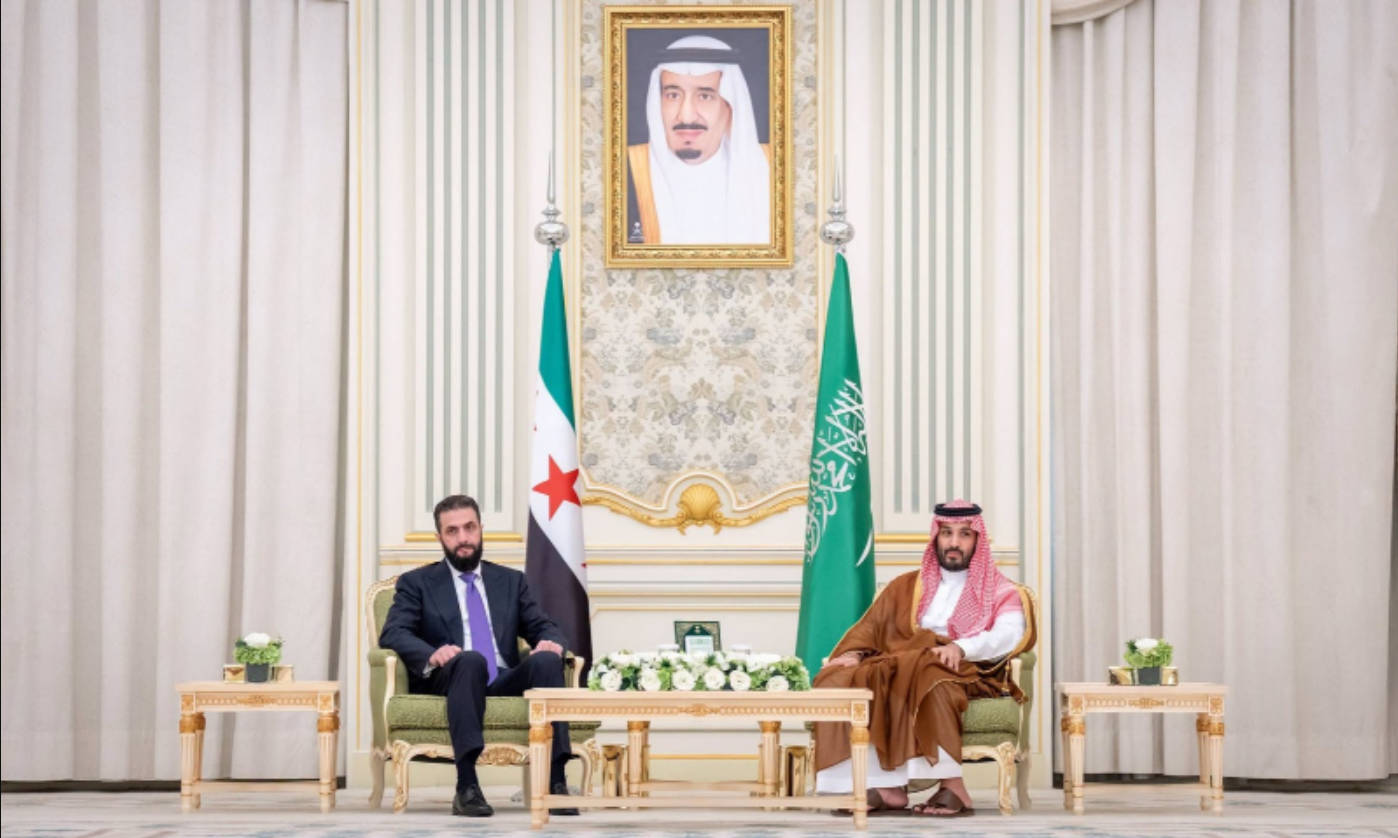
Syrian President Ahmed al-Sharaa visits Riyadh and meets Saudi Crown Prince Mohammed bin Salman, November 4, 2026. (Syrian Presidency)
Is Syria Moving Closer to the War in Yemen?
The Syrian-Saudi military agreement renewed discussion of possible Syrian involvement in Saudi Arabia’s conflict with Ansar Allah, the Houthis, despite the Syrian government’s denial.
Any potential Syrian role in Yemen would depend not only on a political decision but also on the army’s ability to sustain a mission abroad.
The possibility also places the issue in a wider context of Syria’s relationship with Saudi Arabia. The Syrian army is rebuilding its units and capabilities while facing domestic obligations. It would face a different set of calculations if it moved from limited training or advisory work to a prolonged deployment of military units abroad.
Yemen’s war also makes any potential intervention different from a conventional military mission. The conflict involves multiple parties, complex geography, and a prolonged war.
Direct Involvement Unlikely
Nawar Shaaban Qabaqibo, a security and military affairs researcher, considers it unlikely that the Syrian army will enter direct combat in Yemen in the near term. He said the possibility arose because Damascus and Riyadh signed a military cooperation agreement and because of limited reports that Syrian military personnel had arrived in Saudi Arabia to train and advise.
Qabaqibo told Enab Baladi that the presence of Syrian military personnel in Saudi Arabia and the nature of their assigned duties should be distinguished from the possibility of sending Syrian forces to Yemen. He noted that al-Shibani had said there were no Syrian troops in Yemen and no imminent plan to send any.
Qabaqibo said he had seen insufficient evidence that Damascus was preparing to intervene in the war in Yemen or send troops to fight there.
If military cooperation develops, he expects it to remain focused on training, advice, and exchanges of expertise. Syrian officers gained field experience during years of war, while Saudi Arabia has training and equipment capabilities that the Syrian army may need as it rebuilds.
Experience in Asymmetric Warfare
One area of Syrian expertise that could be of interest to Saudi Arabia involves what Qabaqibo called “asymmetric warfare,” in which the opponent is not a comparable regular army but an armed group with a different structure and capabilities.
The article says the Syrian army fought irregular armed groups in recent years, including Hezbollah and the Popular Mobilization Forces, among others. Some Syrian officers gained experience in this type of warfare through those confrontations.
Qabaqibo said a country’s substantial military capabilities do not necessarily mean it can deal effectively with an asymmetric adversary. It may struggle to achieve its objectives in such confrontations, making it possible to benefit from other countries’ military experience.
“If Saudi Arabia needs certain kinds of Syrian expertise, that need may involve the experience accumulated by officers who spent years facing different armed groups, rather than conventional combat capabilities.”
Nawar Shaaban Qabaqibo
Security and military affairs researcher
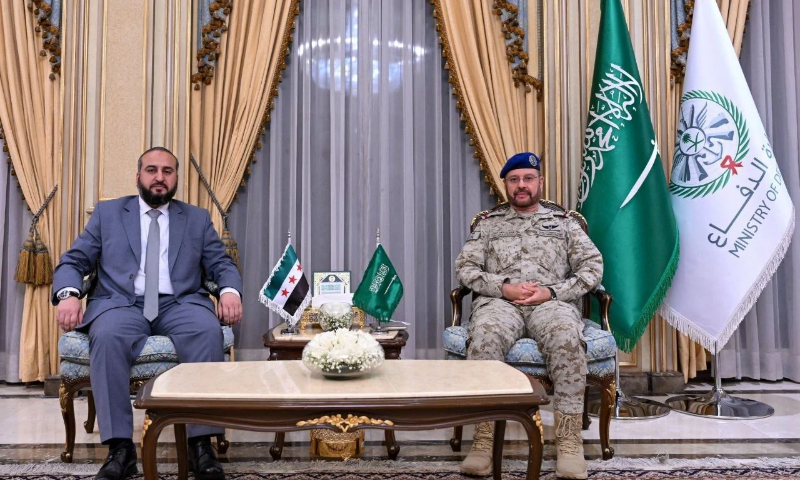
Syrian Defense Minister Murhaf Abu Qasra meets Saudi Chief of the General Staff Fayyad Al-Ruwaili in Riyadh, January 2, 2026. (Syrian Ministry of Defense)
A Political Decision With Military Costs
If sending Syrian soldiers to Yemen is proposed in the future, Qabaqibo said the decision would be primarily political. It would also require transparency about the mission, where it would take place, and how long it would last.
He said any such agreement should be public. The first question the Syrian government would face at home is why it is sending soldiers to Yemen when the army still has major responsibilities in Syria, including securing the borders and reorganizing its units, while the Israeli occupation continues in southern Syria.
He added that the relationship with Saudi Arabia matters to the Syrian government, but Syria’s interest in any military role abroad must be clear. The Yemeni government’s position on having Syrian forces on its territory should also be known.
A political decision would still leave practical obstacles. Syria and Yemen share no border, so transporting troops, supplying them, and evacuating any wounded personnel would require coordination with another country throughout the deployment.
Qabaqibo distinguished between a limited mission, such as sending a small number of officers or trainers for a short period, and deploying military units to Yemen for several months.
A limited mission could be within Syria’s current capabilities. Based on publicly available information, however, there is little basis for concluding that the Syrian army can sustain a long-term commitment abroad.
Qabaqibo said a deployment would require the army to rotate personnel, supply the units, and sustain their missions while maintaining readiness at home.
He sees this as the highest cost of any potential deployment. The absence for several months of even one experienced officer who would otherwise be training a new unit in Syria could affect the training of that entire unit, at a time when the army needs its officers and trainers to reorganize and rebuild its capabilities.
Military cooperation with Saudi Arabia could improve the Syrian army’s readiness if it remains focused on training, advice, and exchanges of expertise. Expanding it to include prolonged troop deployments abroad could reduce the army’s readiness at home, especially while it still urgently needs its officers and trainers.
The Scope of Training
Ali Fawzi, a researcher on Arab and African affairs, said any Syrian involvement in Yemen would depend on political and military calculations. He considers it unlikely that cooperation between Damascus and Riyadh will lead to direct Syrian participation in operations inside Yemen for now.
Fawzi told Enab Baladi that there are signs of growing military cooperation between Syria and Saudi Arabia amid developments in the Yemen crisis. Based on available information, he said, the cooperation remains limited to training, military advice, and exchanges of expertise. There are no confirmed indications that Syrian forces are participating in military operations inside Yemen.
“Reports that Syrian military advisers arrived in Saudi Arabia reflect practical cooperation between the two sides, but they do not necessarily mean that Damascus is preparing to enter direct combat in Yemen. Moving from training and exchanges of expertise to combat would be a different strategic shift, both in the nature of the decision and in its consequences.”
Ali Fawzi
researcher on Arab and African affairs
Different Risks
Fawzi said direct combat would expose Syrian forces to risks arising from the nature of the mission and the length and complexity of the conflict. These include possible missile and drone attacks and the prospect of entering an open-ended confrontation whose duration and outcome would be difficult to predict.
He linked any potential deployment abroad to the Syrian army’s ability to overcome the challenges of rebuilding its institutions after years of war, which left burdens involving organization, weapons, and logistics.
Deploying large military formations to a distant theater such as Yemen would be extremely difficult at this stage, he said, given the army’s domestic priorities and the need to reorganize its units and improve their readiness.
Fawzi said any decision would not be purely military. It would also involve political and economic considerations linked to the future of Damascus’s relationship with Riyadh, the political and economic support and investment Syria might receive, and the impact of any involvement on domestic stability and the rebuilding of state institutions.
The nature of military cooperation would also be affected by Saudi Arabia’s requirements and developments in the war in Yemen, Fawzi said. Any shift between levels of cooperation would depend on the surrounding political and military conditions rather than follow automatically from the defense agreement.
The Most Likely Scenario
Fawzi believes the most likely scenario in the coming period is continued indirect military cooperation through training, professional development, advice, and exchanges of expertise. Cooperation could expand gradually as circumstances require, without necessarily leading to Syrian forces being sent to fight in Yemen.
He places Syria’s involvement in the Yemen issue within the broader relationship between Damascus and Riyadh. It could serve as political and military leverage in that relationship, but it has not yet reached the level of direct military intervention.
Any move to that stage would depend on developments in the conflict, the nature of Saudi Arabia’s requests, and Damascus’s ability to balance regional commitments with the need to focus on rebuilding its institutions and capabilities at home, Fawzi said.
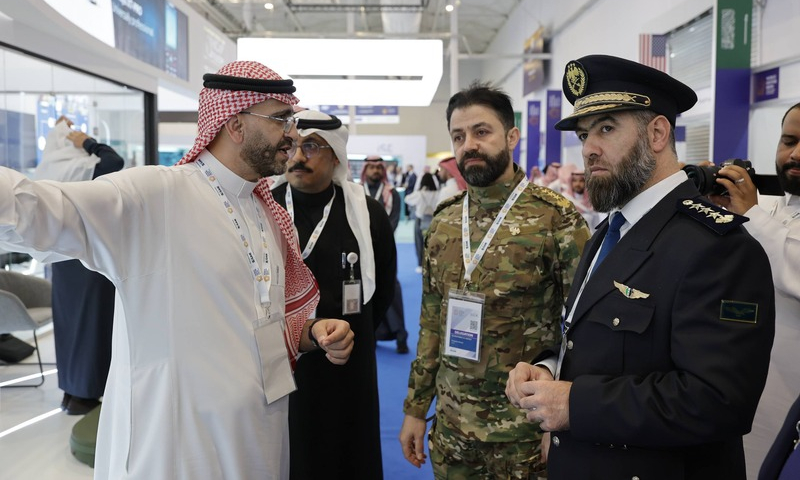
A Syrian Ministry of Defense delegation attends the World Defense Show in Saudi Arabia, February 9, 2026. (Syrian Ministry of Defense)
Washington, Tehran, and the Limits of Syria’s Return to the Arab Fold
The implications of closer Syrian-Saudi military ties extend beyond the bilateral relationship to the calculations of regional and international powers, as Damascus considers security arrangements that could reach beyond its borders.
Washington sees the rapprochement as an opportunity to reshape regional balances, while questions remain about Tehran’s position and the implications of these changes for Syria’s Arab relations.
Comparisons between discussion of possible Syrian intervention in Lebanon against Hezbollah and potential involvement in Yemen also highlight differences in the objectives and political and security calculations in each theater.
Where Does Washington Stand?
Analysts differ on the US position regarding possible Syrian participation in a military operation in Yemen. Some view closer Syrian-Saudi ties as an opportunity to reshape regional balances, while others stress Washington’s reservations about direct military cooperation abroad.
Writer and political analyst Ezz El-Din Malla said Washington’s position would depend on the nature of any potential military mission, its effect on regional balances, the risk of escalation with Iran and Ansar Allah, the Houthis, and its implications for Syria’s stability and the army’s ability to complete its rebuilding.
Malla said the United States considers closer Syrian-Saudi military ties an important and positive step toward reshaping regional balances, strengthening stability, and reducing Iranian influence. Syria’s stability and the rebuilding of its military and security institutions align with US interests in the region, he said.
He also pointed to Washington’s concerns that Syrian involvement in the Yemen war could widen the confrontation with Iran and turn Syria into a party to a new regional conflict.
The US position on any Syrian participation would depend on the mission’s nature and scale, Malla said. Washington does not want the Syrian army to become part of a regional war that drains its capabilities and draws the country back into conflict while its military institutions still face the task of rebuilding.
According to Malla, US support for closer ties between Damascus and Riyadh is conditional on those ties not turning into a new military conflict that threatens US interests.
Mohammed Hamada, a political analyst and activist, offered a more cautious assessment of the prospect that Syrian-Saudi cooperation could shift from security coordination to a direct military partnership. He said the US administration views any steps beyond diplomatic normalization toward direct military cooperation with considerable caution.
Hamada said Washington might understand border security coordination aimed at reducing Iranian influence or fighting terrorism. It would have strong reservations about any Syrian military expansion into regional theaters such as Yemen.
He linked that position to the US desire to preserve existing balances in Yemen and avoid bringing in new parties that could complicate the political settlement process sponsored by the United Nations and supported by Washington.
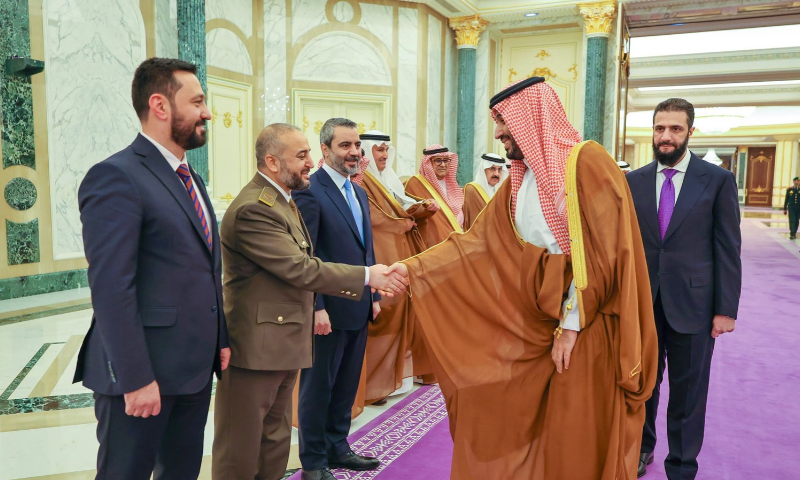
Tehran Faces a Decline in Its Influence in Syria
Malla expects Tehran to see closer Syrian-Saudi military ties as a threat to what remains of its influence in Syria. Strengthening cooperation between Damascus and Riyadh could limit Iran’s ability to protect its interests in the country following the political changes Syria has undergone.
Malla believes Iran may respond by trying to maintain channels of communication with Syria’s new leadership and using the political and regional tools available to it to protect its interests, rather than cutting ties outright.
He said Syrian participation in a confrontation with the Houthis could strain relations between the two countries, but considers a rupture unlikely.
The degree of any potential tension would depend on the nature and scope of Syria’s involvement. The broader Syria’s military role, the greater the risk of tension with Iran. Tehran may nevertheless keep communication channels open with Damascus to avoid losing what remains of its political relationships and opportunities for influence.
“I do not think a break with Iran is likely, but the risk of tension will rise as Syria’s military role expands.”
Ezz El-Din Malla
writer and political analyst
Lebanon and Yemen: Different Theaters and Calculations for Damascus
Hamada said the calculations behind any potential Syrian military move in Lebanon differ from those surrounding possible participation in the Yemen conflict, both in the parties involved and the objectives. His assessment draws on Syrian-Lebanese relations and changes in Damascus’s approach to Hezbollah.
Hamada said Damascus’s approach to Hezbollah has shifted. Under the former regime, the two were strategic allies. The new Syrian administration, led by Ahmed al-Sharaa, has instead pursued security containment and border control, amid regional discussions about possible direct or indirect intervention to limit the group’s influence.
The comparison between Yemen and Lebanon shows that the proposed objectives differ in each case, according to Hamada. In Lebanon, Damascus’s approach is tied to securing the border, confronting smuggling networks, limiting Hezbollah’s supply routes, and supporting Lebanese state institutions.
Discussion of Yemen, by contrast, concerns the possibility that Syria could become involved in a regional conflict beyond its borders.
Hamada considers direct military intervention in Lebanon a remote scenario, while security coordination between the two countries remains possible.
The two experts differ in their assessments of the limits of Syria’s role in regional arrangements. Both link its future role to Damascus’s ability to restore Arab relations while avoiding conflicts that could affect Syria’s stability.
Closer ties with Riyadh offer opportunities to strengthen Syria’s political and economic presence. The calculations of Washington and Tehran, along with the differences between the Lebanese and Yemeni theaters, will help shape the relationship and determine how far Syria acts beyond its borders.
if you think the article contain wrong information or you have additional details Send Correction
النسخة العربية من المقال
-
Follow us :





 More In-Depth
Most viewed
- Al-Sharaa Lifts Bar on Court Challenges to Government Decisions
- Mohammed Hamsho: "Corruption" With Multiple Bodies, But One Head
- Riad Seif, Syrian Dissident Who Went From Parliament to Prison and Exile, Dies
- Syria’s Central Bank Eases Foreign Currency Restrictions
- China Imports Syrian Oil as Iranian Supplies Are Disrupted