

US Central Command (CENTCOM) said Syria’s efforts to combat drug and weapons smuggling across its border with Lebanon contribute to strengthening regional security and stability.
CENTCOM Commander Adm. Brad Cooper said in a statement published on X on Wednesday, November 25, that Syrian authorities had successfully intercepted illicit drug and weapons shipments.
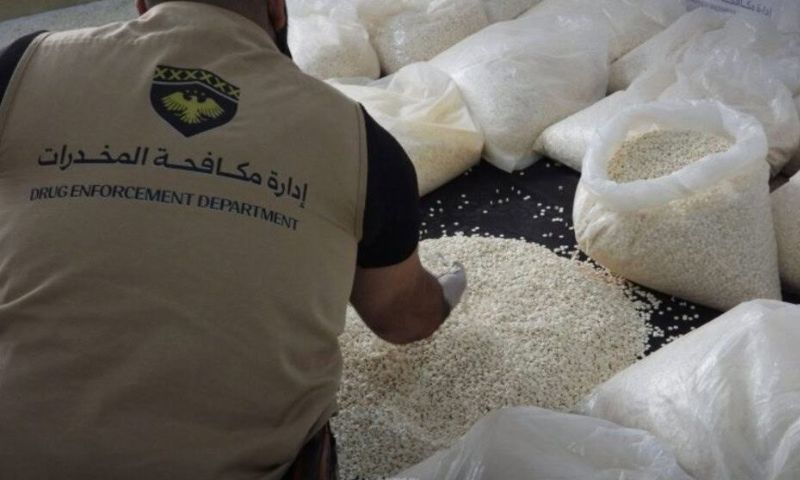
Cooper said Syria’s Anti-Narcotics Department had seized large quantities of Captagon pills and other prohibited substances along the Syrian-Lebanese border earlier this month. He added that Syrian Internal Security Forces had confiscated weapons that he said had been smuggled by Iran’s Islamic Revolutionary Guard Corps (IRGC) and were bound for Lebanon.
The CENTCOM commander said these efforts support a stable, unified, and peaceful Syria while strengthening regional security and stability.
The US statement comes as Syrian and Lebanese authorities intensify security operations targeting weapons and drug smuggling networks on both sides of the border, amid an increase in official announcements about intercepted shipments and efforts to pursue individuals involved in smuggling between the two countries.
Weapons Shipments Seized
As part of recent security operations, the Syrian government announced on November 22 that it had seized a shipment of various weapons intended for smuggling into Lebanon. The General Intelligence Service conducted the operation in cooperation with Internal Security Forces in the Damascus countryside (southwestern Syria), resulting in the arrest of one person involved.
The state-run Syrian Arab News Agency (SANA) reported that Internal Security Forces were continuing investigations to identify the wider connections of the cell and its associated smuggling networks, track down those involved, and prevent Syrian territory from being used as a transit route for smuggling weapons and military equipment.
The agency added that the General Intelligence Service had seized another weapons shipment intended for smuggling into Lebanon on November 20, without disclosing the types or quantities of weapons or identifying the parties behind the two smuggling attempts.
On August 8, Internal Security Forces and the General Intelligence Service thwarted an attempt to smuggle a shipment of weapons and ammunition from Tartus governorate (western Syria) into Lebanon. According to Syrian authorities at the time, the seized items included automatic rifles, rocket-propelled grenades (RPGs), weapons magazines, and quantities of ammunition.
On the Lebanese side, the Lebanese army announced on November 22 that it had seized about 264 kilograms of explosives in the al-Dawra area of Mashari al-Qaa and arrested three people suspected of involvement in smuggling the materials from Syrian territory.
The Lebanese Army Command said the seized materials included about 203 kilograms of C4 explosives and 61 kilograms of TNT. The seizure took place during surveillance and monitoring operations along Lebanon’s northern and eastern borders.
The Lebanese operation coincided with Syrian authorities announcing that they had thwarted two attempts to smuggle weapons into Lebanon, reflecting the continued activity of cross-border smuggling networks in both directions despite security operations announced by both sides.
Coordination Between Damascus and Beirut
The Syrian and Lebanese governments had previously intensified anti-smuggling operations along their shared border. On October 9, they announced that drug and weapons smuggling operations had been thwarted on both sides of the border within 48 hours.
Syrian customs authorities at the Jdeidet Yabous border crossing seized about 395,000 Captagon pills on October 8. Another operation the following day resulted in the seizure of about 129,000 pills, bringing the total to approximately 524,000 pills.
Meanwhile, the Lebanese army announced that it had seized rockets and about 24 kilograms of TNT intended for smuggling from Syria into Lebanon in the al-Qasr area of Hermel. It also arrested another individual in possession of quantities of hashish, Captagon, and marijuana intended for smuggling in the opposite direction.
Previous operations included thwarting an attempt to smuggle a shipment of advanced weapons across the Syrian-Iraqi border intended for Hezbollah in Lebanon, according to an announcement by the Syrian Interior Ministry in July. The Lebanese army also reported seizing 122 mm Grad rockets smuggled from Syria into Lebanon.
As part of coordination between the two countries, Syrian and Lebanese security officials met in Beirut on August 5, chaired by Syrian Deputy Interior Minister for Security Affairs Brig. Gen. Mulham al-Shantout and Lebanese Interior and Municipalities Minister Ahmad al-Hajjar, to discuss shared security issues and ways to strengthen bilateral cooperation.
The meeting followed the Lebanese army’s announcement that it had seized Grad rockets smuggled from Syrian territory and came amid repeated seizures of weapons and drugs along the border, an issue of shared security concern for Damascus and Beirut.
Syria’s Anti-Narcotics Campaigns
Syrian operations announced in November were not limited to the Lebanese border. On November 21, authorities announced that they had thwarted two attempts to smuggle drug shipments through the southern Syrian desert, seizing more than 142,000 Captagon pills intended for smuggling into neighboring countries after detecting and bringing down two balloons carrying the drugs.
On November 25, authorities seized a shipment containing about 2.3 million Captagon pills in Tartus governorate as part of ongoing campaigns against drug trafficking and smuggling.
On November 22, Syrian authorities announced the destruction of about 400 million Captagon pills and other seized narcotics, including 12.2 metric tons of hashish, 2.3 metric tons of cannabis plants, six kilograms of heroin, and 5.4 million other narcotic pills, according to SANA.
CENTCOM’s praise comes amid an increase in Syrian and Lebanese announcements about thwarted cross-border smuggling operations, as authorities in both countries seek to strengthen security cooperation and pursue networks involved in transporting weapons and drugs.
The CENTCOM statement did not specify the quantities or types of weapons confiscated by Syrian authorities, nor did it provide details about the operation in which Iran’s Islamic Revolutionary Guard Corps reportedly smuggled the seized weapons. This information therefore remains attributed to the US assessment presented in the statement.