

Syrian President Ahmed al-Sharaa issued Law No. 4 of 2026, repealing all provisions in existing legislation that bar access to the courts or shield any administrative act or decision from review by the courts with jurisdiction.
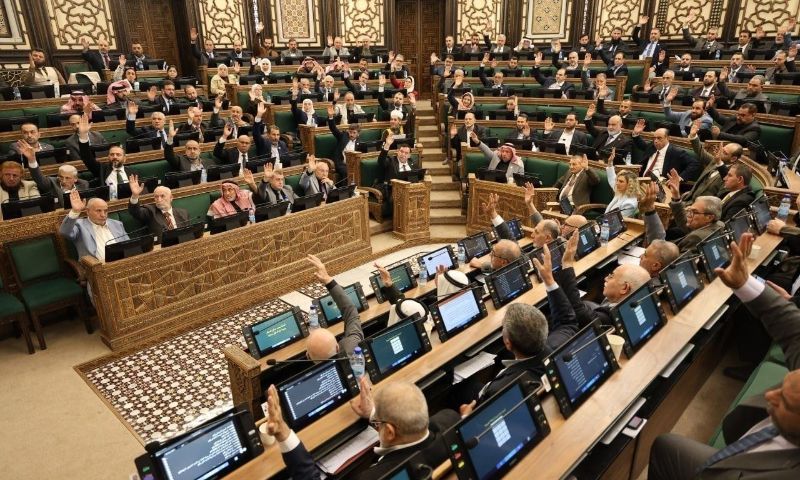
The state-run Syrian Arab News Agency (SANA) reported the law on Wednesday, November 25. Al-Sharaa issued it under the Constitutional Declaration after the People’s Assembly, Syria’s parliament, approved it at its November 9 session.
Article 1 repeals all provisions in existing legislation that bar access to the courts or exempt any administrative act or decision from review by the courts with jurisdiction. Article 2 requires publication in the Official Gazette and stipulates that the law takes effect on the date of issuance.
The People’s Assembly approved the bill after its Constitutional and Legislative Affairs Committee presented it to the full chamber on November 9. The committee found that the Constitutional Declaration allowed the Assembly to consider the bill and recommended putting it directly to a vote.
Protecting Citizens’ Dignity and Ensuring Equality Before the Courts
Deputy Speaker Madonna Bishara told Enab Baladi that the new law was an important step toward upholding Syrians’ dignity, ensuring they are treated with respect, and restoring their ability to seek redress through the courts on an ongoing basis.
Lawmaker Khaled al-Salloum previously told Enab Baladi that the law was a victory for Syria’s judiciary and protected the rights of all segments of Syrian society.
He said the new law ended an era in which some government bodies and decisions were shielded from accountability. Under the new law, he said, everyone in Syria is subject to judicial oversight and equal before the law.
Executive Branch Decisions Open to Judicial Review
Abdul Nasser Houshan, a lawyer who chairs the Assembly’s Constitutional and Legislative Affairs Committee, said the law, which the full chamber approved directly, removes protections that shielded all executive branch administrative decisions from judicial review.
Houshan said earlier legislation had prevented citizens from challenging decisions deemed final, including those made by judicial committees that assess property values in expropriation cases and by committees that hear grievances. He said all decisions by these committees can now be challenged in court, opening the way for cases involving compensation and expropriation rates to be revisited and strengthening judicial oversight of public administration.
Azzam Khanji, a member of the Higher Education, Youth and Sports Committee, told Enab Baladi that parliamentary procedure requires the constitutional committee to assess whether bills comply with the Constitutional Declaration before referring them to specialized committees. Because no single specialized committee was responsible for considering the bill on access to the courts, the Assembly decided to introduce, debate, and pass it in a plenary session.
How the Law Applies
During debate on the bill, People’s Assembly Speaker Abdul Hamid al-Awak said the law repeals earlier provisions and applies prospectively to preserve legal stability. He said retroactive application would affect the stability of the state, legal transactions, and many cases.
Al-Awak said that for more than 60 years, the Syrian state had issued decisions barring judicial review in various matters, including the dismissal of public employees. In such cases, a committee would be formed and the employee would be barred from challenging any administrative act or decision. If the employee filed a case with the Council of State, it would be dismissed on procedural grounds without a further ruling. He said the same restrictions applied to expropriation committees, whose decisions landowners had no right to challenge.
Al-Awak said the law restores access to the courts for Syrians who had been deprived of that right for more than 60 years. Under the law, he said, administrative bodies are prohibited from shielding their decisions from judicial review, and public employees can challenge any administrative decision, including a dismissal, an expropriation, or a regulatory decision. He described the law as one Syrians had long hoped for and that rights advocates and legal professionals had called for during the Syrian revolution.