


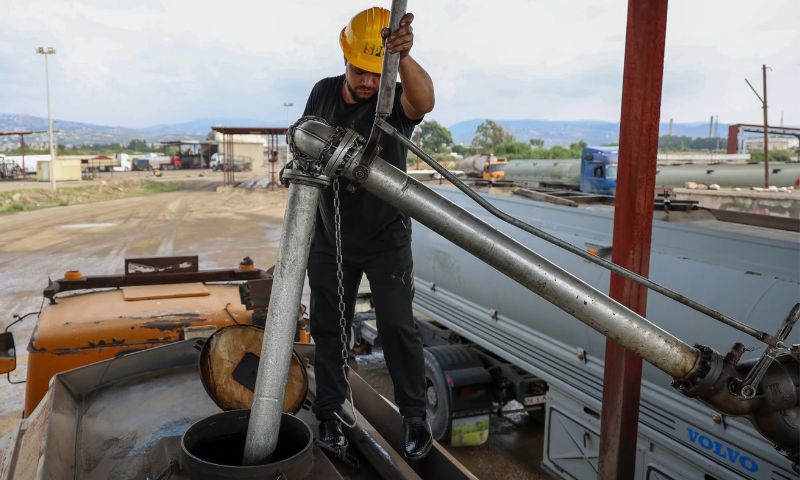
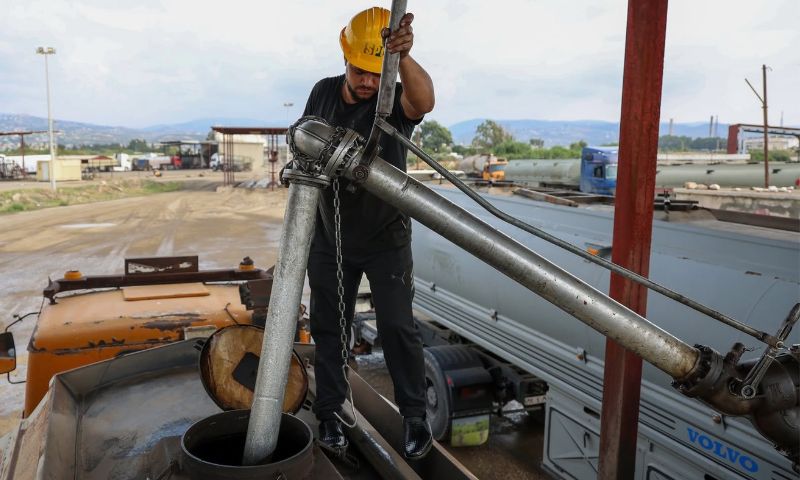
 New supplies of diesel fuel leave Baniyas Refinery for fuel stations, October 13, 2026 (Syrian Petroleum Company).
New supplies of diesel fuel leave Baniyas Refinery for fuel stations, October 13, 2026 (Syrian Petroleum Company).
Syria’s Ministry of Energy announced on Tuesday, October 13, that it had completed its investigation into the contaminated gasoline crisis that damaged vehicles across several Syrian governorates after substandard fuel was widely distributed through gas stations. The ministry attributed the incident to an operational error that caused noncompliant gasoline to mix with fuel meeting approved standards.
The investigation revealed that a shipment of gasoline that failed to meet approved technical and quality standards had previously been unloaded into storage facilities belonging to the Syrian Petroleum Company, according to a statement issued by the ministry on Tuesday, October 13.
According to the ministry, the company decided to return the shipment to its source because it did not meet the required specifications and was unsuitable for consumption in the domestic market.
However, during the process of transporting the substandard gasoline back through the pipeline network, an operational error caused it to mix with gasoline that met the required standards. Part of the mixture subsequently reached the domestic market, causing damage to vehicles.
The Ministry of Energy pledged to take the necessary legal action against all those responsible for the error and negligence, each according to their level of responsibility. It also promised to address shortcomings in operational and oversight systems to prevent similar incidents from recurring.
The ministry also announced that it had instructed the Syrian Petroleum Company to establish a compensation mechanism for affected vehicle owners and make its details public. Compensation will be distributed in successive phases.
The announcement comes amid a crisis in Syria’s fuel sector following the circulation of quantities of adulterated gasoline with a dark red color approaching black, which numerous Syrians have complained about over the past several days.
The fuel caused serious mechanical failures in hundreds of cars and other vehicles immediately after refueling, triggering widespread anger among vehicle owners. They demanded legal action against the distributing entities and financial compensation for the mechanical damage, at a time when repair costs have risen to record levels beyond the financial means of many citizens.
For its part, the Syrian Company for the Storage and Distribution of Petroleum Products (SADCOP) stated on October 6 that it was directly following up on complaints and videos circulating about the issue.
The company explained that its technical teams had begun extensive inspections, including collecting samples at different stages of the supply chain, from the source to gas stations. It maintained that laboratory test results had shown, “so far,” that the samples examined complied with approved specifications.
At the same time, SADCOP’s statement acknowledged that cases of fuel failing to meet the required standards had indeed been detected in the domestic market.
The company said its verification and investigation efforts were focused on identifying the source of the noncompliant fuel, the point in the supply chain through which it entered the market, and the reasons it reached gas stations. It added that technical and regulatory teams were continuing their work to determine responsibility and hold those involved accountable to prevent a recurrence.
Meanwhile, several Syrian governorates are experiencing fuel shortages as deliveries of gasoline and diesel to a number of gas stations have declined. Some stations have suspended operations, while others have exhausted their available supplies, with the severity of shortages varying from one governorate to another.
According to observations gathered by Enab Baladi through its correspondents on Tuesday, fuel availability varies across governorates. Aleppo (northern Syria), Latakia (western Syria), and Hama (central Syria) are experiencing shortages of both diesel and gasoline, with several gas stations closed. In Daraa (southern Syria), Deir Ezzor (eastern Syria), and Tartous (western Syria), shortages are primarily affecting diesel, while gasoline remains available in some areas.
By contrast, fuel availability appears relatively better in Damascus and the Deir Ezzor countryside. Some areas of the Hama countryside have also seen improvements in the availability of both fuels following the arrival of new supplies.
if you think the article contain wrong information or you have additional details Send Correction


 A
A
A
A
A
A




 More Society