
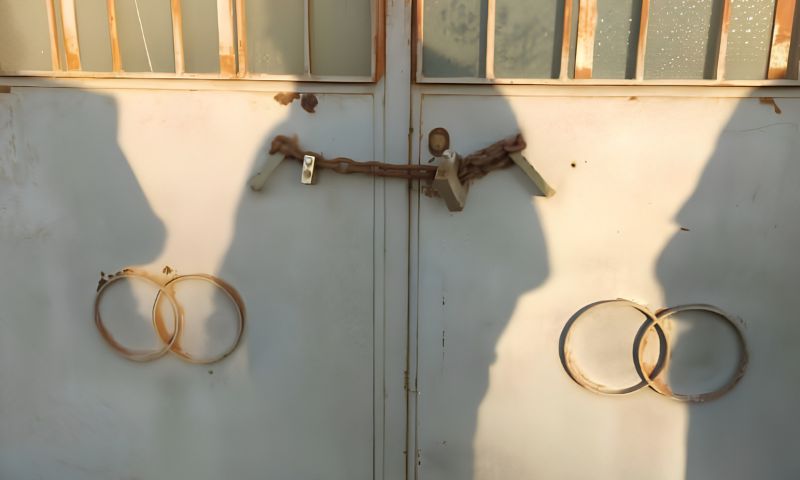

The National Guard, affiliated with Hikmat al-Hijri, the spiritual leader of the Druze community in Suwayda (southern Syria), announced the closure of the municipal offices in Hibran, a village in the governorate’s countryside, after Governor Mustafa al-Bakour appointed a new local council.
In a statement posted on Facebook and attributed to a group of young residents of the village, the National Guard’s al-Sumoud Battalion said the closure would remain in place until “the new council is dissolved and proper, lawful elections are held with the participation of all village residents, so that the council reflects the will of the village’s people alone.”
The battalion rejected the governor’s decision and the subsequent cooperation of some parties in forming a municipal council “through improper procedures.” It expressed its “categorical rejection of any decision issued by Governor al-Bakour and his illegitimate government,” as it described it.
It called the move “a disregard for the will of the people of the area and their sacrifices,” saying their blood would not be “the price of giving up their dignity and their right to manage their village’s affairs.”
The battalion added that it would not accept imposed decisions or councils appointed “through procedures that do not respect residents’ will.”
Previous Incident at the Education Directorate
Suwayda’s Education Directorate experienced tensions on April 6 after an armed group entered its building and attacked employees.
Local sources told Enab Baladi’s correspondent in Suwayda that the attack was an attempt to prevent employees from continuing their work following a decision to replace the education director.
The developments followed an April 1 decision by the Syrian Ministry of Education appointing Safwan Ballan as education director in Suwayda, replacing Laila Jahjah, a move that sparked controversy in the city.
Employees refused to leave the building, leading to tensions and gunfire at the entrance intended to intimidate them and force them to leave.
Enab Baladi’s correspondent reported that several employees and directorate officials went to the Internal Security Command in Suwayda, which is affiliated with the Druze spiritual leadership, to file a complaint over the incident.
The local news outlet Suwayda 24 reported that the armed group belonged to the National Guard’s security office, which is affiliated with the spiritual leadership.
Newly appointed education director Safwan Ballan subsequently withdrew from his duties, saying he wanted to avoid internal divisions in Suwayda and was complying with the decision of Hikmat al-Hijri, the spiritual leader of the Druze community.
In a post on his Facebook page, Ballan said he had accepted the position to meet the demands of education staff and institutions, rather than out of personal ambition for the post.
Suwayda’s Crisis
These incidents come amid an ongoing crisis between local factions that control most of Suwayda governorate under Hikmat al-Hijri’s leadership and the Syrian government, which controls parts of its countryside.
Since the crisis erupted in July 2025, Suwayda has experienced security incidents, difficult living conditions, and disruptions to public services, with both sides accusing each other of responsibility.
One recent dispute concerned students taking basic and secondary education certificate exams after they were offered a special examination session in government-controlled areas of the governorate’s countryside.
The government’s decision polarized residents, with some supporting sending students there and others rejecting the move. Only a limited number reached the examination centers, most of them Suwayda natives living in Damascus countryside.