


Deir Ezzor Plans to Revive Date Palm Cultivation After Losing 8,000 Trees


 A
A
A
A
A
A
The organization investing in Deir Ezzor’s Date Palm Propagation Center (eastern Syria) plans to rehabilitate its plantation after years of neglect and war reduced its tree numbers. The plan aims to restore the lost palms, introduce solar-powered irrigation, and increase production to achieve self-sufficiency and eventually enter export markets, despite high production costs and expensive palm offshoots and agricultural supplies.
The center in al-Jalaa, in the al-Bukamal countryside, once had more than 20,000 date palms. Around 12,000 remain today, illustrating the scale of the losses sustained over recent years.
Speaking to Enab Baladi on the sidelines of the Third Deir Ezzor Date Exhibition 2026, those overseeing the center outlined a ten-year investment plan to reverse the decline by rehabilitating the plantation, expanding offshoot planting, and powering irrigation systems with solar energy, with the aim of achieving self-sufficiency and opening the way for exports.
A Ten-Year Plan
Shahira Ashour, a representative of American Relief Fund, told Enab Baladi that the organization had signed an investment contract with the Ministry of Agriculture to rehabilitate and develop the plantation. Installation of a solar power system to replace diesel engines had begun, she said, to provide a sustainable electricity supply and reduce the operating costs of irrigation and palm care.
According to Ashour, the plan includes importing 5,000 offshoots of the Khunaizi variety from Arab Gulf countries, alongside using offshoots and aerial offshoots already growing on the plantation to increase tree numbers.
Ashour said the plan aims to meet local market needs and achieve self-sufficiency in the near term, before finding markets outside the region and eventually moving into exports.
Declining Palm Numbers
The al-Jalaa date palm plantation was established in 1986 and held around 20,000 palms before suffering neglect over the past 14 years because of the war and events in the region.
Ashour said the plantation had not received the fertilizer, irrigation, and care it needed during that period, causing its tree numbers to decline.
She added that the organization had carried out emergency palm pollination in April and May this year, before signing the investment contract and beginning rehabilitation and development work.
Ayman al-Habal, head of the Date Palm Propagation Center, also told Enab Baladi that the plantation’s tree numbers had fallen from more than 20,000 palms to around 12,000 today, comprising several varieties.
Al-Habal attributed the decline to the consequences of the war and security conditions in the region, alongside severe shortages of fertilizer, agricultural equipment, and operating supplies.
According to Ashour, the organization investing in the plantation plans to increase its palm numbers to 20,000 next year.
She explained that the plan would rely on planting the offshoots and aerial offshoots currently available on the plantation to replace lost trees and restore palm numbers to their level before the years of neglect.
Challenges
Farmers believe that reviving date palm cultivation requires more than introducing new varieties or expanding cultivated areas. They say government and institutional support is needed to reduce the cost of establishing orchards and ensure continued production.
Farmers who spoke to Enab Baladi said a single palm offshoot costs around $300, creating a substantial financial burden and limiting their ability to establish new orchards or replace trees lost over recent years.
They called for easier imports of high-yielding palm offshoots with greater resistance to changing weather conditions, alongside regular supplies of fertilizer, pesticides, and other agricultural inputs at subsidized prices.
They also stressed the need to reduce the cost of establishing date palm orchards, describing it as one of the main obstacles preventing farmers from returning to this form of cultivation.
An Exhibition to Exchange Expertise
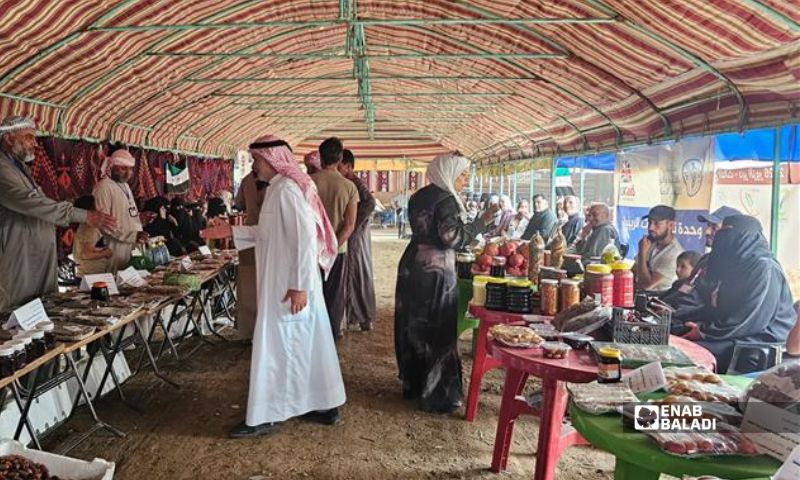
The remarks came during the third annual palm and date exhibition in al-Jalaa, attended by farmers and agricultural and research organizations.
Ashour said the exhibition provided an opportunity to bring together the region’s palm growers and exchange expertise and knowledge about palm cultivation, date production, and tree care.
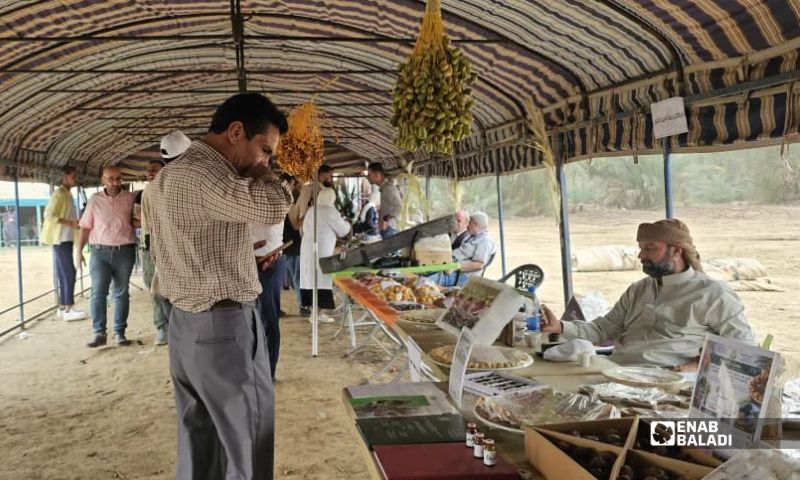
The exhibition featured more than 20 locally grown date varieties, including Khastawi, Zahidi, Asabi al-Arous, Lulu, Barhi, Shahani, Ikhlas, Halwani, Baqlawa, Nabtet Saif, Shihabi, Kabkab, Degla, and Zaghloul, alongside other varieties.
The Agricultural Research Center in Deir Ezzor also participated, displaying new and improved strains produced and tested locally to develop varieties capable of adapting to the region’s environmental and climatic conditions.
This diversity reflects Deir Ezzor’s potential to revive date palm cultivation and date production, but realizing that potential remains dependent on providing agricultural inputs and reducing their costs.
At the date festival in al-Jalaa, Deir Ezzor, October 11, 2026 (Enab Baladi).
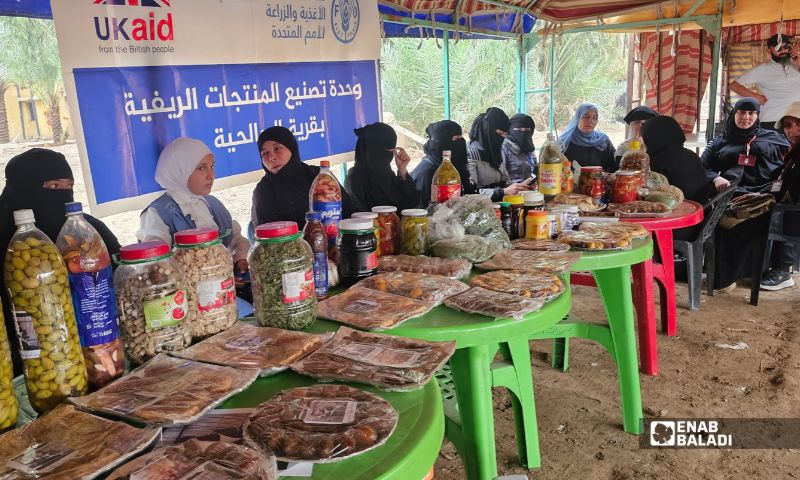
At the date festival in al-Jalaa, Deir Ezzor, October 11, 2026 (Enab Baladi).
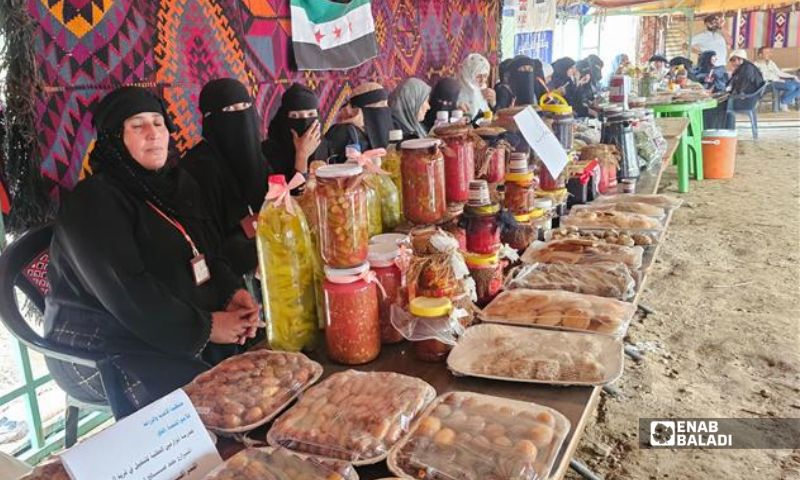
At the date festival in al-Jalaa, Deir Ezzor, October 11, 2026 (Enab Baladi).
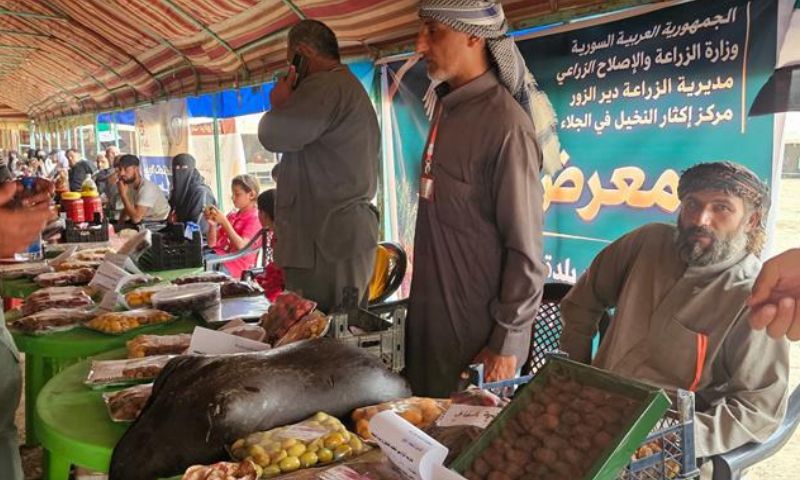
At the date festival in al-Jalaa, Deir Ezzor, October 11, 2026 (Enab Baladi).
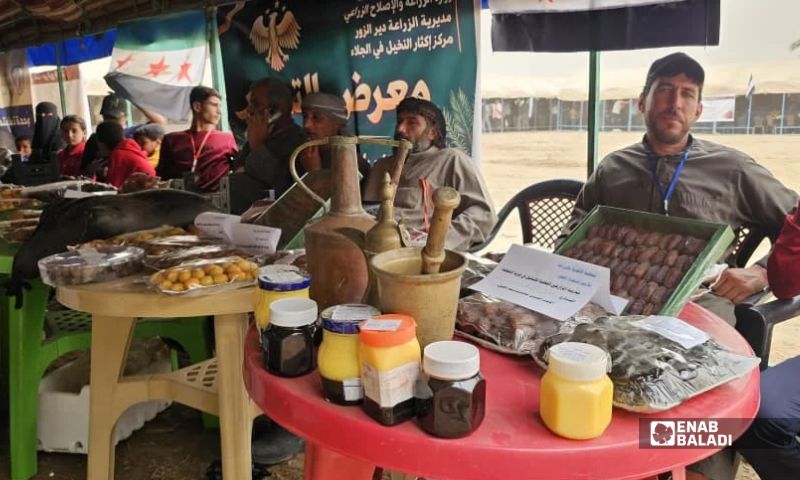
At the date festival in al-Jalaa, Deir Ezzor, October 11, 2026 (Enab Baladi).
if you think the article contain wrong information or you have additional details Send Correction
-
Follow us :




 More Economic Reports
 Most viewed
- Salafi-Ashari Dispute in Syria: Can Differences Undermine Harmony?
- Membership or Cooperation? Al-Sharaa’s Riyadh Visit Brings Syria Closer to the Mecca Pact
- Who Owns the Istanbul Hotel Hosting al-Shaibani and Barrack?
- Israeli Elections: What Is Damascus Waiting For?
- Aleppo’s Great Mosque Reopens After 14 Years