


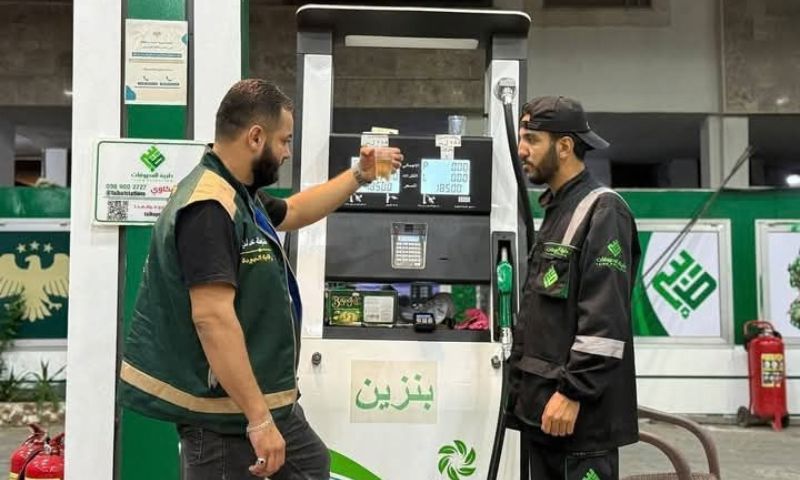
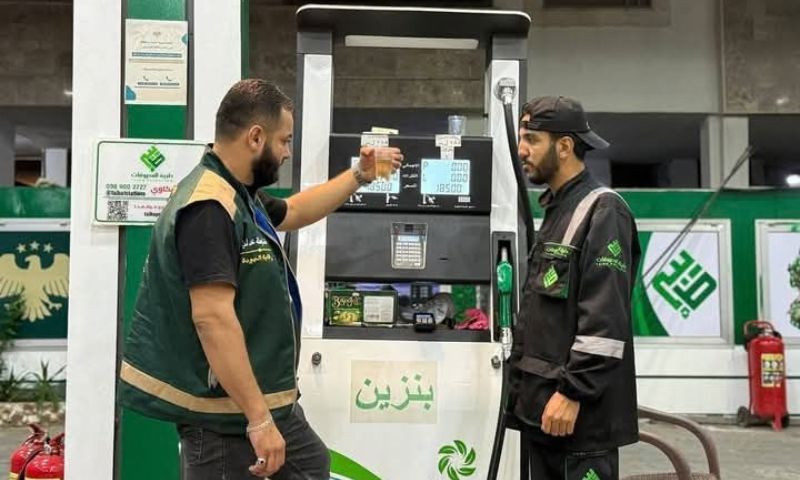
 Quality control patrols in Tartous (western Syria) inspect gasoline at fuel stations to ensure compliance with standards after adulterated fuel circulated in recent days, October 6, 2026 (Energy Services Directorate/Facebook).
Quality control patrols in Tartous (western Syria) inspect gasoline at fuel stations to ensure compliance with standards after adulterated fuel circulated in recent days, October 6, 2026 (Energy Services Directorate/Facebook).
The transport sector in several Syrian governorates has been hit by supplies of adulterated gasoline, dark red and almost black in color, causing an unprecedented wave of mechanical breakdowns.
The fuel caused serious damage to hundreds of cars and other vehicles immediately after refueling. Vehicle owners expressed widespread anger and called for distributors to be sued and required to compensate them for the damage, as maintenance costs reach record levels beyond what residents can afford.
Complaints were concentrated along Syria’s coast. Fuel stations in Latakia (western Syria), along with several stations on the road between Baniyas (Tartous governorate, western Syria) and Tartous, recorded the highest rates of vehicle damage. Similar complaints were also reported in Damascus, Aleppo (northern Syria), Hama (central Syria), Raqqa (northeastern Syria), and Deir Ezzor (eastern Syria).
Social media was flooded with videos showing fuel resembling “dark tea” being drained from vehicle tanks. Inspection and oversight committees faced accusations of failing to check its quality before it entered local markets.
Accounts also circulated from vehicle owners who reported sharp chemical odors resembling “burned nylon” coming from exhaust pipes, with engines suddenly stopping after traveling only short distances following refueling.
Mechanics who spoke to Enab Baladi said damage in such cases mainly involves ruined spark plugs, clogged fuel filters, and failures of gasoline pumps and electronic sensors caused by sticky deposits.
In more severe cases, premature ignition of the fuel, producing knocking or pinging, can cause the cylinder head to crack or break.
According to estimates from repair shop owners, fixing these faults typically costs between 50,000 and 120,000 new Syrian pounds per vehicle, adding to already severe living costs.
Observations on the ground align with information indicating that supplies of low-octane gasoline, rated at only around 85 octane, have entered the market. Their distribution was accompanied by widespread warnings about high levels of impurities and chemical contaminants.
Mechanical experts say using fuel of such poor quality directly disrupts combustion timing inside the engine. This generates powerful shock waves that can cause severe structural damage to engine components, particularly in modern vehicles that are not designed to run on these types of fuel.
Responding to the crisis, the Syrian Company for the Storage and Distribution of Petroleum Products (SADCOP) issued a statement on Tuesday evening, October 6, saying it was directly following up on the complaints and circulating videos.
The company said its technical teams had begun extensive testing, collecting samples from different stages of the supply chain, from the source through to fuel stations. Laboratory results showed that the samples tested “so far” met approved standards.
At the same time, SADCOP’s statement acknowledged that fuel failing to meet specifications had been detected in the local market.
The company said investigations were currently focused on identifying the source of this fuel, the stage of the supply chain through which it entered, and why it was present at filling stations. Technical and oversight teams were continuing their work to establish responsibility and hold those involved accountable to prevent a recurrence.
if you think the article contain wrong information or you have additional details Send Correction


 A
A
A
A
A
A



 More Economic Reports