


 Syrian Foreign Minister Asaad Hassan al-Shaibani receives members of the UN Commission of Inquiry on Syria, March 7, 2026. (Syrian al-Ikhbariya)
Syrian Foreign Minister Asaad Hassan al-Shaibani receives members of the UN Commission of Inquiry on Syria, March 7, 2026. (Syrian al-Ikhbariya)


 A
A
A
A
A
A
The United Nations Commission of Inquiry on Syria praised the “significant achievements of the Syrian government and its people,” while pointing to continuing challenges in building institutions that respect rights, addressing the legacy of past atrocities, and ensuring they are not repeated.
In a briefing to the Human Rights Council on Tuesday, September 8, the commission welcomed its continued engagement with the government, including the facilitation of access to Syrian territory and dialogue on key human rights issues and the transitional justice framework.
It also said it had engaged with senior officials to discuss potentially concerning situations before they escalated.
The commission added that Syria’s path toward a successful and sustainable transition depends on comprehensive accountability, inclusion, and guarantees of non-recurrence.
The UN commission stressed that all perpetrators of serious violations must be held equally accountable, warning that “selective justice” for international crimes is contrary to international law and could revive grievances and undermine reconciliation efforts.
The commission urged stronger accountability for the violence that took place in Syria’s coastal region and in Suwayda (southern Syria) in 2025, including addressing the fate of missing persons.
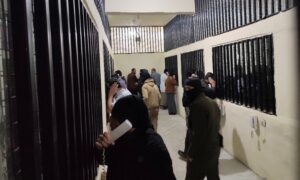
It also expressed concern over reported deaths in detention, the arrest of activists, continued hate speech and online harassment, as well as threats of violence against women, particularly female activists.
The UN Commission of Inquiry on Syria praised the Syrian government’s efforts to limit violations during military operations carried out earlier this year with the Syrian Democratic Forces (SDF).
At the same time, it said it is investigating reports of “serious violations” in Aleppo and northeast Syria, noting that the investigations include reported violations against the SDF, including allegations that detainees were killed.
The commission highlighted the continuing and deteriorating conditions of “arbitrary detention affecting more than 2,000 people, most of them women and children allegedly associated with the Islamic State,” who are being held at Roj camp in al-Hasakah governorate.
It renewed its call for the camp to be closed immediately and for foreign nationals to be repatriated, recalling the “long history of violations of international human rights law and international humanitarian law associated with these camps, including acts that may amount to war crimes.”
The commission also drew attention to more than 100 foreign children detained in northern and eastern Syria, some of whom have been held since 2019. It stressed that the detention of children should be a measure of last resort and that children allegedly associated with armed groups should be rehabilitated and treated as victims.
The commission expressed concern over the “mass forcible transfer” of detainees suspected of belonging to the Islamic State from eastern Syria to Iraq earlier this year.
It urged swift action to address the situation in a way that ensures respect for fundamental human rights.
The commission highlighted Israeli military activity, noting that Israel continues to conduct military operations on Syrian territory.
It added that Israel’s activity inside Syrian territory is becoming increasingly entrenched through ground incursions, patrols, raids, and searches conducted routinely, causing displacement among the population.
The commission said it had documented the detention of 49 people in Syria by Israeli forces, including two children. Some were being held incommunicado, it said, expressing serious concern that they may have been subjected to torture and ill-treatment.
Commission member Fionnuala Ní Aoláin said, “We are deeply concerned about violations of human rights and international humanitarian law committed by Israel on Syrian territory, which may amount to war crimes.”
Yaser Al-Farhan, head of the Human Rights and International Treaty Bodies Section in the International Organizations Department at Syria’s Ministry of Foreign Affairs and Expatriates, said the Syrian government continues to cooperate with various international human rights mechanisms, according to Syria’s official news agency, SANA.
In his remarks before the Human Rights Council, al-Farhan said the National Commission for Transitional Justice had made progress in the areas of truth, accountability, and reparations. He said it had drafted a transitional justice law, strengthened victims’ participation, expanded its presence in affected governorates, and cooperated with the specialized judiciary in preparing evidence files.
Al-Farhan said the Syrian judiciary had begun a national judicial process based on the Constitutional Declaration, national laws, and international standards, noting that rulings had been issued against a number of defendants accused of committing violations.
He said the criminal court specialized in transitional justice had ruled in five cases and was continuing to examine another 12. An additional 69 files were before the referral judge, 1,147 files were under investigation, and about 1,333 files were with the Public Prosecution.
Al-Farhan affirmed the Syrian judiciary’s commitment to fair-trial standards, including public hearings, allowing international observers and human rights organizations to attend, guaranteeing defense rights and communication with families, facilitating victims’ participation, ensuring the integrity of procedures and judicial independence, alongside a new legislative process aimed at strengthening the protection of rights and freedoms and the rule of law.
Al-Farhan said the National Commission for Missing Persons had launched consultations to prepare the legislative framework governing its work in partnership with victims’ families, their associations, and civil society. It also opened centers to receive families, launched the national “Athar” program for reporting missing persons, developed a central database, and carried out 194 field response operations related to missing persons and mass graves.
He added that the Syrian government is working to launch a national strategy to prevent and combat torture, alongside progress in indicators related to press freedom, freedom of expression, and cultural and linguistic rights. He also pointed to what he described as the successful agreement to integrate the Syrian Democratic Forces into state institutions.
Al-Farhan said Israel continues hostile actions against Syria, including bombardment, abductions, incursions, and attacks on civilians, in violation of international law, Syrian sovereignty and territorial integrity, and the Disengagement Agreement.
He called on the Human Rights Council to address the fate of Syrians forcibly disappeared by Israel, work to determine their whereabouts and secure their release, and exert pressure to halt Israeli violations.
Al-Farhan said that despite progress in human rights and accountability processes, Syria still faces challenges that require international support for reparations resources and for building the capacity of national institutions.
He stressed that strengthening cooperation between the Commission of Inquiry, the Syrian judiciary, the Public Prosecution, and law enforcement bodies would contribute to achieving redress and accountability more effectively.
if you think the article contain wrong information or you have additional details Send Correction






 More Politics