


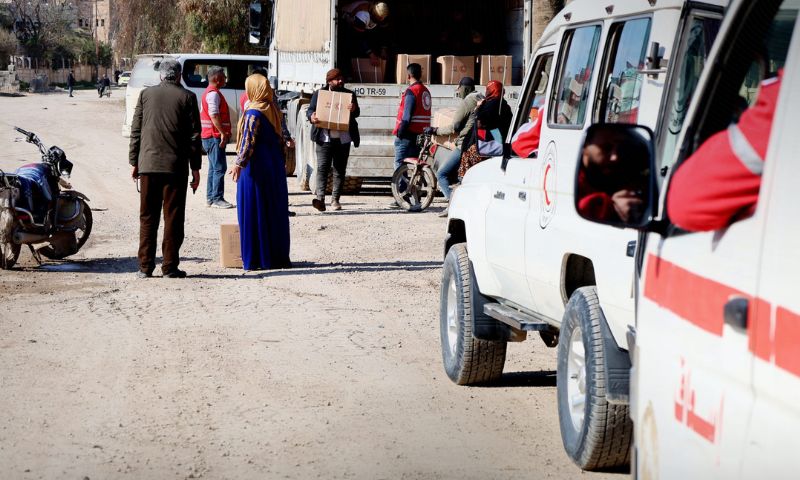
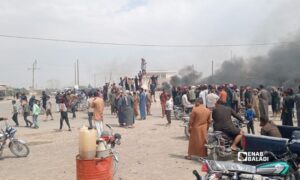
 Distribution of food and relief aid to affected families in Hasakah city (northeastern Syria), March 25, 2026 (SANA)
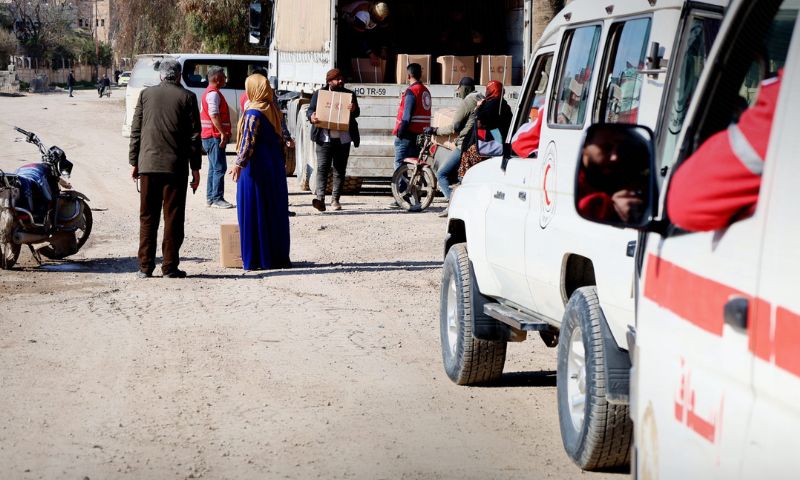
Distribution of food and relief aid to affected families in Hasakah city (northeastern Syria), March 25, 2026 (SANA)
Countries and international organizations continue to provide funding and assistance to support Syrians, including refugees in neighboring countries and humanitarian response efforts inside Syria, as humanitarian and public service needs remain high amid continuing challenges related to education, basic services, and refugee return.
Jordan’s Ministry of Planning and International Cooperation signed a 36.5 million euro financing agreement with the German Development Bank (KfW) to fund the third phase of the program “Accelerating Access of Syrian Refugee Children to Formal Education in Jordan.”
The initiative aims to ensure continued access to formal education for Syrian refugee children and ease pressure on Jordan’s education system.
Health and education services are among the factors influencing Syrian refugees’ decisions on whether to return.
According to Ahmad Bawaneh, director of the International Medical Corps, rebuilding health and education services in Syria after years of war and destruction will take time. He said the process cannot be completed within one or two years and will instead require a gradual approach.
The Swedish government also announced this September a humanitarian aid package totaling 297 million Swedish kronor, about $30.2 million, for 2026.
The package includes 50 million kronor, about $5 million, in humanitarian assistance for Syria, aimed at addressing urgent needs and helping create favorable conditions for the sustainable return of residents.
Sweden’s funding includes 30 million kronor, about $3 million, for the United Nations High Commissioner for Refugees, 10 million kronor, about $1 million, for the World Food Programme, and another 10 million kronor for the International Committee of the Red Cross.
Swedish Minister for International Development Cooperation and Foreign Trade Benjamin Dousa said humanitarian needs are enormous, citing United Nations estimates that more than 300 million people need humanitarian assistance, while relief efforts reach only about one-third of those in need because of funding shortages.
September also saw several international contributions to support Syrians, including the launch of a British program to assist Syrians returning from the United Kingdom to Syria. The program is intended to support the return and reintegration of people in Britain who do not have legal status or the right to remain in the country.
According to the UK Home Office, the program provides returnees with a range of services, including assistance upon arrival and reintegration support that can continue for up to one year.
The United Nations World Food Programme also announced that it had received a 1.5 million euro contribution from the French government through the French Initiative for Food Security and Nutrition (IFSAN).
The contribution is intended to help prevent malnutrition and strengthen government-led social protection programs in Syria.
According to the World Food Programme, the contribution will help the most vulnerable families meet their food and nutrition needs and support pregnant and breastfeeding women and young children during the first 1,000 days of life, a period considered critical for growth.
if you think the article contain wrong information or you have additional details Send Correction


 A
A
A
A
A
A




 More Economic Reports