

The World Food Programme (WFP) said in a report issued on Sunday, Aug. 23, that Syria continues to face one of the world’s largest food security crises.
According to the report, published by ReliefWeb, 13.3 million people are food insecure, including 7.1 million who face acute food insecurity.
WFP estimated that around 15.6 million people in Syria need assistance, while the organization itself faces a severe funding shortfall.
During the first half of 2026, WFP provided food, cash, and nutrition assistance, reaching an average of 7.4 million people, while 6.8 million people benefited in February.
However, the funding shortfall forced WFP to halve emergency food assistance, from 1.3 million people to 650,000, limiting the assistance to seven of Syria’s 14 governorates.
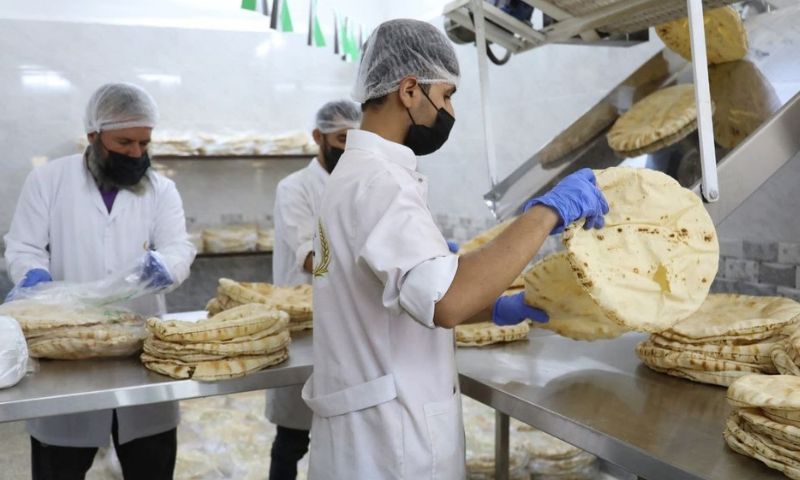
The suspension of the national bread subsidy program due to funding shortages also affected more than six million people, while the withdrawal of subsidies contributed to an increase of more than 18% in bread prices.
According to WFP, cuts to emergency food assistance increased pressure on vulnerable households and local markets, exacerbating community tensions, weakening social cohesion, and increasing the risk of instability during Syria’s transitional period.
In July 2026, WFP provided assistance to 682,302 people and dispatched around 3,987 metric tons of food, in addition to $4.9 million in cash transfers.
WFP needs $186 million to cover the requirements of its operations in Syria from August 2026 through January 2027.
Bread Support and Agricultural Recovery in Syria
During the first half of 2026, WFP implemented 75 interventions supporting the bread value chain, including the rehabilitation of 11 bakeries and two silos, as well as the provision of electricity generators to 60 bakeries, helping increase bread production capacity.
Another 22 interventions remain underway, including the rehabilitation of 19 bakeries, two silos, and two mills. These activities are concentrated in the governorates of Deir Ezzor, Raqqa, Damascus, Rural Damascus, Latakia, and Tartous.
WFP is also implementing five interventions to rehabilitate food systems and restore critical agricultural infrastructure, including the rehabilitation of the al-Babiri pumping station in Aleppo and the Afamia pumping station in Hama, with the aim of supporting agricultural production and strengthening the resilience of local communities.
The al-Babiri pumping station provides irrigation water for more than 37,000 hectares of agricultural land, while the Afamia pumping station supplies water to around 7,000 hectares in the al-Ghab Plain, benefiting thousands of farming families.
Rehabilitating these facilities is expected to improve access to water, reduce crop losses during droughts, support year-round agriculture, strengthen food security and climate resilience, and contribute to the recovery of local agricultural economies.
In Latakia, WFP is implementing a comprehensive wildfire recovery response aimed at protecting livelihoods and restoring agricultural production, alongside ongoing irrigation projects along the Euphrates River in Deir Ezzor.
WFP is also supporting the development of national databases in preparation for establishing a future social registry, while integrating cash assistance with comprehensive services for the most vulnerable families, particularly those with children suffering from malnutrition. The effort is intended to contribute to building more efficient and inclusive social protection systems.
With support from France and Switzerland, the initiative is expected to benefit around 11,000 people each month in Aleppo, Latakia, and Tartous governorates, with plans to gradually expand it across Syria.
Security, Climate Challenges and the Funding Gap
WFP faces growing security and climate-related challenges that are hindering access to assistance and the continuation of its programs in Syria, according to the report.
Areas of northeastern, northwestern, and southern Syria have seen an increase in security incidents, requiring continued monitoring and measures to reduce risks, protect staff and assets, and ensure that operations can continue.
According to the report, floods, wildfires, and other climate-related shocks continue to pose a significant threat to the most vulnerable people, their livelihoods, infrastructure, and access to essential services.
Amid these challenges, WFP said it urgently needs $200 million by the end of 2026 to resume vital food assistance for around 1.3 million of the most vulnerable people affected by food insecurity, displacement, and economic hardship.