


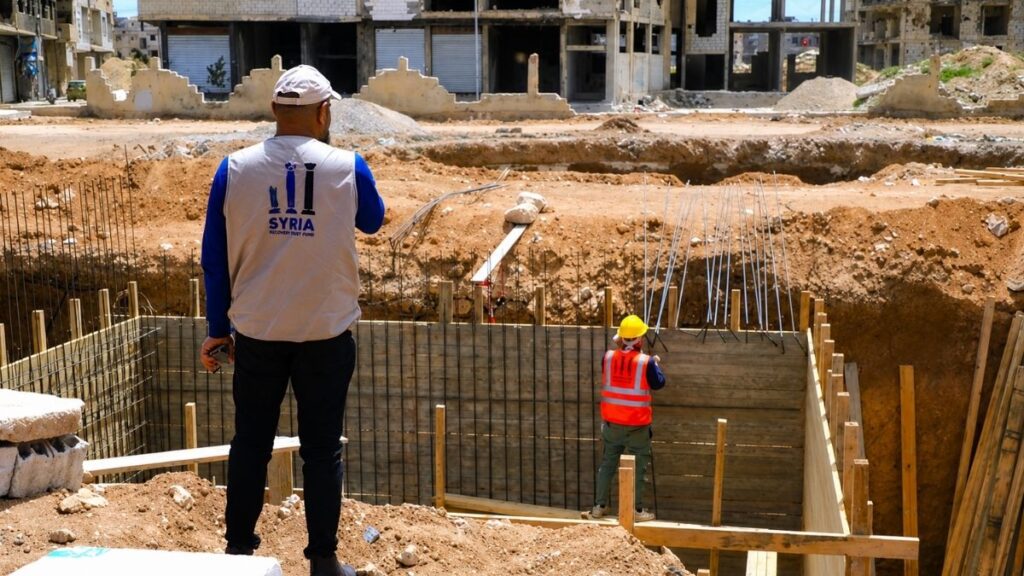
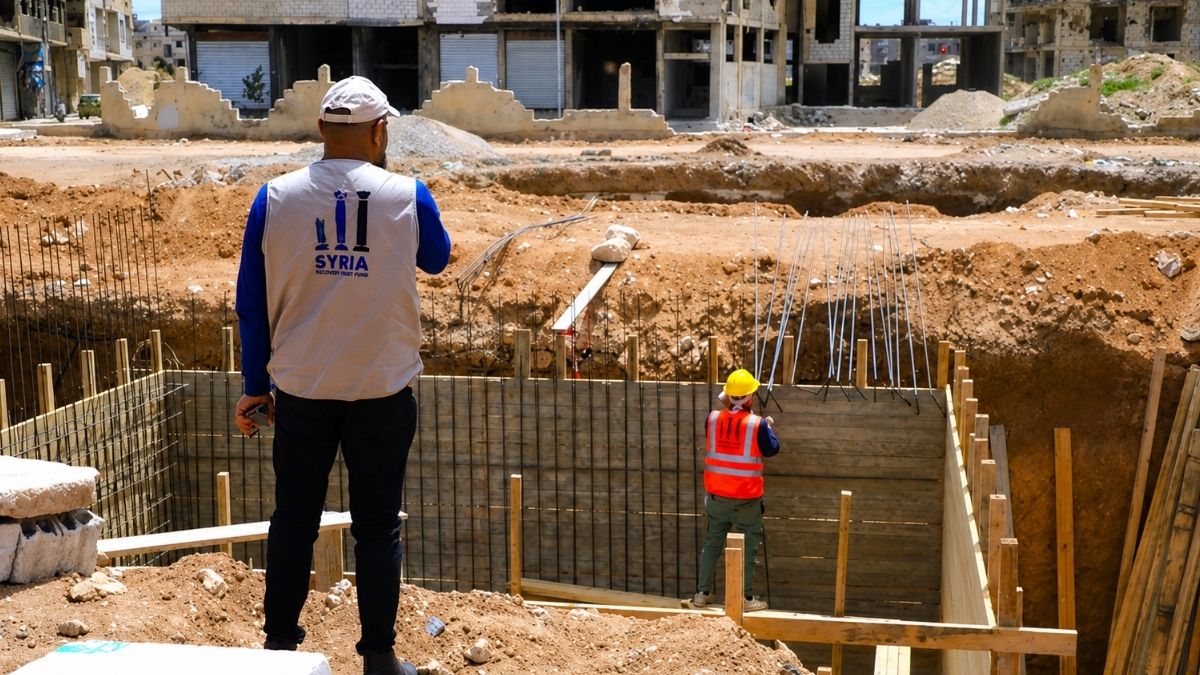
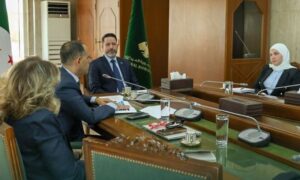
 One of the Syria Recovery Trust Fund’s projects in Syria, July 29, 2026. (Syria Recovery Trust Fund)
One of the Syria Recovery Trust Fund’s projects in Syria, July 29, 2026. (Syria Recovery Trust Fund)
The Syria Recovery Trust Fund announced that it approved two new projects on July 28 to support recovery and reconstruction efforts in Syria. The projects will rehabilitate infrastructure in Jisr al-Shughur (Idlib governorate, northwestern Syria) and provide agricultural support to farmers in Raqqa and Deir Ezzor governorates in northeastern Syria.
According to a statement reviewed by Enab Baladi, the projects reflect the fund’s continued commitment to promoting sustainable recovery, improving essential services and supporting the livelihoods of local communities across Syria.
The first project, titled “Multi-Sector Rehabilitation Initiative in Jisr al-Shughur, Phase II,” was developed in direct coordination with the Higher Commission for “Syria without Camps.” It has a budget of EUR 1.96 million and will be implemented over 12 months.
The project seeks to create suitable conditions for residents to return safely and with dignity by rehabilitating essential infrastructure and strengthening the local community’s capacity to achieve stability. Its activities include rehabilitating 250 damaged homes, three schools and three water pumping stations, as well as providing cash-for-work opportunities to 200 people.
Agricultural assistance will also be provided to 250 families, enabling them to cultivate household gardens. The project is expected to support livelihoods, strengthen food security and improve access to education and water services, while contributing to the implementation of the “Syria without Camps” vision.
The second project, titled “Agriculture Support to Farmers in Raqqa and Deir Ezzor Governorates, Phase X,” continues the fund’s assistance to Syria’s agricultural sector. It has a budget of EUR 1.9 million and will also be implemented over 12 months.
The project aims to strengthen wheat production and support agricultural cooperatives by providing certified wheat seeds, fertilizers, pesticides and agricultural machinery. It is expected to benefit 1,118 farmers belonging to several agricultural cooperatives in the two governorates, helping increase agricultural production, improve food security and strengthen communities’ capacity to achieve stability.
“Approving these two projects demonstrates the fund’s continued commitment to fully supporting Syria’s reconstruction through targeted interventions that respond to communities’ urgent needs,” SRTF Director General Hani Khabbaz said.
Khabbaz added that the fund is working with the relevant government authorities and implementing partners to restore essential services, support livelihoods and create sustainable opportunities that allow families to rebuild their lives. He said the two projects represent another important step toward strengthening food security and community resilience and supporting long-term recovery across Syria.
In an interview with Enab Baladi in July 2025, the SRTF’s executive director said that all funding provided by the countries represented on the fund’s governing bodies consists of non-repayable grants.
He said KfW Development Bank serves as the SRTF’s trustee, overseeing fund disbursement, financial administration, auditing and the application of transparency and integrity standards. KfW was founded in 1948 to finance Germany’s postwar reconstruction using funds from the Marshall Plan.
International reconstruction trust funds are generally established within the World Bank or the United Nations. According to the fund, the SRTF was the first reconstruction trust fund established independently of both institutions, reflecting its founders’ intention to prevent the former Syrian regime from controlling or benefiting from the fund in any way.
if you think the article contain wrong information or you have additional details Send Correction


 A
A
A
A
A
A




 More Economic Reports