


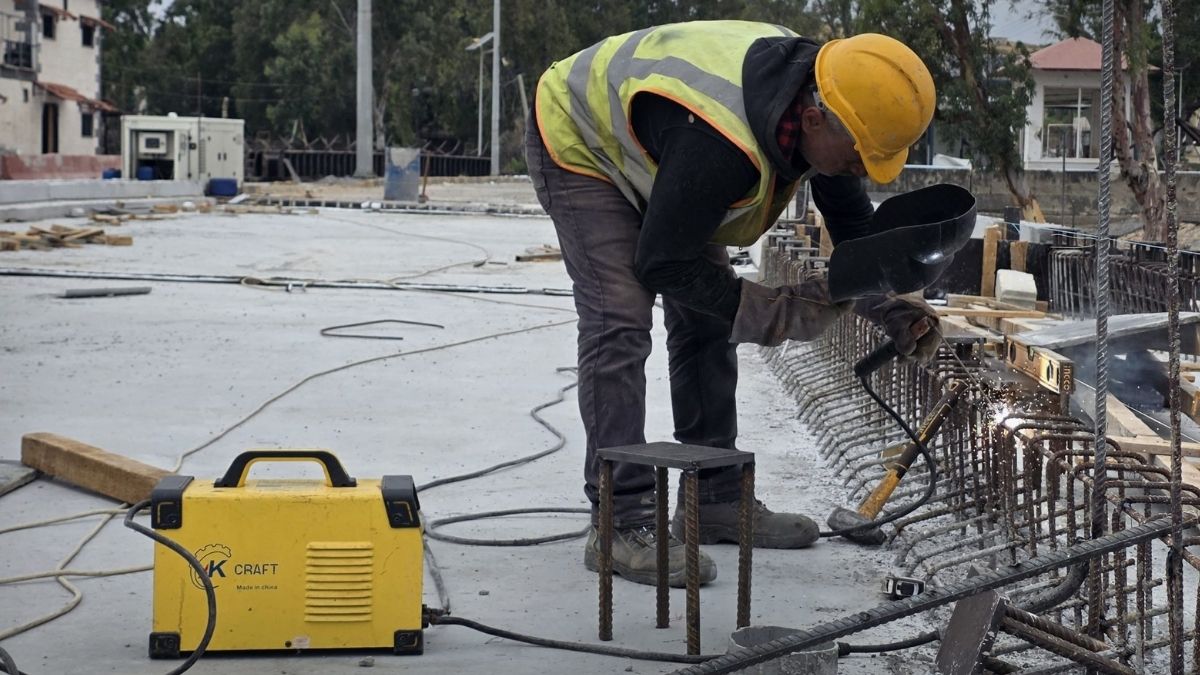
 Rehabilitation work at the al-Dabousiyah border crossing with Lebanon ahead of its planned reopening in early September, July 12, 2026. (SANA)
Rehabilitation work at the al-Dabousiyah border crossing with Lebanon ahead of its planned reopening in early September, July 12, 2026. (SANA)
Syria’s General Authority for Borders and Customs announced that the al-Dabousiyah border crossing with Lebanon will reopen in early September 2026, once the final arrangements for its rehabilitation have been completed.
The reopening aims to stimulate trade, facilitate passenger movement between the two countries, and ease pressure on the Jdeidet Yabous crossing, currently the only commercial border crossing operating between Syria and Lebanon.
The announcement came during an inspection tour on Sunday by Qutaiba Badawi, head of Syria’s General Authority for Borders and Customs, accompanied by Homs Governor Murhaf al-Naasan, to review the project’s final stages, according to Syria’s official news agency, SANA.
Badawi said the crossing would initially reopen using the existing facilities once rehabilitation work is completed. A second phase will include a comprehensive expansion of the site in accordance with international standards, he said, adding that the entire project would take about a year and a half to complete.
Explaining why the crossing had previously ceased operating, Badawi said it was taken out of service after the bridge over Nahr al-Kabir al-Janoubi was damaged by Israeli bombardment. He added that the authority had completed the bridge’s reconstruction in line with approved engineering specifications and standards.
The al-Dabousiyah crossing is strategically and economically important. It serves as the main route for overland transport between the Port of Tripoli in northern Lebanon and Syria’s central and northern governorates. It is also a key gateway for Lebanese goods and products transported through Syrian territory to Gulf countries and other Arab markets.
On May 4, the General Authority for Borders and Customs announced the opening of the Jisr al-Qamar border crossing with Lebanon as part of its efforts to expand border-crossing capacity and improve movement between the two countries.
Passenger traffic began in both directions after the necessary operational and administrative arrangements were completed to ensure smooth operations and passenger movement.
Regarding preparations at the crossing, the authority said simplified procedures had been introduced and inspection processes accelerated to reduce waiting times. Guidance and administrative services were also provided inside the crossing, while security and service readiness were strengthened to accommodate the expected level of traffic.
Jisr al-Qamar is located along the northern section of the Syrian-Lebanese border. It connects the Wadi Khaled area in Lebanon’s northern Akkar Governorate with the village of al-Mushayrifah in the western countryside of Homs Governorate on the Syrian side.
Lebanon and Syria are connected by six official border crossings, three in northern Lebanon and three in the east. The northern crossings are al-Arida, al-Abboudieh, and al-Boqayaa-Talkalakh. The eastern crossings are al-Masnaa, al-Qaa-Jousieh, and Matraba.
In addition to the official crossings, unauthorized routes also connect Lebanon and Syria. The border between the two countries extends for about 375 kilometers, including rugged and overlapping terrain with numerous valleys and mountains.
In September 2025, a delegation from the General Authority for Borders and Customs and a Lebanese delegation discussed activating and rehabilitating shared border crossings between the two countries.
The discussions, held during a meeting in Damascus, covered all border crossings, including Jdeidet Yabous, Jousieh, al-Arida, al-Dabousiyah, and Jisr al-Qamar.
The two sides agreed that the authority’s Directorate of Facilities and Maintenance would rebuild the bridge at the al-Dabousiyah crossing with support from the International Organization for Migration and in coordination with Lebanon’s Ministry of Public Works and Transport. They also agreed to rehabilitate the existing bridge at the al-Arida crossing.
The two sides also agreed to activate the Jisr al-Qamar crossing to strengthen movement between the countries and to enable commercial trucks to pass through the Jousieh crossing.
At the time, the authority said activating the crossings would help stimulate trade and reduce transportation burdens on merchants.
Both sides stressed the importance of simplifying procedures, ensuring proper treatment of travelers, addressing existing problems, and improving performance at the crossings. They also discussed expanding the categories of Syrians permitted to enter Lebanon.
if you think the article contain wrong information or you have additional details Send Correction


 A
A
A
A
A
A




 More Economic Reports