


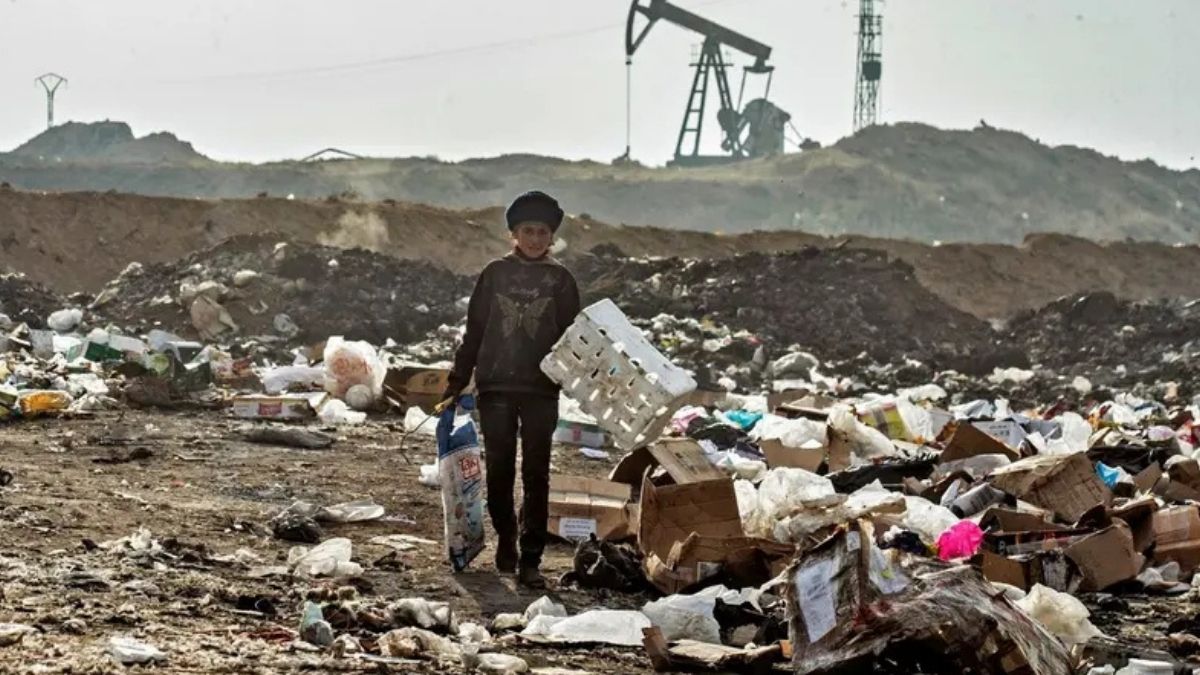
 A boy collects garbage in the al-Malikiyah area, north of Hasakah, on June 14, 2023. (AFP)
A boy collects garbage in the al-Malikiyah area, north of Hasakah, on June 14, 2023. (AFP)
A joint report issued by the Food and Agriculture Organization of the United Nations (FAO) and the World Food Programme (WFP) listed Syria among 13 countries classified as hunger hotspots worldwide, warning that food insecurity levels could worsen between June and November 2026.
The report is part of a series of periodic assessments monitoring acute food insecurity conditions in several of the most affected countries, based on data related to armed conflicts, economic pressures, climate change, and the level of humanitarian funding available to respond to food crises.
The report said armed conflicts and violence remain the main factor behind food crises in 12 of the 13 countries included on the list, including Syria, alongside other factors such as worsening economic conditions, declining agricultural production, and the impact of climate change on food resources.
It noted that the persistence of these factors is worsening food insecurity, particularly in areas suffering from prolonged crises and weak economic and service infrastructure.
The report classified Sudan, South Sudan, Yemen, and Palestine as facing the highest risk of hunger severity and scale, amid ongoing humanitarian crises and conflicts in those regions.
The list of other countries classified as food insecurity hotspots also included Syria, Somalia, Nigeria, Chad, Burkina Faso, Mali, the Democratic Republic of the Congo, Myanmar, and Haiti, which are also facing rising levels of acute food insecurity.
The report noted that the humanitarian response to global food crises is facing growing challenges due to an estimated 59% decline in funding allocated for humanitarian aid between 2022 and 2025, which has affected the ability of humanitarian organizations to meet growing needs in many affected countries.
It explained that this drop in funding limits the ability of humanitarian actors to adequately implement food relief programs, at a time when humanitarian needs are rising in conflict zones and areas facing prolonged crises, including Syria.
The two UN agencies called for urgent measures to expand humanitarian aid and ensure it reaches people in need without obstacles, along with investment in livelihoods and strengthening the ability of affected local communities to withstand worsening crises.
The report stressed that the continuation of the current situation without an adequate response could lead to worsening food insecurity levels in the listed countries through the end of 2026, imposing additional challenges on international humanitarian efforts.
Syria’s inclusion on the list comes amid the continued repercussions of a conflict that has lasted for several years and directly affected food security levels, at a time when multiple factors overlap, including declining purchasing power, difficulties in agricultural production, and uneven access to humanitarian aid across regions.
if you think the article contain wrong information or you have additional details Send Correction


 A
A
A
A
A
A






 More Economic Reports