


 Syrian Interior Ministry spokesperson Nour al-Din al-Baba holds a press conference to explain the work of the Counterterrorism Department in pursuing remnants of the former regime, June 15, 2026. (Enab Baladi/Ahmad Muslimani)
Syrian Interior Ministry spokesperson Nour al-Din al-Baba holds a press conference to explain the work of the Counterterrorism Department in pursuing remnants of the former regime, June 15, 2026. (Enab Baladi/Ahmad Muslimani)
Syrian Interior Ministry spokesperson Nour al-Din al-Baba announced that the Counterterrorism Department dismantled a “terrorist” security cell linked to the former regime’s agencies after long-running tracking, surveillance, and investigation operations.
Al-Baba said on Monday, June 15, during a press conference held in Damascus and attended by Enab Baladi, that the Counterterrorism Department arrested Major General Ahmad Hijazi, the former head of what was known as the Information Branch in the dissolved State Security Branch.
He revealed that investigations showed members of the cell were involved in surveillance work, collecting information, and identifying coordinates for military and security bodies affiliated with the former regime, in addition to coordinating bombing operations that targeted civilian areas in Idlib governorate and the city of Jisr al-Shughur, causing civilian casualties.
The Syrian Interior Ministry spokesperson said investigations showed the involvement of cell members, including Fadi Maarouf, known as “Abu Jahl,” and Issa Ghannam, in transferring and handing over the coordinates of the Jabal al-Duwaila military camp in Kafr Takharim (Idlib, northwestern Syria) to Brigadier General Abdulrahman Najm, the former head of the State Security Branch, which contributed to targeting the camp and led to more than 100 killed and wounded among members of the Faylaq al-Sham faction in late October 2020.
In reference to the renewed prominence of transitional justice and accountability for those involved in violations during the years of war, al-Baba addressed the vigils, sit-ins, and popular demands witnessed in several Syrian areas in recent days, calling for holding accountable those responsible for crimes and violations committed during the former regime’s rule.
The Syrian Interior Ministry spokesperson said these demands “express a legitimate desire to achieve justice after long years of repression, killing, and terrorism.”
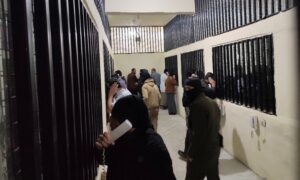
In the file of violations committed inside military hospitals affiliated with the defunct regime, al-Baba announced the arrest of 12 officers involved in violations against detainees, including one major general, six brigadier generals, two colonels, two lieutenant colonels, and one captain, stressing that pursuit and investigation operations against the rest of those involved are continuing.
He said transitional justice is an integrated national project based on:
Protecting community stability does not contradict accountability, but rather represents one of the most important conditions for its success, as experiences have shown that societies recover through justice and the rule of law, not through the dominance of anger and impulsiveness, according to al-Baba.
He reaffirmed that the rights of victims and the blood of martyrs are a trust borne by state institutions, and that accountability is continuing and will not stop. However, it will remain legal accountability based on evidence, facts, and judicial rulings, not on rumors, emotions, or immediate desires. He said, “Justice is our path, the law is our tool, and building the new Syria can only happen through strong institutions, an independent judiciary, and fair accountability that excludes no one and wrongs no one.”
He also revealed that the Counterterrorism Department currently has 5,989 detainees distributed across various military ranks, including one person with the rank of Imad [CHECK ARABIC], 42 major generals, 172 brigadier generals, 218 colonels, 112 lieutenant colonels, 73 majors, 160 captains, 126 first lieutenants, 32 lieutenants, 435 first warrant officers, 268 warrant officers, 174 first sergeants, 285 sergeants, 160 corporals, in addition to 1,483 members.
Al-Baba referred to the arrest of:
Al-Baba stressed that holding accountable those responsible for crimes and violations committed against the Syrian people represents a legitimate right for victims and their families, while implementing this right remains the responsibility of the state and its judicial and security institutions.
He noted that accountability is not only a popular demand, but also an official commitment by the new Syrian state and a basic pillar in the project of building a state of law and institutions.
Al-Baba also reviewed the Counterterrorism Department’s work mechanism, explaining that it is based on three main stages:
He stressed that the Interior Ministry works in coordination with the Justice Ministry and the National Commission for Transitional Justice, and deals with all citizens equally according to the principle of citizenship and the rule of law, while continuing to pursue those involved from the remnants of the former regime inside and outside the country through legal, security, and political tracks.
Nour al-Din al-Baba said the Syrian state has not been lenient since liberation in pursuing those involved in crimes and violations, and that the accountability file has never been postponed or secondary, as the competent agencies continue tracking wanted individuals, collecting evidence, completing investigations, and referring those involved to the judiciary.
The importance of these operations does not lie only in arresting wanted individuals, but in confirming that the state is moving forward in pursuing anyone whose involvement in crimes and violations is proven, regardless of their previous position, influence, or affiliations, according to al-Baba. He stressed, “There is no immunity for any criminal and no place for impunity in the new Syria.”
At the same time, he emphasized the state’s rejection of any attempts to turn demands for accountability into retaliatory practices or collective accusations not based on evidence, stressing that justice requires punishing the guilty, protecting the innocent, and guaranteeing fair trials for all.
During the press conference, the Syrian Interior Ministry spokesperson said internal security forces had foiled a terrorist attack launched by the Islamic State that targeted one of the Internal Security Command’s headquarters in the city of Raqqa (northern Syria).
The ministry, through its Facebook page, said security personnel confronted two suicide attackers in Raqqa, clashed with them, and managed to neutralize one of them, while the other detonated himself with an explosive vest after being surrounded.
The explosion killed one member of the internal security forces and wounded three others, who were transferred to hospitals for treatment.
Syrian cities witnessed protest movements, including demonstrations and vigils, that raised slogans demanding accountability for those the participants described as “shabiha” and “remnants of the former regime,” along with calls to remove them from some areas.
The movements expanded into a wave of protests stretching from Aleppo to Idlib, the Damascus countryside, Raqqa, and Deir Ezzor, at a time when the file of transitional justice and accountability for those involved in violations during the years of war has returned to the forefront of debate.
The Syrian Interior Ministry preceded the press conference with a statement at dawn on Monday, saying it “is following with great concern the tensions witnessed in some areas of Idlib governorate, against the backdrop of popular demands to hold accountable those responsible for the crimes and violations committed against Syrians during the years of rule by the defunct regime.”
It affirmed its understanding of the feelings of anger and pain those crimes left among residents, stressing that achieving justice and holding perpetrators of crimes and violations accountable is a responsibility undertaken by the state through its specialized institutions, and that it will never be lenient toward anyone proven to have been involved in bloodshed or violations against the Syrian people.
While security agencies continue their operations to pursue wanted individuals and those involved across various governorates, the ministry called on citizens to exercise restraint and not be drawn into any acts of revenge or attacks outside the framework of the law, because that threatens security and stability and obstructs the path of justice.
It added, “We call on residents and everyone who possesses reliable information or documented evidence about people involved in crimes or violations to take the initiative and submit it to the competent authorities through the approved official channels,” stressing that the relevant agencies are following these files with full seriousness, and that any reliable information would contribute to pursuing wanted individuals and bringing them to justice.
The ministry explained that victims’ rights will not be lost, and that all documented cases and files will be followed up according to legal procedures, ensuring that criminals are held accountable and those harmed are given justice, away from chaos or individual revenge.
It noted that building a state of justice and the rule of law requires resorting to the competent institutions, trusting their procedures, and joining efforts to preserve security and stability and prevent any attempts to drag the country into chaos with dire consequences.
if you think the article contain wrong information or you have additional details Send Correction


 A
A
A
A
A
A






 More Politics