
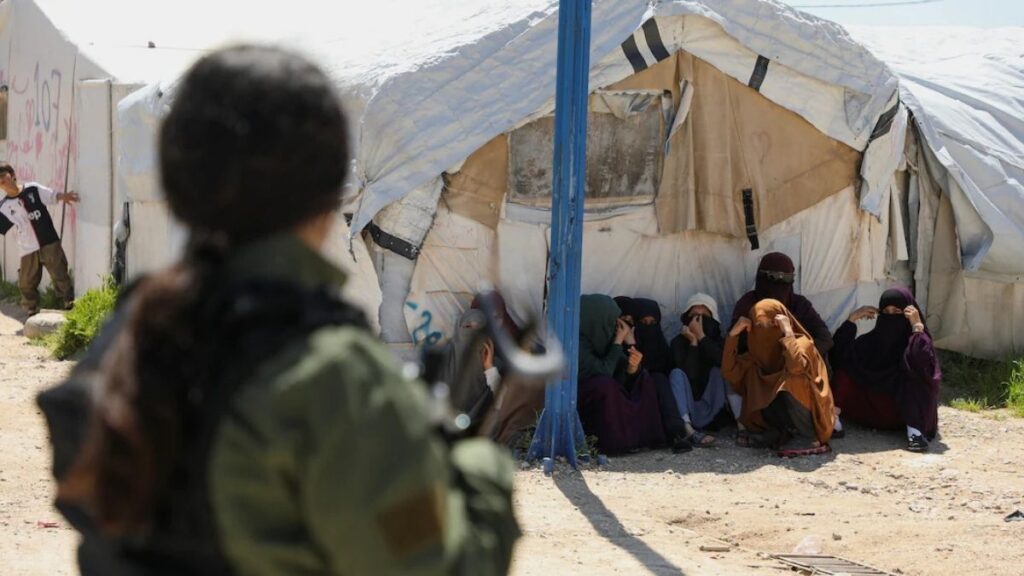

The Australian Broadcasting Corporation (ABC) said a second group of Australian women and children linked to the Islamic State group left a refugee camp in northeastern Syria and is likely to return to Australia.
ABC said a bus carrying the group left Roj camp on Thursday afternoon, 21 May, under the guard of a convoy of Syrian government officials acting as escorts.
The group is expected to arrive in Damascus, but it remains unclear when it may travel to Australia, ABC reported Friday, 22 May.
The group that left Thursday may include all the remaining Australians, but camp officials declined to comment on the latest departure, according to ABC.
The Australian government had previously ruled out providing direct assistance for the return of Australian families linked to the Islamic State group, but acknowledged there were “severe limits” on preventing citizens from returning to the country.
Return of 13 Australian Citizens
Australian authorities announced on 6 May the return of 13 citizens linked to suspected Islamic State members from northeastern Syria, in a move reflecting a limited shift in policy on foreign families held in camps in the area, amid official confirmations that legal measures would be taken against some returnees.
Agence France Presse reported at the time, citing Australian police, that the group included four women and nine children who had been staying in Roj camp in the countryside of al-Hasakah governorate, noting that they were expected to arrive at the airports of Sydney and Melbourne on 7 May after arrangements were made for their return to the country.
Australian Home Affairs Minister Tony Burke said at a press conference that the group had “booked to return to Australia,” while stressing that the government “is not assisting and will not assist these individuals,” referring to an official hardline position on the issue of repatriating people linked to the organization.
Burke added that the returnees had made a “horrible and shameful decision,” stressing that anyone proven to have committed crimes would face “the harshest penalties the law allows, without exception,” confirming a move to hold returnees judicially accountable within Australia’s legal frameworks.
The Australian Federal Police, for its part, announced that it had collected evidence inside Syrian territory as part of investigations aimed at determining whether Australian citizens had committed crimes punishable by law, such as traveling to prohibited areas or involvement in illegal activities, including human trafficking.
Australian Federal Police Commissioner Krissy Barrett said “some individuals will be arrested and charged,” without providing additional details on the nature of the charges or the number of people who may be affected by the measure.
Trial of Women Linked to Islamic State
Australian police charged two women linked to the Islamic State group with slavery offenses after they returned from Syria, where they had been held in a refugee camp for more than seven years.
Police said on 8 May that Kawthar Ahmad, 54, and her daughter Zeinab Ahmad, 31, face charges of committing crimes against humanity, including owning and using a female slave in Syria, which carries a maximum penalty of 25 years in prison.
Australian police had arrested the two defendants as part of a group of four women and nine children who returned to Australia from Syria at Melbourne Airport on 7 May.
Roj camp is one of the most prominent camps holding families of former Islamic State fighters. It is located in the countryside of al-Hasakah governorate and is controlled by the Syrian Democratic Forces (SDF), while the area has seen varying international efforts in recent years to repatriate foreign nationals.