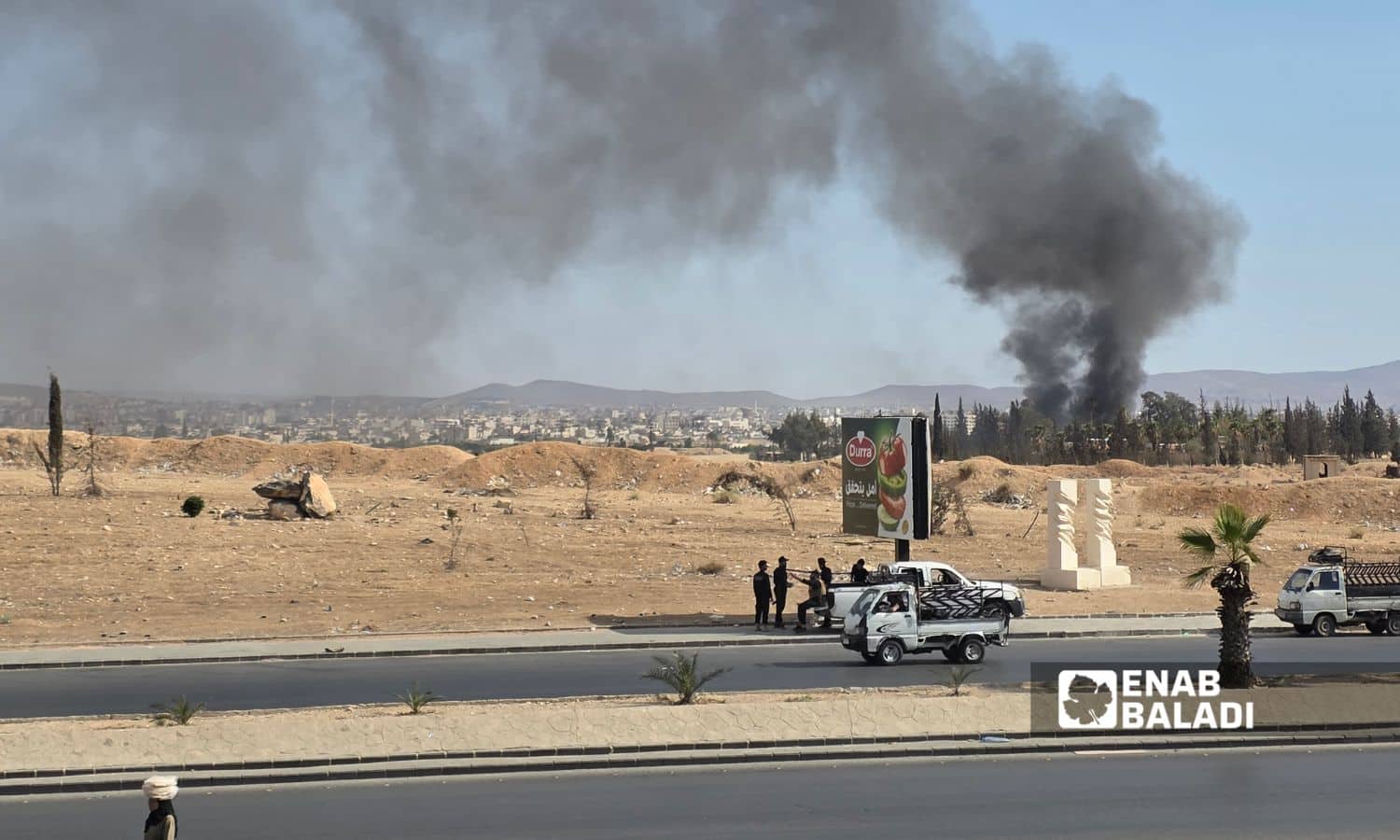
Air quality in Damascus classified as "poor" due to rising pollution levels – 24 July 2025 (Enab Baladi/Amir Huquq)
(EB) is an independent Syrian media organization that was founded in 2011. EB offers 24-hour news coverage through its multilingual interactive websites, and it publishes a weekly newspaper that covers Syrian political, social.
Copyright © 2026 Enab Baladi. Enab Baladi is a nonprofit charitable 501(c)(3) organization, Tax ID. 46-3313735

Air quality in Damascus classified as "poor" due to rising pollution levels – 24 July 2025 (Enab Baladi/Amir Huquq)
Enab Baladi – Amir Huquq
Damascus is experiencing a continuous rise in environmental pollution levels, particularly air pollution, which affects the quality of ambient air and poses a threat to both the environment and human health.
According to AccuWeather, a website specializing in air quality measurement, Damascus has an Air Quality Index (AQI) of 53, classified as “poor.” The platform considers any value at 48 or below to be acceptable, while “excellent” quality is defined as an AQI of 13 or below.
For comparison, AQI data shows Germany’s air quality index at 31, classified as “good,” and Turkey’s at 41, also considered “good.”
Environmental and health bodies in Damascus attribute the rising air pollution levels to population density, emissions from factories surrounding the city, vehicle exhaust, power generators, and public transportation.
Youssef Sharaf, Deputy Minister of Local Administration for Environmental Affairs, told Enab Baladi that the ministry has prioritized environmental concerns to achieve sustainable development and reduce pollution.
The environment is among the most affected national sectors, with pollution stemming from various sources. One of the sudden causes of increased pollution in Damascus has been the spread of dense dust from demolition operations, in addition to pollutants emitted from burning fuel in transport, industrial, and electrical facilities using low-quality fuel.
Sharaf also noted that explosion-related emissions contributed to air pollution, raising concentrations of airborne particulates and dust and increasing CO₂ levels in the atmosphere. “This is in addition to smoke columns rising from various locations and the increased presence of airborne pollutants, all of which have had catastrophic consequences for public health, the economy, and the environment alike,” he said.
Regarding pollution types, Sharaf explained that air pollutants fall into the following categories:
Gases
Heavy metals
Particulate matter
Secondary air pollutants
The deputy minister revealed that vehicle emissions account for 60–70% of Damascus’s air pollution, especially old vehicles and microbuses operating on diesel fuel. The high sulfur content (0.7%) in the fuel increases the emission of sulfur dioxide (SO₂) and fine particulates (PM2.5 and PM10).
Regarding unregulated power generators, which have spread across residential neighborhoods due to frequent electricity cuts, he stated they run for up to 16 hours daily and emit nitrogen oxides (NOx) and sulfur oxides (SOx)—further contributing to air pollution and causing respiratory illnesses.
Unlicensed factories in some industrial zones—such as battery plants in the Ahda Ashariyah area—emit heavy metals like lead, which exceed internationally permitted levels. Stone crushers and quarries increase dust and particulate matter, especially around Damascus. In some neighborhoods, waste is burned indiscriminately, releasing toxic gases such as dioxins and fine particulates, according to Sharaf.
The growing air pollution and its direct impact on residents’ respiratory health necessitate urgent measures to curb the escalating contamination.
Sharaf pointed out that the ministry, through its provincial environmental directorates, follows a periodic plan to monitor pollution from potential sources and responds to citizen complaints. The ministry applies Syrian standards for permissible pollutant concentrations.
Additionally, the ministry is developing a plan to study the environmental reality, in cooperation with the Ministry of Higher Education, through its environmental directorates. It is also evaluating the current situation and reviewing the readiness of all affiliated bodies to enforce the Environmental Law. Scientific foundations are being established to support the reconstruction phase, integrating environmental standards and sustainable development goals in line with current conditions.
Sharaf added that studies are underway to improve transportation systems, reduce reliance on unregulated generators by establishing licensing criteria for their operation, and promote solar energy use in homes and shops as a clean alternative. The ministry also aims to activate environmental assessments for factories and set environmental protection conditions in licensing, alongside post-operation monitoring plans.
Respiratory illnesses are closely tied to air quality levels. Air pollution is a leading cause of increased respiratory diseases, particularly chronic conditions such as asthma and allergic respiratory disorders.
According to Youssef Sharaf, outdoor air pollution is one of the most significant environmental health problems affecting humans. He emphasized that exposure to fine particulate matter causes cardiovascular diseases, various respiratory illnesses, certain cancers, and allergic conditions. Heavy metals such as lead have cumulative effects that increase their toxicity and impact on health.
For his part, Dr. Nabough al-Awa, a professor at the University of Damascus and a specialist in ear, nose, and throat diseases, told Enab Baladi that the increase in air pollution has raised respiratory illnesses, especially bronchial and lung diseases, potentially leading to respiratory failure.
He explained that air pollution reduces oxygen levels, endangering patients with chronic lung conditions. Dr. al-Awa confirmed a sharp increase in respiratory diseases recently.
He noted that while air pollution is not a new phenomenon in Damascus, it has intensified rapidly in recent months due to population growth, increased visitors from other provinces, and the unregulated rise in vehicles on the streets. He called for collective efforts to improve environmental standards by regulating pollution sources, thereby enhancing air quality and curbing disease spread.
Dr. al-Awa advised people with chronic respiratory conditions to avoid crowded areas and heavy traffic, stay away from dust, smoke, and fires, wear face masks, and take vitamins D and C to strengthen the immune system.
Air pollution affects the respiratory system and causes a range of health problems. Fine particles, volatile organic compounds, and airborne toxins can deeply penetrate the lungs, resulting in:
Increased risk of respiratory infections
Worsening asthma symptoms
Development of respiratory allergies
Decline in lung function over time
Breathing difficulties: shortness of breath, chest tightness, coughing, wheezing, or trouble breathing deeply
if you think the article contain wrong information or you have additional details Send Correction
Propaganda distorts the truth and prolongs the war..
Syria needs free media.. We need your support to stay independent..
$1 a month makes a difference..
Click here to support