


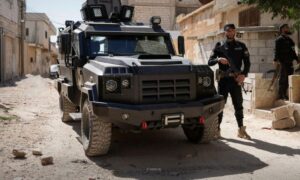
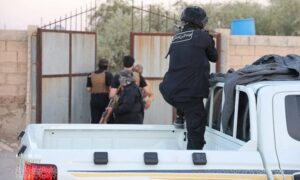
 Members of Syria’s Internal Security Forces in the countryside of Suwayda – July 14, 2025 (Syrian Ministry of Interior)
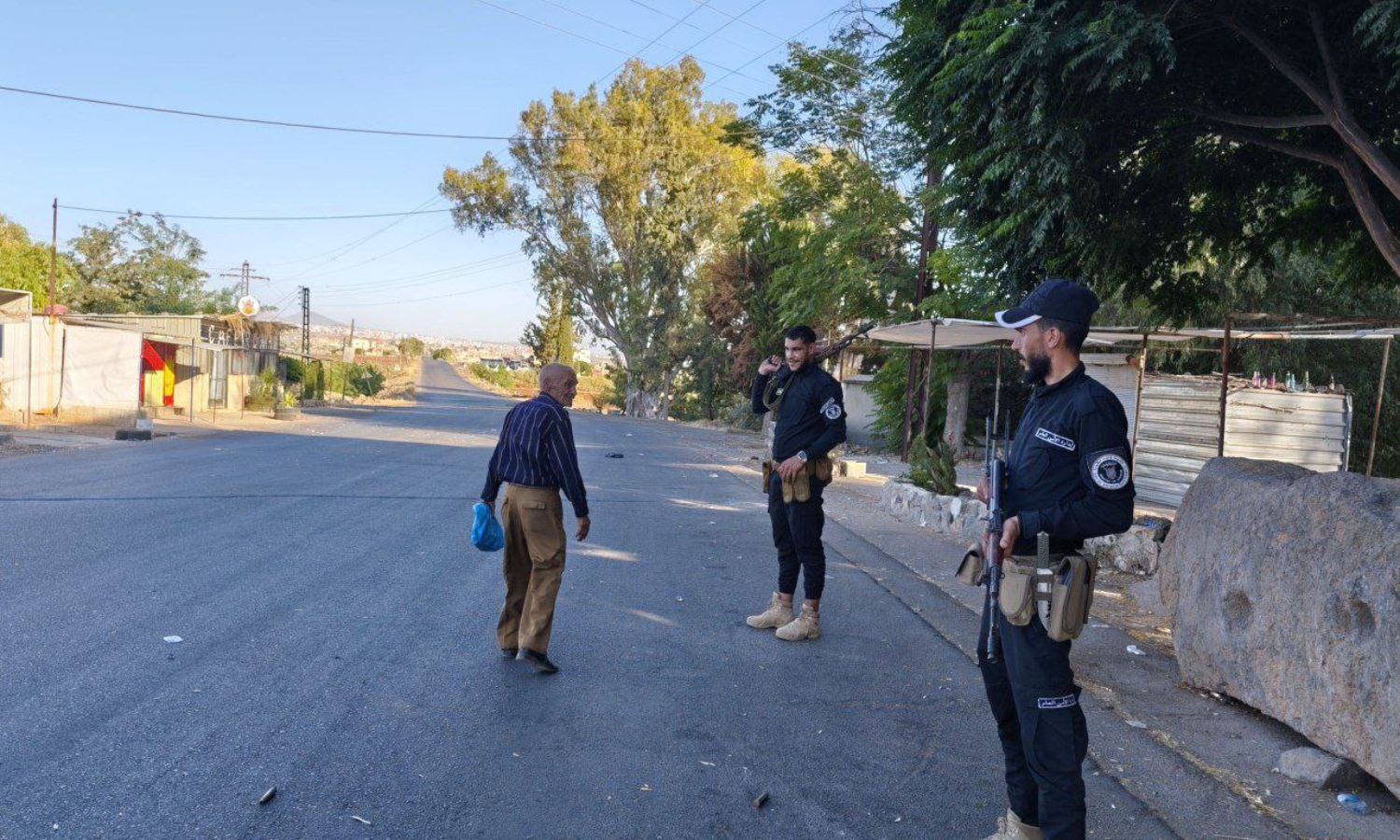
Members of Syria’s Internal Security Forces in the countryside of Suwayda – July 14, 2025 (Syrian Ministry of Interior)
U.S. Special Envoy to Syria, Thomas Barrack, announced an international agreement to implement a ceasefire in Suwayda, southern Syria, following days of intense violence and reciprocal violations.
In a post published on X early on Saturday, July 19, Barrack stated that Syria’s transitional president, Ahmad al-Sharaa, and Israeli Prime Minister Benjamin Netanyahu had agreed to a ceasefire in Suwayda.
He added that the agreement was supported by the United States and endorsed by Turkey, Jordan, and neighboring countries.
Barrack called on Syrian components—particularly Druze and Sunni Bedouin communities—to lay down their arms and work alongside other minorities to build “a new and unified Syrian identity rooted in peace and prosperity with its neighbors.”
In response, the Druze spiritual leadership headed by Sheikh Hikmat al-Hijri—one of the most prominent figures opposing the Syrian government’s reentry into Suwayda—issued a statement saying it extended its hand “to all honorable individuals to help end the ongoing fighting, implement the ceasefire, and appeal to reason.”
Meanwhile, Enab Baladi documented the arrival of Syrian security personnel in areas near the frontlines on the outskirts of Suwayda city.
The ceasefire announcement followed a government pledge to deploy specialized forces to de-escalate the conflict and restore order in the governorate.
In a statement issued late on July 18, the Syrian presidency said it would send forces to “resolve clashes and address the conflict on the ground,” in parallel with political and security measures aimed at “restoring stability and ensuring a swift return to calm across the province.”
The presidency urged all parties to exercise restraint and prioritize “the voice of reason,” asserting that the state is making “intensive efforts” to stop the fighting and contain violations.
Suwayda has witnessed a major escalation involving armed clashes and mutual abuses between Bedouin tribal fighters and local factions aligned with Sheikh al-Hijri.
Following the entry of Syrian security forces into Suwayda—coordinated with local leaders and factions—Sheikh al-Hijri called on the U.S. and Israeli presidents to intervene.
Israel responded by launching airstrikes on General Security vehicles inside Suwayda, as well as targeting locations outside the province, including the Syrian Army’s General Staff building in Damascus.
After the withdrawal of Syria’s Interior Ministry and Defense Ministry forces, Bedouin civilians reportedly suffered violations at the hands of local factions, prompting tribal groups to issue calls for reinforcements. This led to the arrival of fighters from northern Syria and the Suwayda periphery.
Armed tribal groups subsequently took control of several villages in Suwayda, reportedly committing retaliatory abuses and burning civilian property.
The Syrian Network for Human Rights (SNHR) reported that more than 300 people have been killed from all sides since the fighting began on July 13, though the figures remain preliminary.
Separately, Reuters reported on July 18 that Israel had agreed to a “limited” entry of Syrian government forces into Suwayda within 48 hours.
An unnamed Israeli official told the agency that Israel approved a restricted deployment of Internal Security Forces in light of what the official described as “ongoing instability” and “days of bloodshed.”
Israel Allows Limited Deployment of Syrian Forces in Suwayda
if you think the article contain wrong information or you have additional details Send Correction


 A
A
A
A
A
A


 More Politics